Aug 20, 2026 Choose Guiding
Custom Metal Plaques | Brass, Bronze or Copper?
Choosing brass, bronze or copper for custom metal plaques? Compare color, durability, engraving, aging and outdoor use to find the right material.
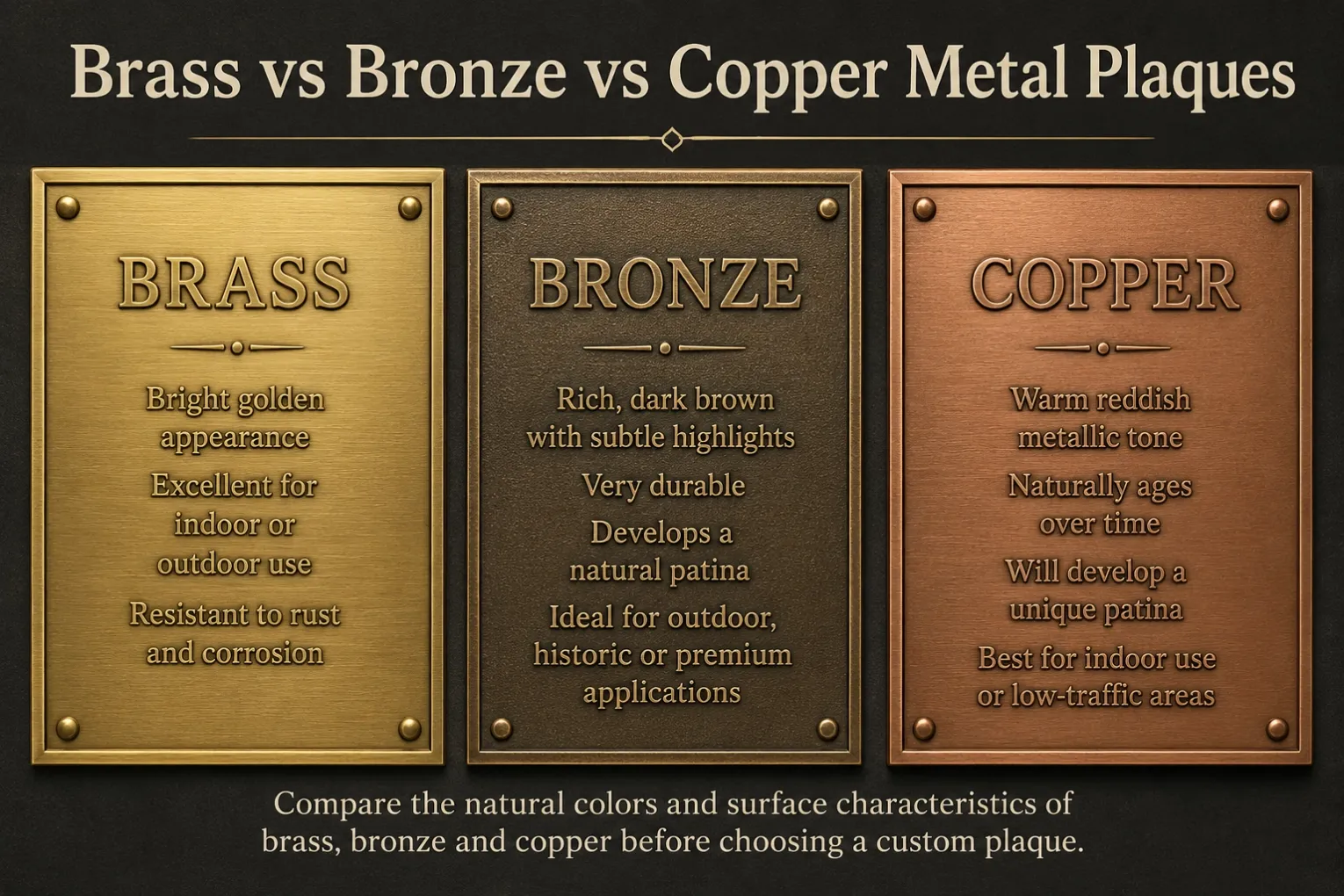
Custom Metal Plaques | Brass, Bronze or Copper? - KAIYUBANG
Choosing brass, bronze or copper for custom metal plaques? Compare color, durability, engraving, aging and outdoor use to find the right material.
When ordering custom metal plaques, one of the first decisions is the material. Brass, bronze and copper may look similar at first glance, but they differ significantly in composition, color, aging behavior, manufacturing method and final appearance.
For memorial plaques, building signs, donor plaques, address plaques and engraved metal plaques for outdoors, choosing the right metal can affect not only appearance but also manufacturing cost and long-term performance.
So, what is the difference between brass, bronze and copper, and which one should you choose for your plaque?
Brass vs Bronze vs Copper: What Is the Main Difference?
The simplest distinction is their composition.
Copper is the base metal. Brass and bronze are copper alloys created by combining copper with other elements.
Brass is primarily an alloy of copper and zinc. For example, C26000 cartridge brass contains approximately 68.5–71.5% copper, with zinc making up most of the balance.
Bronze, by contrast, refers to a family of copper alloys. Traditional bronze is commonly associated with copper and tin, although modern bronze grades may contain additional elements.
This difference in composition changes the color, hardness, machinability and aging characteristics of the finished plaque.
Quick Comparison
Material | Typical Composition | Typical Appearance | Common Plaque Applications |
|---|---|---|---|
Copper | Primarily copper | Reddish-orange | Decorative and artistic plaques |
Brass | Copper + zinc | Yellow/gold | Nameplates, signs, engraved plaques |
Bronze | Copper-based alloy, often with tin | Brown/golden-brown | Memorial and architectural plaques |
Exact properties vary according to alloy grade, thickness, casting process and surface finish.
Why Is Brass Popular for Custom Metal Plaques?
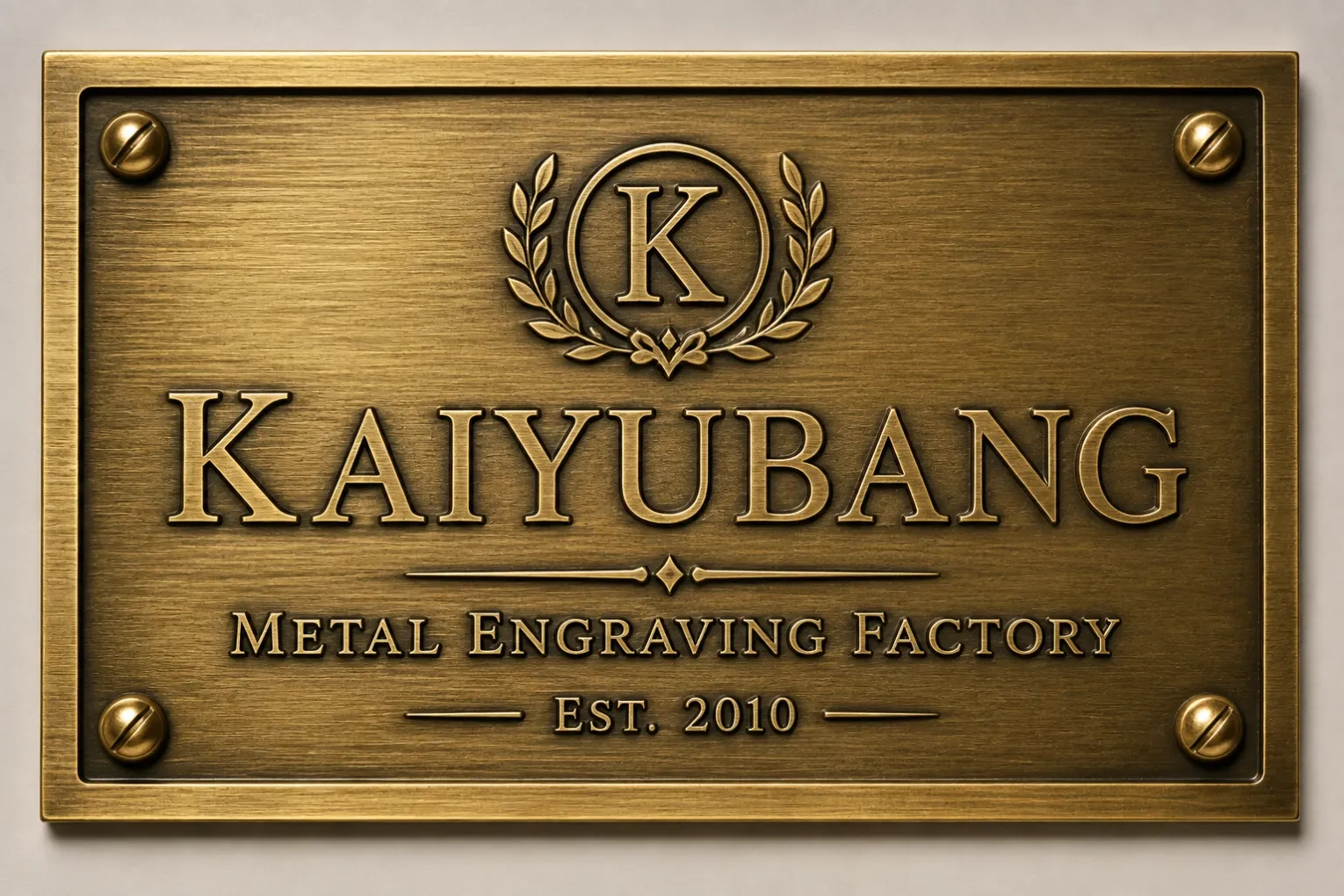
Brass is an attractive choice when customers want a clean, polished and luxurious gold-like appearance without using precious metal.
Its bright yellow tone works especially well for:
- Hotel plaques
- Office signs
- Door number plaques
- Corporate plaques
- Recognition plaques
- Decorative nameplates
- Small identification plates
C26000 brass, for example, is classified by the Copper Development Association as a copper-zinc alloy and is used in architectural and decorative hardware applications because of its appearance, formability and corrosion resistance.
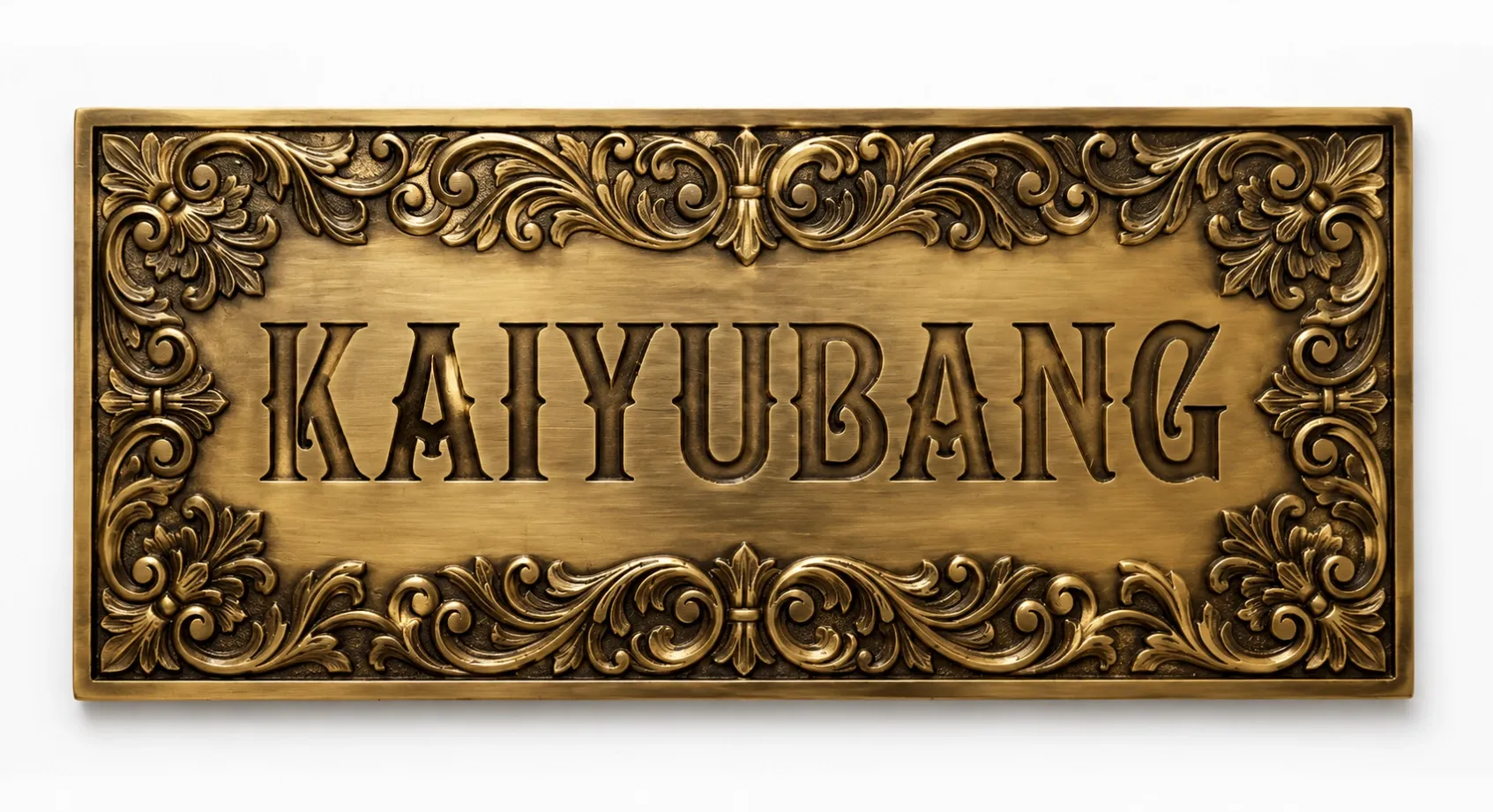
For customers looking for small metal plaque engraving, brass is particularly useful because lettering, logos and decorative borders can create strong visual contrast after engraving and finishing.
Brass Finishes for Metal Plaques
A brass plaque can be finished in several ways:
Polished Brass – bright, reflective and decorative.
Brushed Brass – softer appearance with visible directional texture.
Antique Brass – chemically darkened and polished to highlight raised and recessed areas.
Satin Brass – lower reflectivity and suitable for modern architectural projects.
For engraved designs, recessed lettering can also be filled with black, red or other colors to improve readability.
Why Is Bronze Often Used for historical markers and architectural signage?
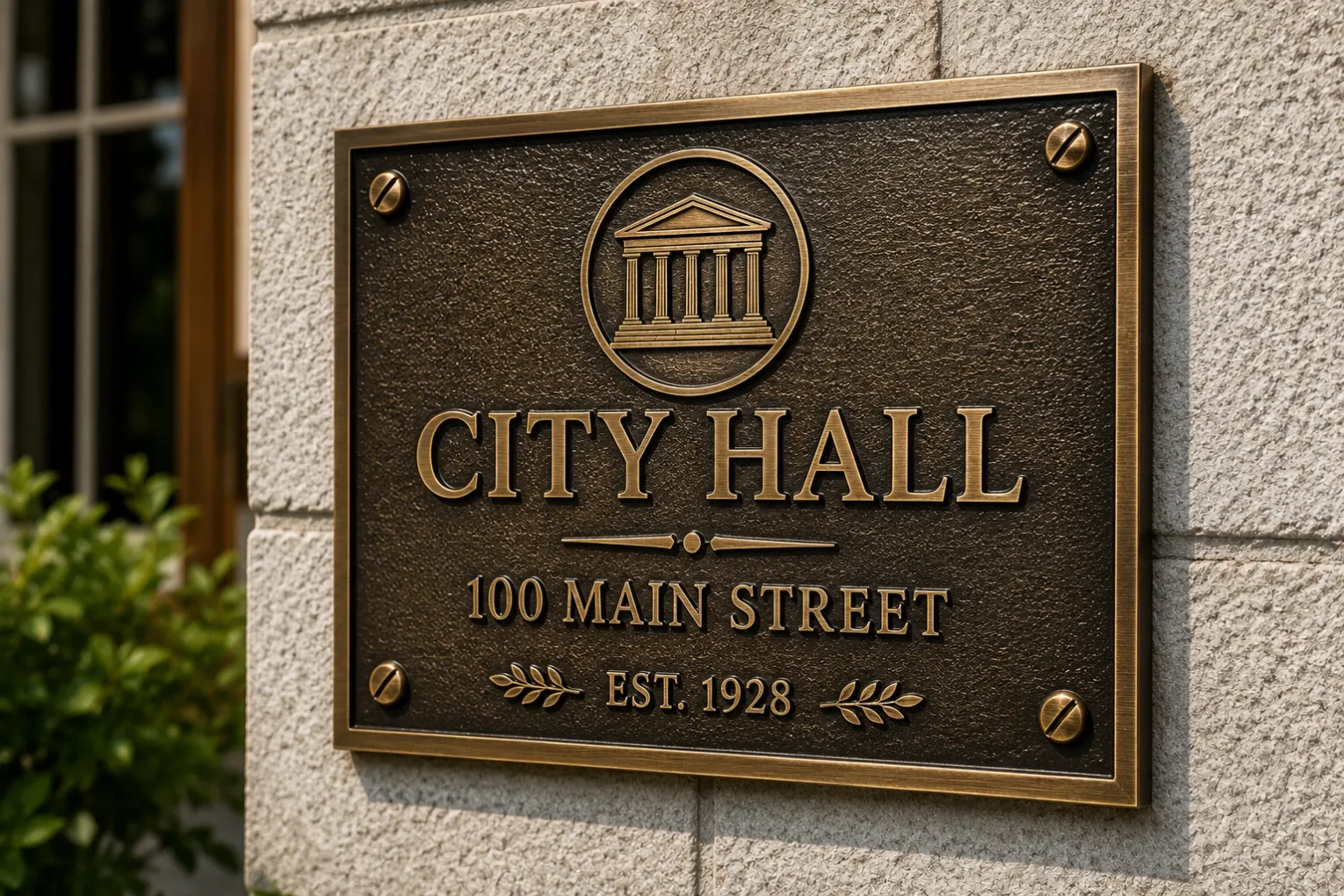
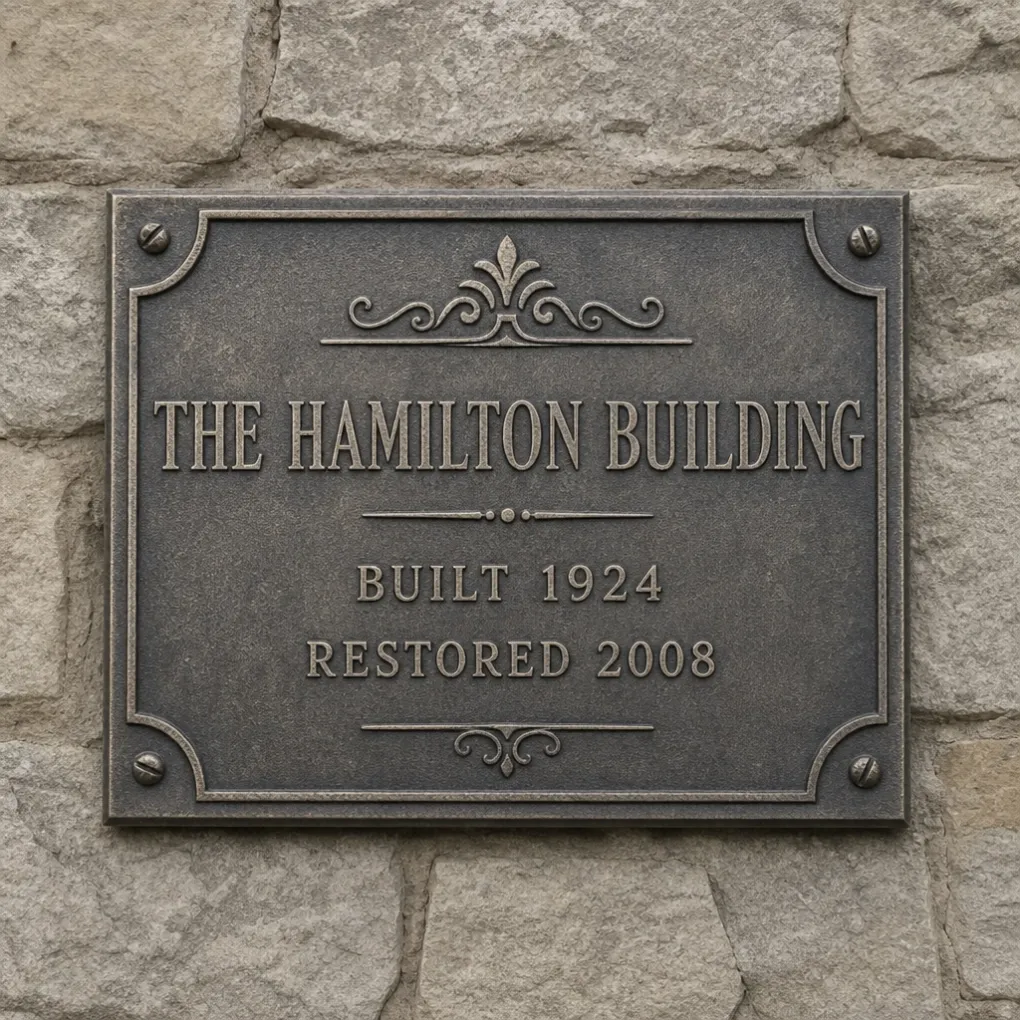
Bronze is strongly associated with memorials, monuments, historical markers and architectural signage.
One important reason is its visual character. Instead of maintaining a bright yellow appearance like polished brass, bronze can develop a darker, more traditional surface that works particularly well with memorial and historical applications.
Typical products include:
- Memorial plaques
- Cemetery markers
- Historical markers
- Church plaques
- Donor plaques
- Building plaques
- Bench memorial plaques
- Tree memorial plaques
Cast bronze is especially suitable for plaques requiring raised lettering, portraits, borders, logos or relief artwork.
For example, the Copper Development Association lists C93200 as a cast bronze containing approximately 81–85% copper, 6.3–7.5% tin and other alloying elements. Different bronze grades have different compositions, so the exact alloy should be selected according to the manufacturing process and application.
Cast Bronze vs Engraved Bronze
This distinction is important when purchasing engraved metal plaques for outdoors.
A cast bronze plaque is created using a mold. Letters, borders and graphics can be produced as raised or recessed features.
An engraved bronze plaque begins with a plate or sheet and removes material using CNC engraving or another machining process.
Therefore, two plaques described simply as "bronze plaques" can have very different manufacturing methods and visual results.
Copper Plaques: A More Natural and Artistic Appearance
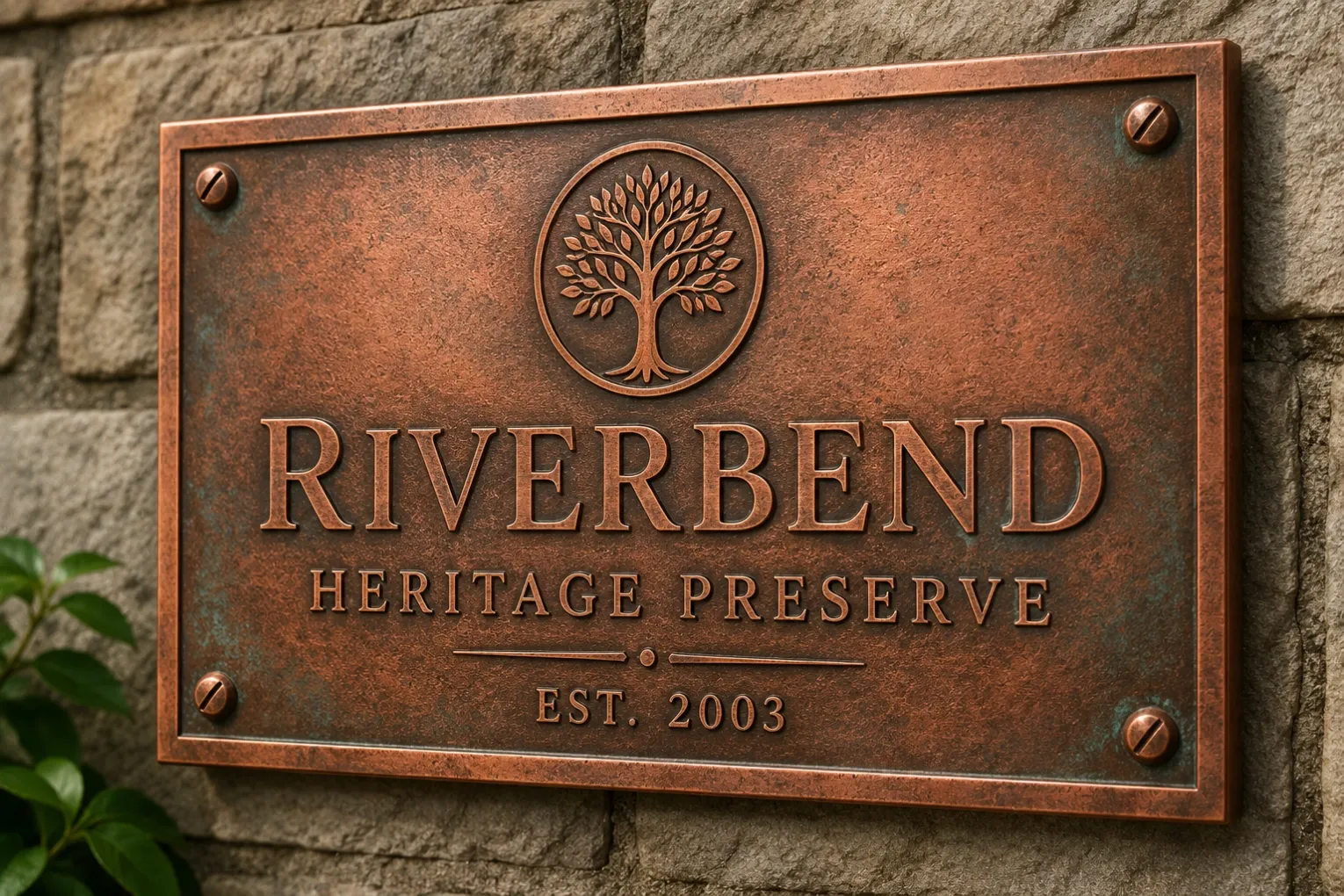
Copper has a recognizable reddish-orange appearance that immediately distinguishes it from brass and many bronze alloys.
It works particularly well for customers who want the material itself to become part of the design.
Copper can be used for:
- Artistic plaques
- Decorative wall plaques
- House nameplates
- Architectural signage
- Commemorative signs
- Custom relief artwork
One of copper's most interesting characteristics is how its appearance changes over time.
Depending on environmental exposure and finishing, the surface can gradually darken and eventually develop a patina. For some architectural projects, this natural aging is desirable rather than a defect.
This makes copper particularly attractive for designs where the customer wants the plaque to gain visual character as it ages.
Engraved Metal Plaques for Outdoors: Which Material Is Better?
There is no single material that is best for every outdoor plaque.
Instead, consider the intended appearance, location, manufacturing method and maintenance requirements.
Choose Brass When You Want:
A brighter gold-like appearance, fine engraving, decorative lettering and a polished architectural style.
Choose Bronze When You Want:
A traditional, substantial appearance for memorial, historical or institutional projects, particularly when casting and raised lettering are required.
Choose Copper When You Want:
A warmer reddish tone, natural surface variation and an artistic appearance that can evolve through oxidation and patination.
Outdoor performance also depends on much more than the base metal. Surface treatment, protective coating, installation method, local climate and maintenance all influence how a plaque will look after years of exposure.
Laser Engraved Metal Plaques: Does the Material Matter?
Yes.
When producing laser engraved metal plaques, the metal type, alloy composition, surface coating and laser system all affect the final result.
Laser marking, laser engraving and CNC engraving should not automatically be treated as the same process.
For deeper lettering or recessed graphics, CNC engraving may be more appropriate. For fine markings, serial numbers, logos or detailed surface graphics, laser processing may be considered depending on the material and required depth.
This is why a professional supplier should review the artwork and application before recommending a manufacturing method.
Does a Metal Plaque Engraving Machine Determine the Quality?
A metal plaque engraving machine is important, but the machine alone does not determine the quality of a finished plaque.
Professional plaque manufacturing also depends on:
- Correct alloy selection
- Artwork preparation
- Engraving depth
- Cutting accuracy
- Surface grinding and polishing
- Oxidation or patina control
- Paint filling
- Protective finishing
- Quality inspection
For relief plaques, another important factor is how well the manufacturer converts a flat design or photograph into a three-dimensional surface.
A powerful machine cannot compensate for poorly prepared artwork or an unsuitable material.
Brass vs Bronze vs Copper: Which Costs More?
It is tempting to simply ask whether brass, bronze or copper is cheaper, but this comparison can be misleading.
The final price of custom metal plaques is influenced by:
Material grade + plaque dimensions + thickness + manufacturing process + artwork complexity + surface finish + mounting system + quantity.
A small CNC-engraved brass plate, for example, should not be compared directly with a thick cast bronze memorial plaque.
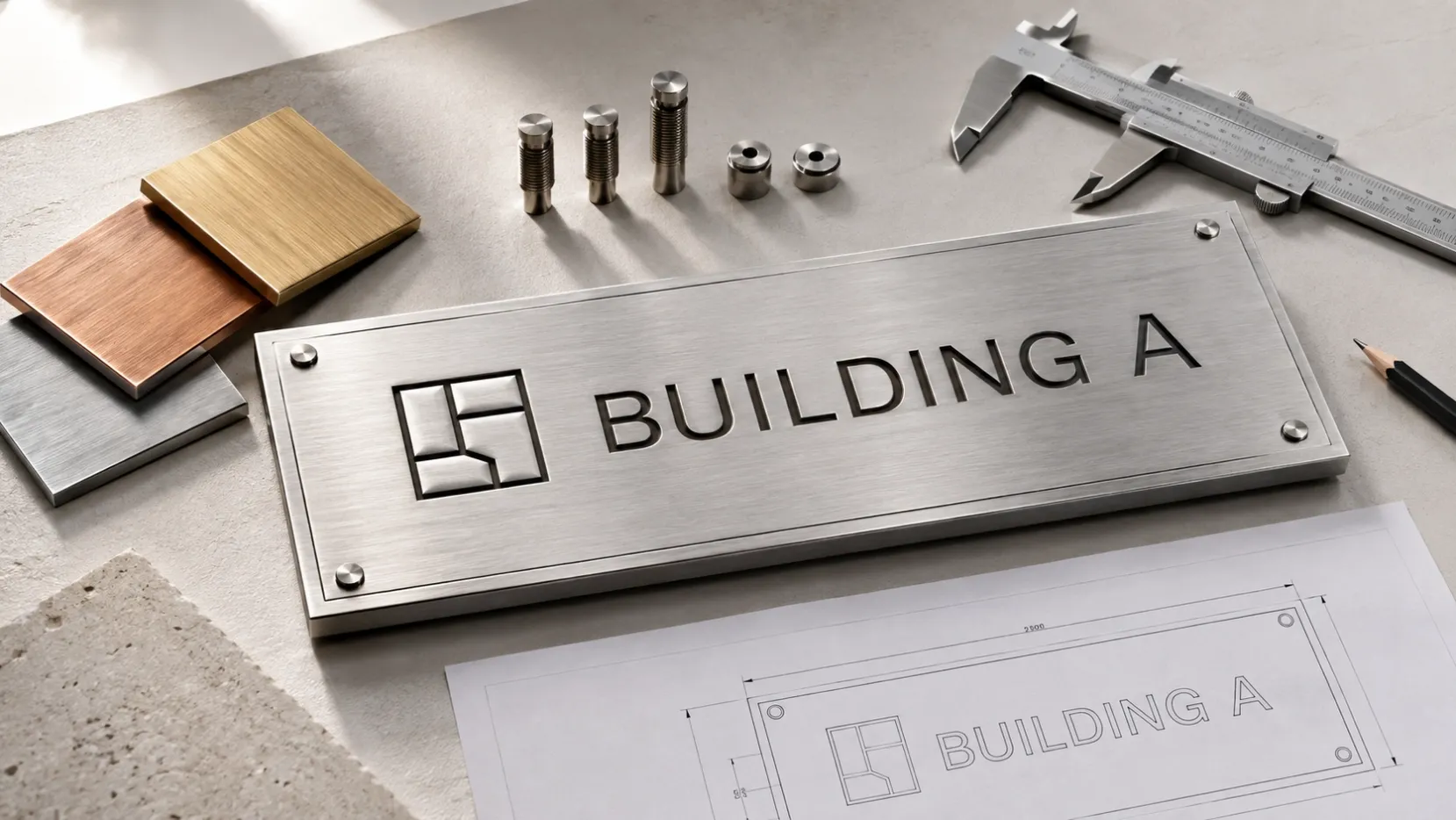
When requesting a quotation, provide at least:
- Length × width
- Thickness
- Preferred material
- Quantity
- Artwork or text
- Surface finish
- Installation method
- Indoor or outdoor application
These details allow a manufacturer to provide a much more accurate quotation.
Searching for “Metal Plaques Near Me”? Consider Manufacturing Capability Too
People searching for metal plaques near me often prioritize location because they want convenient communication, shorter lead times or easier installation.
Location matters, but for highly customized plaques, manufacturing capability can be equally important.
Before selecting a supplier, check whether they can provide:
- Custom dimensions
- Multiple copper alloy options
- CNC engraving
- Laser processing
- Relief manufacturing
- Casting
- Custom patina
- Paint filling
- Custom mounting
- Artwork confirmation before production
For international projects, requesting drawings, material specifications, finish samples and production photos can help reduce uncertainty before shipment.
How to Choose the Right Material for Your Custom Metal Plaque
If your priority is a bright decorative gold appearance, brass is often an excellent starting point.
If your project is a memorial, historical marker or traditional architectural plaque, bronze is usually worth considering.
If you want a warm, artistic surface with natural aging characteristics, copper can create a distinctive result.
But material should never be selected by color alone.
Thickness, engraving depth, casting requirements, installation environment and desired finish should all be considered together.
At KAIYUBANG, we manufacture customized metal plaques using different materials and processes according to the customer's artwork and application. Before production, dimensions, material, thickness, finish and mounting requirements can be confirmed to help ensure that the finished plaque matches the intended design.
Whether you need custom metal plaques, engraved metal plaques for outdoors, small metal plaque engraving or laser engraved metal plaques, selecting the right material is the first step toward a plaque that looks appropriate and performs well in its intended environment.