Oct 15, 2026 Choose Guiding
Custom Copper Plaque | Why Choose Copper Outdoors?
Explore how a custom copper plaque adds warmth and lasting character to outdoor spaces, with practical advice on patina, engraving, mounting, and care.

Custom Copper Plaque | Why Choose Copper Outdoors?
A custom copper plaque brings warmth, readable detail, and lasting character to an outdoor space. Whether it marks a front entrance, identifies a garden, or commemorates someone special, copper offers an appearance that develops with time.
Its appeal goes beyond its reddish metallic color. Copper does not form iron rust, complements natural building materials, and can develop a distinctive patina outdoors. Choosing it well, however, means understanding the material, finish, lettering, and installation.
Why Choose Copper for Outdoor Decoration?
Copper Does Not Rust Like Iron
Rust refers to the corrosion products associated with iron. Copper behaves differently: exposure to the atmosphere gradually changes its surface, often from warm metallic tones to brown and, under suitable conditions, greenish patina.
The Copper Development Association explains how outdoor copper patina and finishes develop through natural weathering.
That does not make copper immune to corrosion. Salt exposure, trapped moisture, cleaning chemicals, and contact with other metals can affect performance. A suitable material specification and installation still matter.
Warm Color Creates a More Considered Appearance
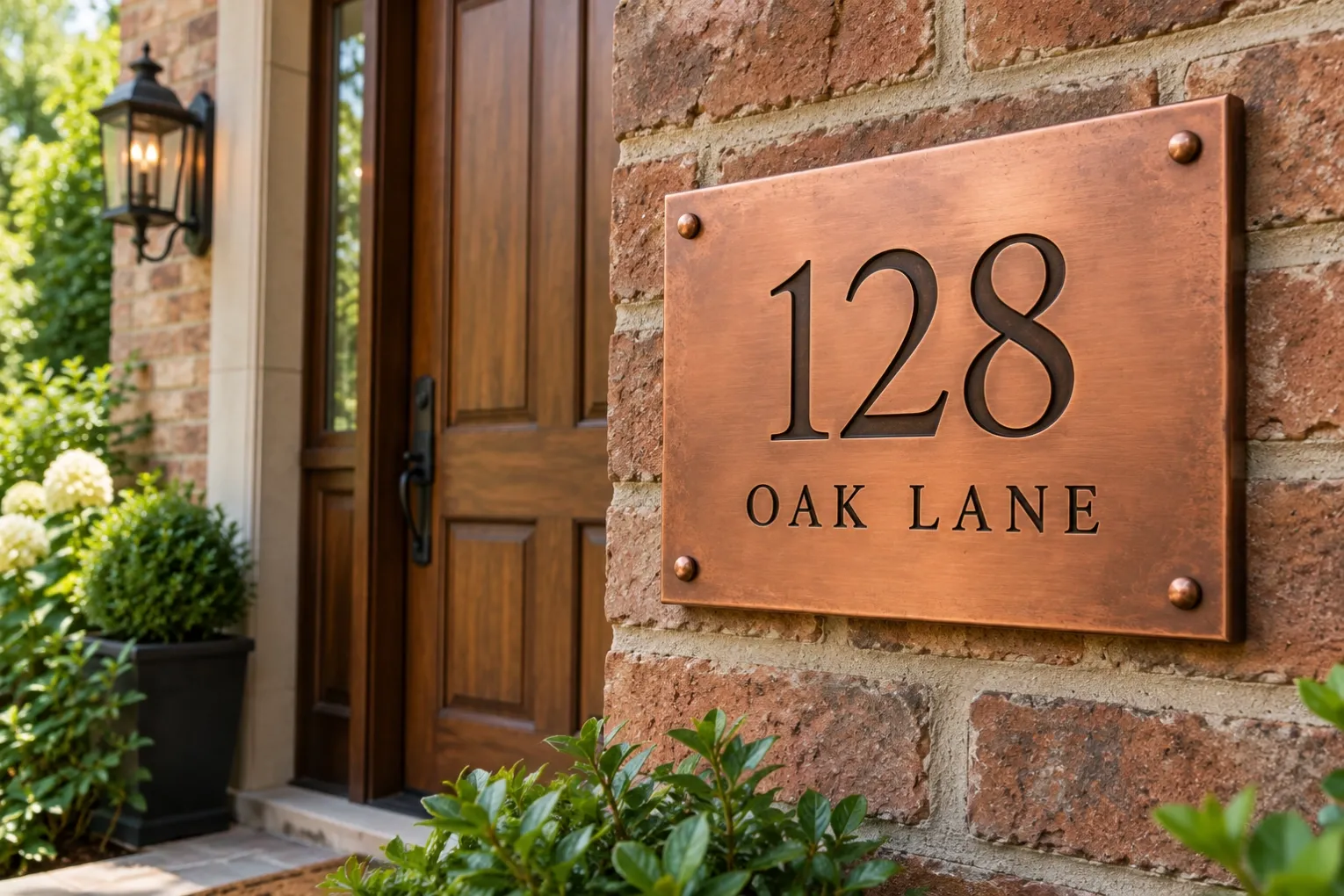
Copper's reddish tone works particularly well beside brick, timber, stone, and planting. It can make a small detail—such as an entrance sign or garden marker—feel intentional and substantial.
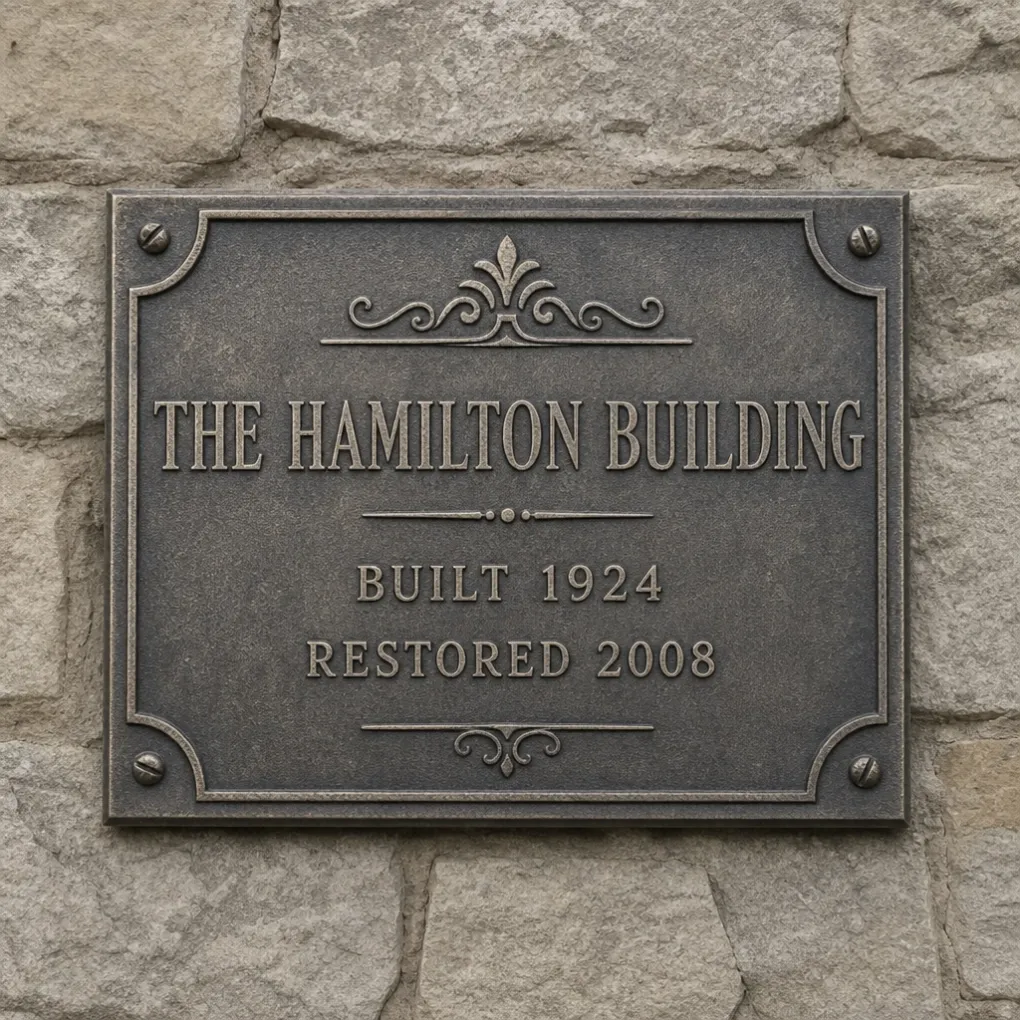
For a metal address plaque for house entrances, visual quality also depends on readability. Generous spacing, contrasting lettering, and a size suited to the viewing distance matter as much as the metal itself.
A polished surface creates a brighter accent. A brushed finish offers a softer appearance, while a darkened background can help lettering stand out.
Its Changing Surface Can Be Part of the Design
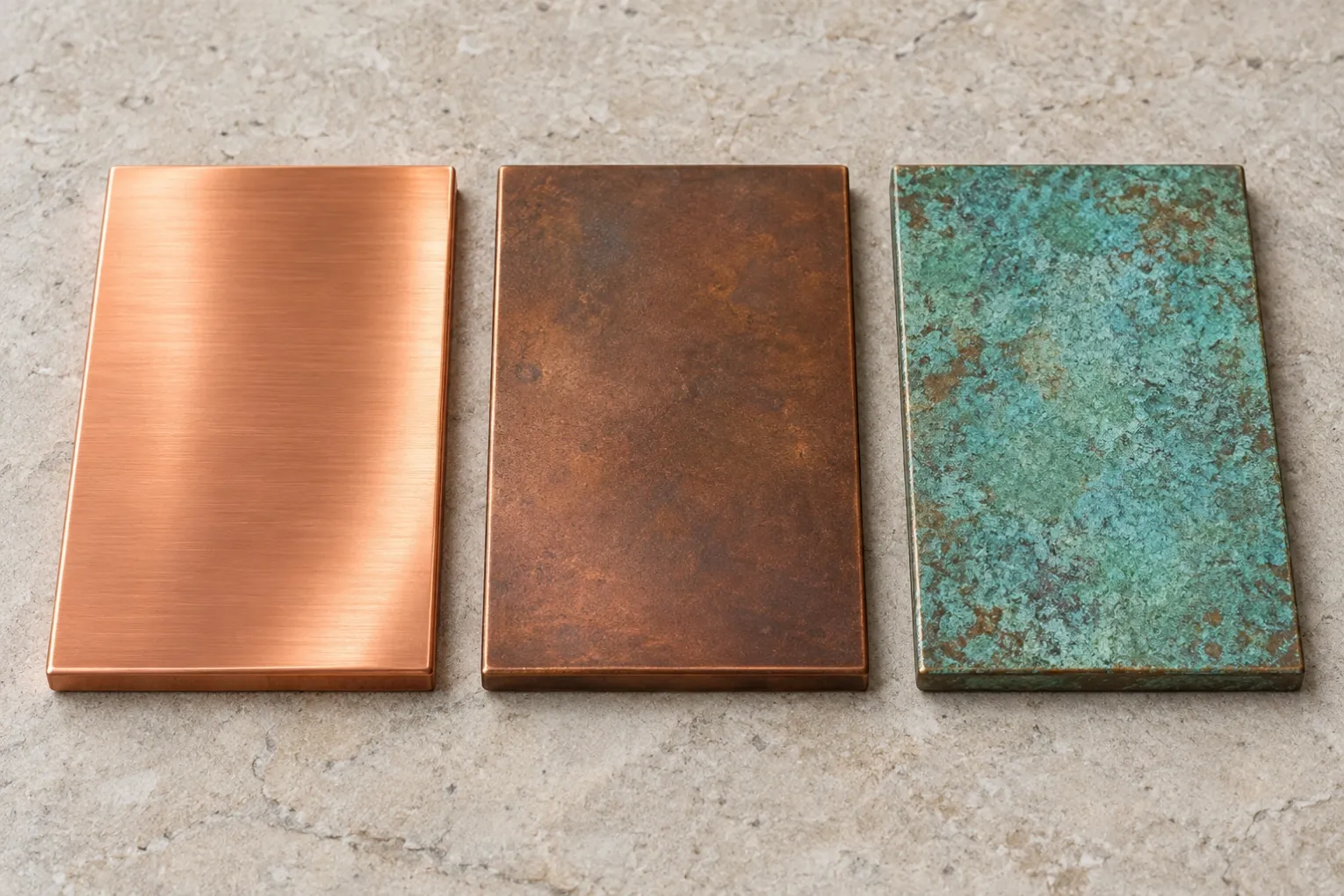
Copper suits spaces where natural aging is welcome. Rather than expecting the original color to remain unchanged, owners can choose a finish that complements the way the material will weather.
A custom plastic nameplate may be appropriate when low weight, color flexibility, or initial cost is the priority. Some plastics can fade or become brittle after prolonged exposure; outdoor-rated materials can perform differently. Ask about the exact substrate, UV resistance, and warranty before comparing options.
The useful comparison is between specified products—not simply “metal” and “plastic.”
Where a Custom Copper Plaque Works Best
House Numbers and Entrance Signs
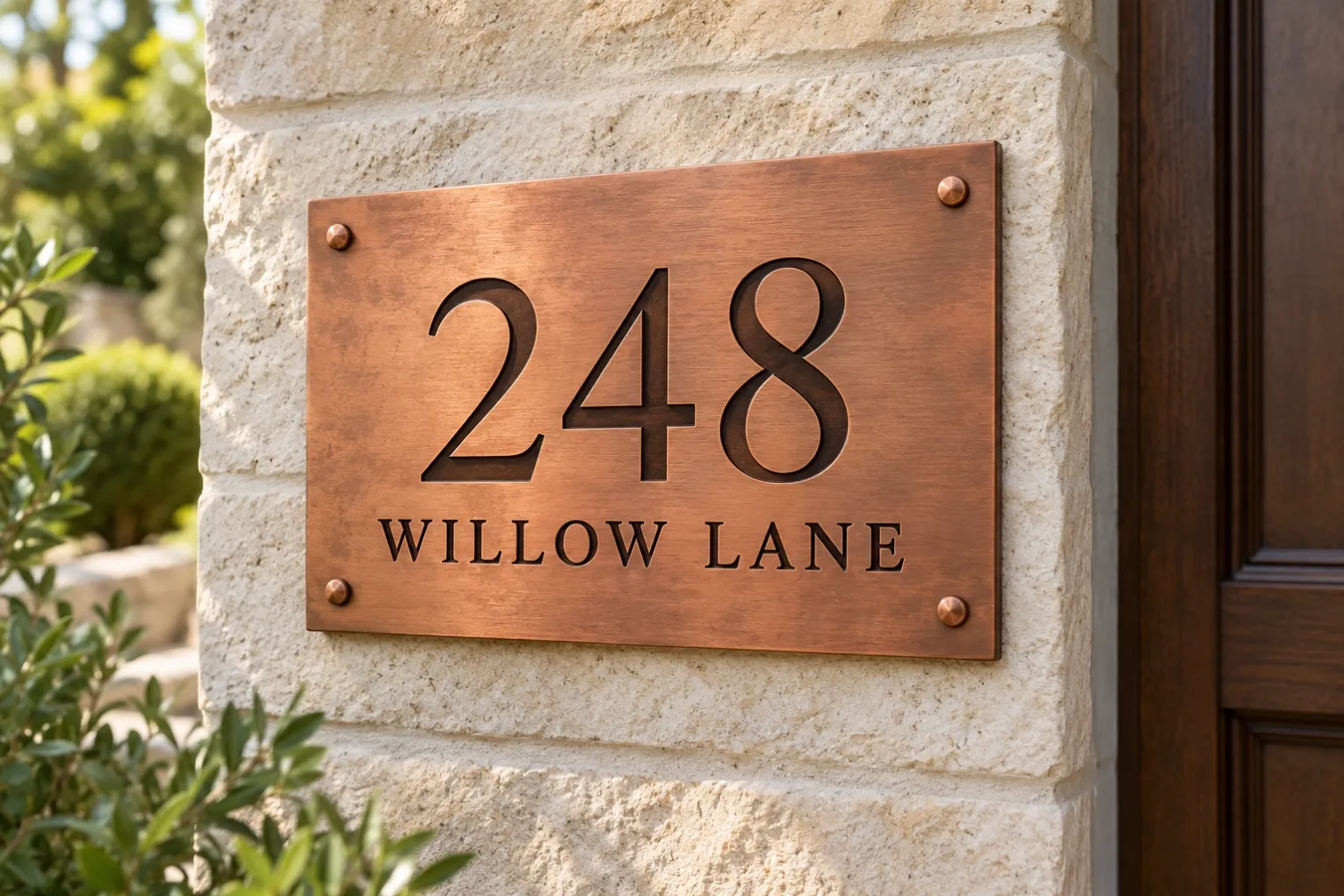
Copper can provide a warm focal point beside a doorway or on a boundary wall. Before ordering, consider:
- The distance from which visitors need to read the address.
- Contrast between the lettering and background.
- Available daylight and entrance lighting.
- Whether the mounting surface can support the plaque.
- Exposure to irrigation, roof runoff, or standing water.
Choose lettering for practical visibility first, then refine the decorative details.
Memorial Plaques for Garden Settings
Memorial plaques for garden spaces should sit comfortably within the landscape while remaining easy to read.
A brief inscription, clear dates, and restrained decoration often create a more personal result than a crowded design. A stone support or suitable stake can position the plaque above soil and vegetation.
Consider how planting will grow around it and whether sprinklers will repeatedly wet the surface. Allow enough access for gentle cleaning.
Decorative Furniture and Landscape Features
Copper details can also complement benches, gates, planters, and outdoor furniture. An engraved table detail, for example, might be a small dedication plaque attached to a garden table rather than engraving across its working surface.
For these applications, check edge finishing, attachment security, and exposure to repeated handling. Placement should support the way people use the object.
Copper, Bronze, or Cast Iron: What Is the Difference?
A copper-colored plaque is not necessarily solid copper. It may be bronze, brass, plated metal, or a coated substrate. Ask the supplier to identify the material precisely.
- Copper: Recognizable for its reddish tone and evolving surface appearance.
- Bronze: A family of copper alloys frequently used for cast lettering, relief details, and commemorative designs.
- Cast iron: A substantial option with a traditional appearance; protective coatings and their upkeep are important because iron can rust.
A cast iron plaque may suit a period property, while copper may better complement a warm, contemporary entrance. The choice should reflect the desired appearance, manufacturing method, and maintenance expectations.
The Copper Development Association's copper alloys for architectural plaques and decoration provides additional material-selection context.
Choosing Materials for Military and Commemorative Plaques
Military deployment plaques can record a unit, location, and period of service. Military memorial plaques serve a different purpose, honoring individuals or collective service. Both require careful review of names, dates, wording, and layout.
Bronze military plaques are worth considering when a design calls for cast relief, raised lettering, or detailed emblems. They should not be described as pure copper simply because bronze belongs to the copper-alloy family.
For military seal plaques, confirm that the artwork is accurate and that any necessary permissions have been obtained. Review a production proof before approving manufacture, including small lettering and emblem details.
What to Confirm Before Ordering
Material and Finish
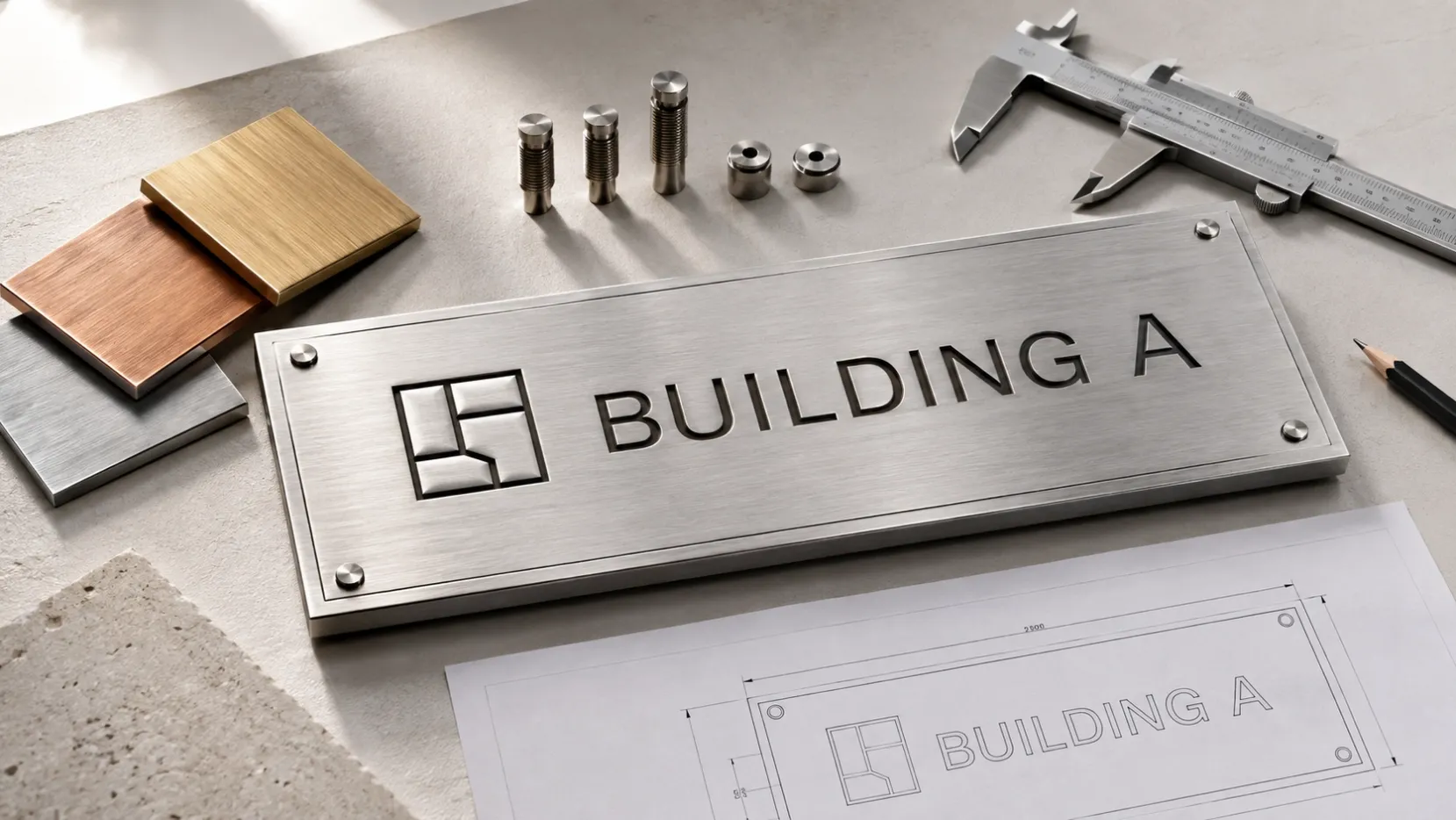
Ask whether the product is solid copper, a copper alloy, or a copper finish over another material. Confirm thickness, backing, and the intended outdoor application.
Decide whether you want natural weathering or a finish intended to preserve a particular appearance. Clear coatings can require maintenance; request the supplier's written care instructions.
Lettering and Artwork
Discuss engraving depth, lettering size, contrast, and any paint fill. Fine detail that looks attractive on a screen may be difficult to read from a path or driveway.
Request a proof showing the actual dimensions and verify every character before production.
Installation and Local Service
Specify the mounting surface and expected exposure. Ask the supplier to recommend compatible fixings and any isolation needed between different metals.
If your search begins with “metal plaques engraved dallas tx,” confirm that the provider offers the material and fabrication method you need. Local availability alone does not establish suitability for outdoor use.
Caring for an Outdoor Copper Plaque
Start with the manufacturer's instructions for the exact finish supplied.
- Remove loose dirt gently.
- Use approved mild cleaning products and soft materials.
- Avoid abrasive polishing unless it is appropriate for the finish.
- Inspect fixings and areas where moisture collects.
- Keep vegetation from obscuring the inscription.
Do not polish away a patina you intended to retain. Equally, do not assume that a coated plaque needs the same treatment as bare copper.
Choose Copper for the Way You Want Your Space to Age
A custom copper plaque offers warm color, distinctive surface character, and a lasting decorative presence when its specification suits the location.
The strongest result comes from matching the material to the setting: readable lettering for an entrance, thoughtful wording for a memorial, and a finish whose aging process you will enjoy. Before ordering, confirm the alloy, artwork, mounting method, and care requirements so the finished piece remains meaningful as its appearance evolves.