Aug 19, 2026 Choose Guiding
How Are House Numbers Assigned? | Kaiyubang
How are house address numbers assigned? Learn why street numbers follow patterns, why gaps occur, and what homeowners should know before ordering a sign.
How Are House Numbers Assigned? | Kaiyubang
Have you ever wondered why one home is 108 while the next property might be 112 instead of 110? House address numbers may look simple, but they form part of a larger addressing system designed to distinguish properties and support navigation, delivery and identification.
Understanding the system is particularly important before ordering custom house numbers or permanently installing an address plaque.
Who Assigns House Numbers?
The relevant local authority determines or administers property addresses according to the jurisdiction's addressing system.
The exact authority and method vary by country, city and county, so you should verify your official address locally before manufacturing permanent signage.
In the United States, USPS addressing standards describe the primary address number as part of the delivery address line, along with elements such as the street name and suffix.
USPS standardizes addresses for mailing purposes, but this should not be confused with assuming that every street number nationwide is created by one identical local numbering formula.
Why Do Odd and Even Address Numbers Appear on Opposite Sides?
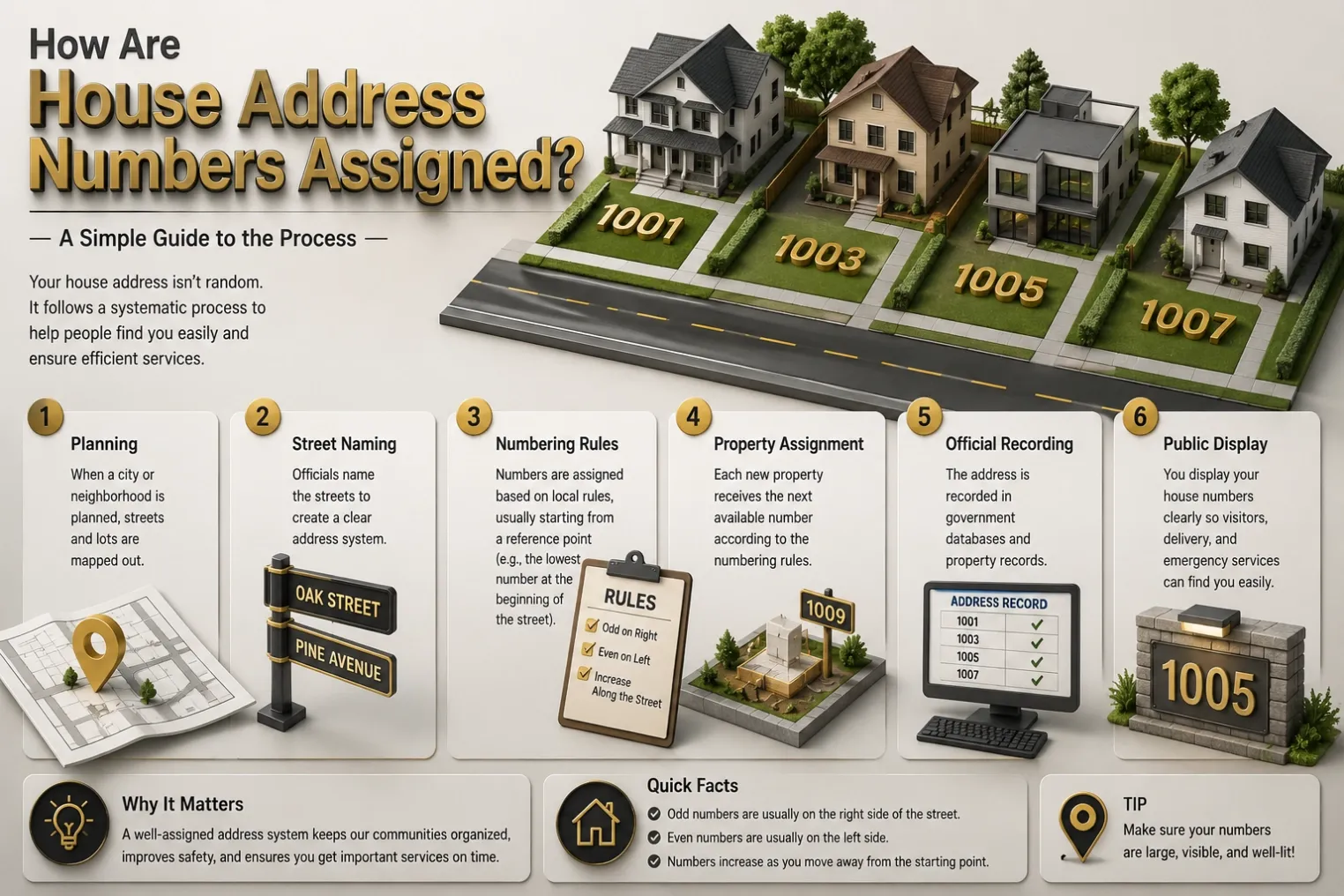
One of the most familiar road-numbering patterns separates odd and even address numbers onto opposite sides of a street.
For example, you might see:
101 – 103 – 105 – 107
on one side and:
102 – 104 – 106 – 108
on the other.
This creates a predictable sequence that makes properties easier to locate.
However, numbering conventions can differ by jurisdiction, and irregular streets, rural properties, redevelopment and subdivisions can create exceptions.
Why Are Some House Numbers Missing?
You may see 20, 24 and 28 without finding 22 or 26.
That does not necessarily mean properties disappeared.
Numbering systems may deliberately leave room between address numbers for homes so that future parcels, new buildings or subdivisions can be accommodated.
Changes to lots can also create unusual sequences.
For example, one large property may eventually become several smaller properties.
A numbering system with available intervals can accommodate that growth more easily.
Why Do Some Addresses Include Letters?
Sometimes house numbers and letters are used when several properties must be distinguished within an existing numbering sequence.
You might encounter:
12A
12B
12C
or another locally accepted variation.
USPS Publication 28 recognizes that house numbers can include alphabetic or fractional components in certain address formats.
This is one reason your physical house number letters and numerals should reproduce the officially recognized address rather than a version chosen only for appearance.
What About Fractional House Numbers?
Fractional addresses such as 33½ also exist.
USPS standards specifically recognize fractional address formats and punctuation associated with them.
If your official address contains a fraction, the physical home address numbers should present it clearly.
Turning a complex official number into an overly artistic design can create unnecessary confusion.
How Do Rural Address Numbers Work?
Rural addressing may operate differently from dense urban street numbering.
Depending on the jurisdiction, the number can relate to an established addressing grid, road position or another local system.
This is why a property on a long rural road might have a much larger number than a property in a compact neighborhood.
For homeowners, the practical lesson is straightforward:
Never assume that a large number is arbitrary.
Confirm the officially assigned numbers for house address before ordering permanent metal signage.
Street Number Signs vs. House Number Signs
Although they sound similar, street number signs and house identification signs can serve different purposes.
A street sign identifies a street or road.
A house number sign identifies an individual property.
A residential sign may contain only a number:
428
or combine the number and street information:
428 MAPLE ROAD
The second format can be useful for larger properties, villas, gated entrances and locations where the main building is far from the roadway.
Why Correct Address Numbers Matter
Good address numbers for a house perform several functions simultaneously.
They help visitors locate the property, support deliveries, provide a consistent identity and reduce confusion between neighboring buildings.
Readability therefore matters as much as style.
Your official number might be 1628, but if your decorative typography makes the 6 resemble an 8, the design is not doing its job.
Turning an Assigned Number Into a Design Feature
You usually cannot choose your official address simply because another number looks better.
But you can choose how your numbers house address are presented.
That opens significant design possibilities:
floating metal numerals, raised letters, engraved plaques, cut metal signs, brushed stainless steel, bronze-style finishes and contemporary black address panels.
This is where personalized house numbers become useful.
The address remains accurate while the presentation reflects the architecture.
Custom House Number Manufacturing
For a custom project, begin with four pieces of information:
- Official address
- Desired dimensions
- Installation surface
- Preferred material and finish
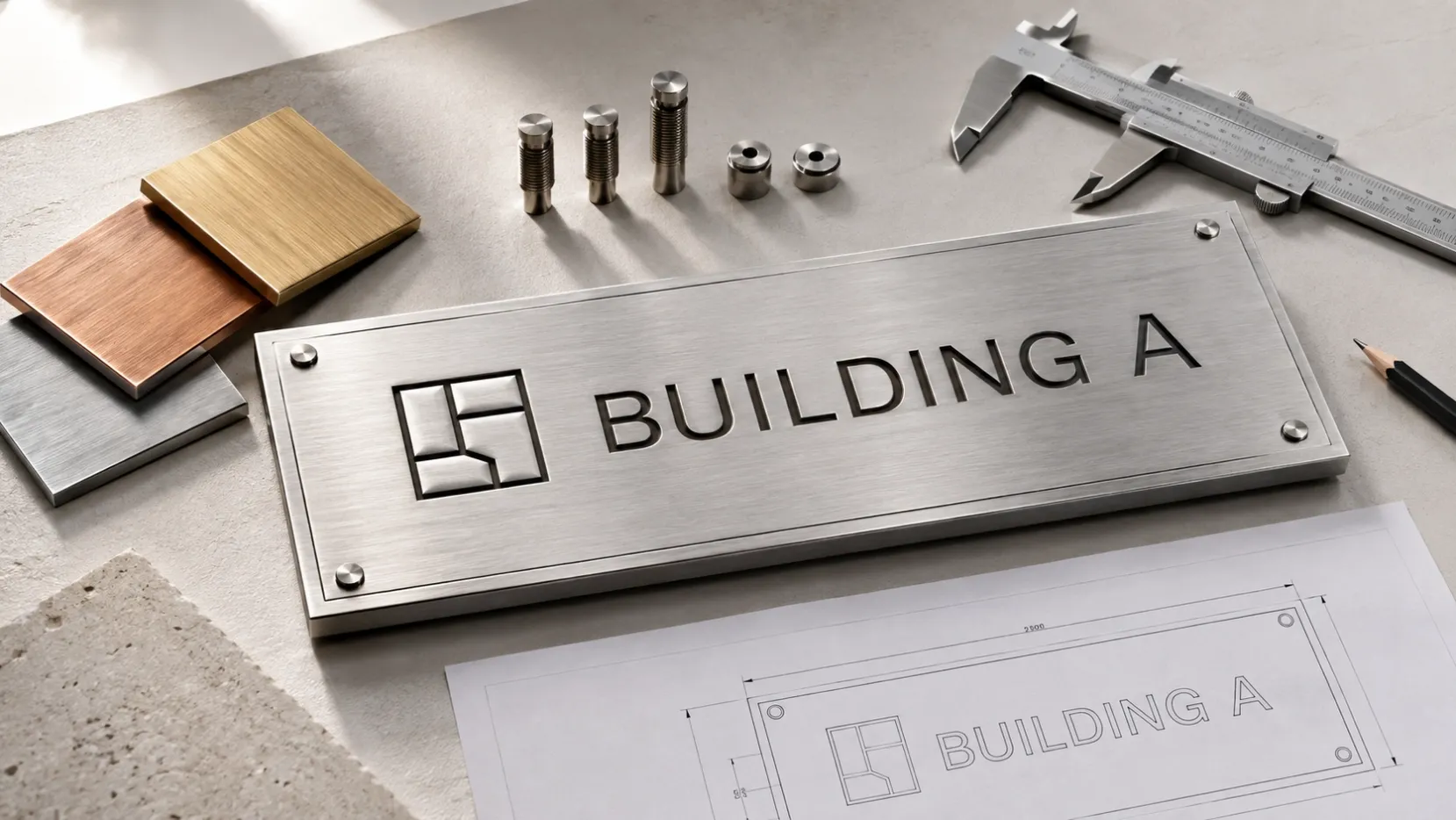
A manufacturer can then develop the custom house number into a production drawing before fabrication.
This is particularly valuable for architects, builders, property developers and signage companies that need consistent address systems across several buildings.
Conclusion
House address numbers are more than decorative digits attached to a wall. They belong to an organized property identification system whose exact rules depend on the local jurisdiction.
Before ordering a permanent house number plate or custom metal sign, verify the official address first.
Once the number is correct, materials, typography, spacing and finishes can transform those functional digits into a distinctive architectural feature.