Aug 21, 2026 Choose Guiding
Metal Plaques Uses | 6 Popular Applications - Kaiyubang
Discover 6 popular uses of metal plaques, from building identification and address signs to recognition, historical markers, memorials, and branded displays.
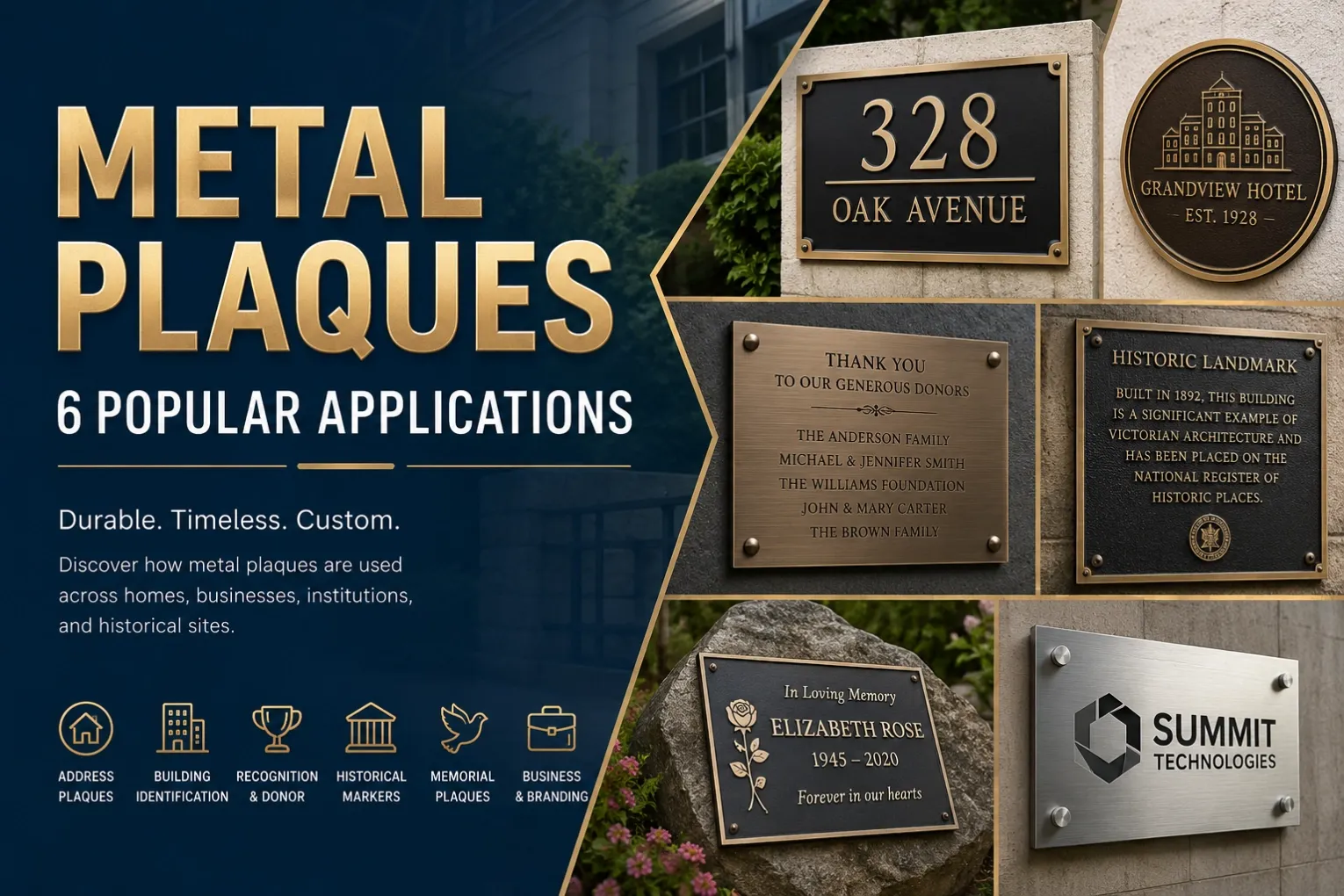
Metal Plaques Uses | 6 Popular Applications - Kaiyubang
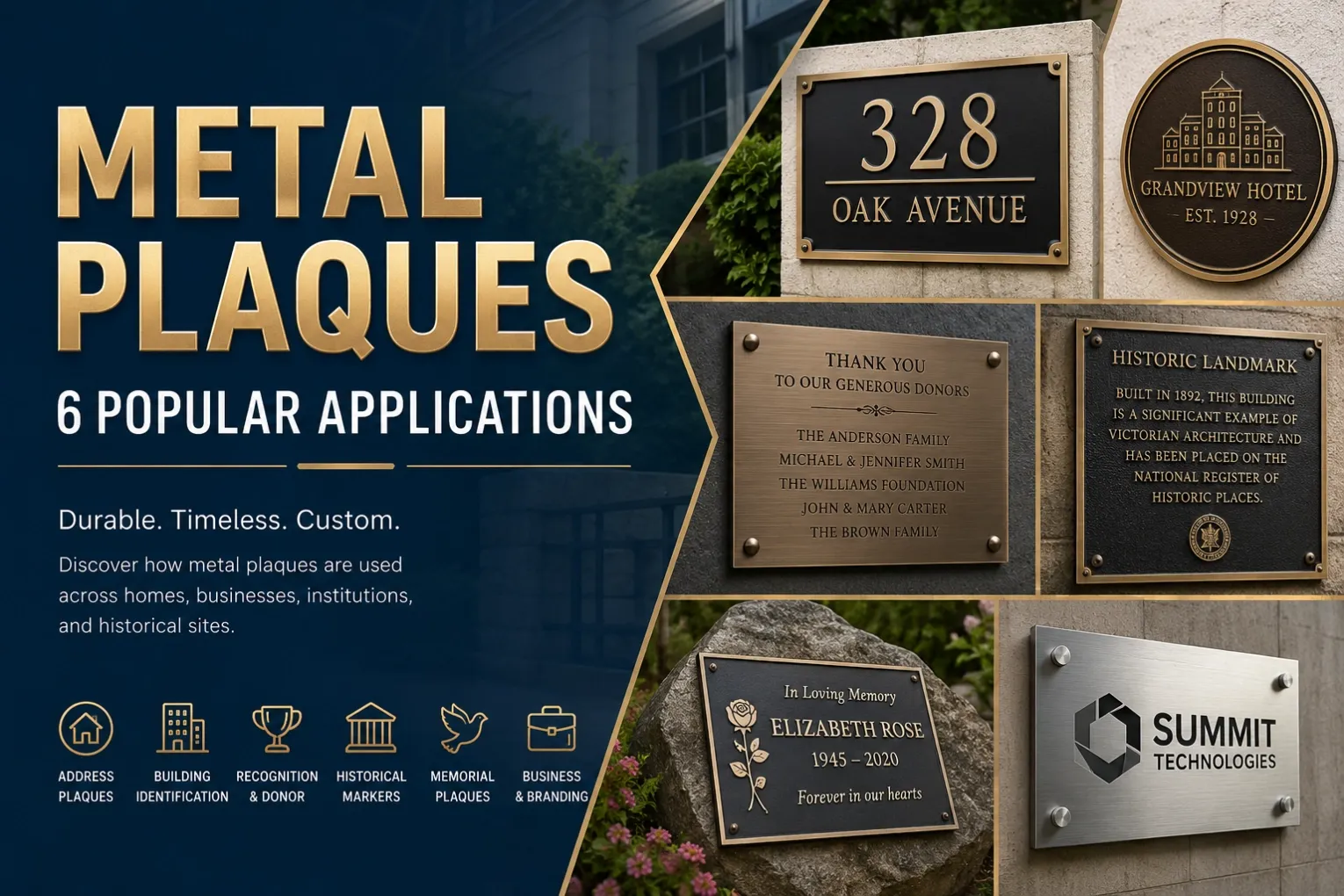
Meta Description:
Discover 6 popular uses of metal plaques, from building identification and address signs to recognition, historical markers, memorials, and branded displays.
Metal plaques are used wherever information, identity, recognition, or history needs to be displayed in a durable and professional way. From a metal address plaque outside a villa to engraved plaques installed on buildings, donor walls, hotels, institutions, and historical sites, metal offers a combination of durability, customization, and visual value.
Unlike temporary printed signs, a custom metal plaque can be designed around a specific environment, architectural style, message, logo, or installation method. Materials such as bronze, brass, aluminum, copper, and stainless steel also allow buyers to balance appearance, outdoor performance, manufacturing process, and budget.
Below are six of the most common application scenarios for metal plaques and what buyers should consider for each one.
1. Metal Address Plaques for Homes, Villas, and Properties
One of the most practical applications is property identification.
A metal address plaque can display a house number, street name, villa name, family name, apartment number, or property entrance information. These plaques are commonly installed beside entrance doors, on exterior walls, gates, stone columns, fences, and driveway entrances.
For homeowners, architects, builders, and property managers, the plaque is not simply an address marker. It becomes part of the exterior design.
What Matters for Metal Address Plaques?
- Viewing distance and character size
- Contrast between text and background
- Rain and UV exposure
- Wall or gate material
- Mounting method
- Architectural style
- Metal finish and surface texture
For example, brushed stainless steel works naturally with modern architecture, while antique brass or bronze can complement traditional villas and heritage-style properties.
For customized projects, plaque engraving, CNC machining, etched lettering, raised lettering, or relief processes can be selected according to the desired visual depth.
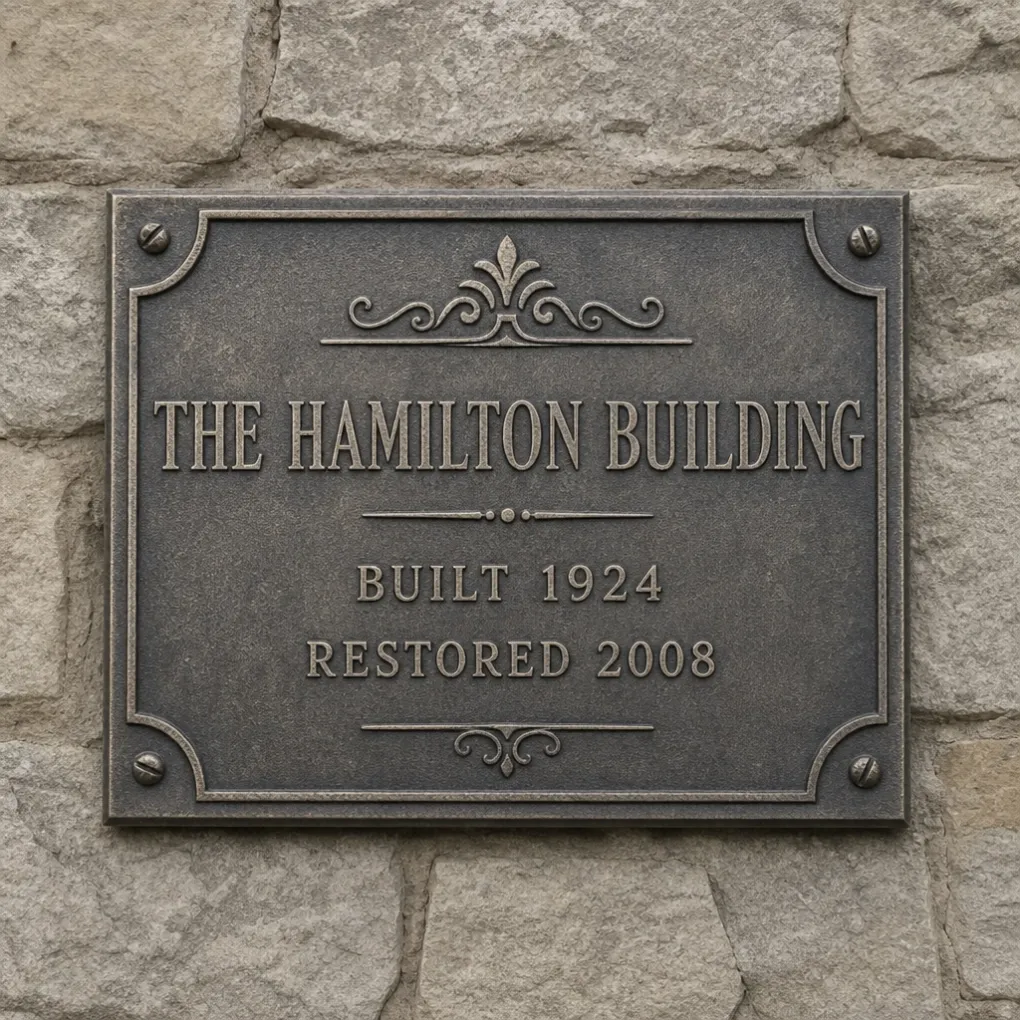
2. Engraved Metal Plates for Buildings and Architectural Identification
Commercial and public buildings often require permanent identification that looks more architectural than a printed sign.
An engraved metal plate may include:
- Building name
- Construction date
- Architect or developer
- Property information
- Room identification
- Facility information
- Opening or dedication information
This is where engraved metal plates and architectural plaques are especially useful.
A hotel, office building, school, museum, church, residential development, or commercial property may require plaques that remain visually consistent with the building for years.
Choosing the Right Engraving Process
Different projects require different forms of metal plaque engraving.
CNC engraving creates physical depth in the metal and works well when customers want strong, permanent lettering. Chemical etching is suitable for detailed graphics and relatively fine text. Laser marking works particularly well with certain stainless steel and coated-metal applications.
Raised lettering and cast relief can create greater dimensional impact for entrance plaques and architectural installations.
For permanent room and space identification in the United States, accessibility requirements may also need to be considered. ADA standards include specifications relating to tactile characters, Braille, contrast, non-glare finishes, and sign installation.
3. Recognition and Donor Metal Plaques
Recognition is another major application of metal custom plaques.
Companies, universities, hospitals, nonprofit organizations, clubs, associations, foundations, and community projects often need permanent plaques to acknowledge contributions or achievements.
Common examples include:
- Donor recognition plaques
- Sponsorship plaques
- Corporate recognition plaques
- Achievement plaques
- Dedication plaques
- Project completion plaques
- Award displays
- Founder recognition plaques
A donor wall, for example, may contain dozens or even hundreds of individual engravable plaque units. In this situation, consistency becomes extremely important.
The manufacturer must control dimensions, finish, typography, mounting positions, and engraving depth across multiple pieces.
Why Customization Matters
Recognition projects rarely use exactly the same information.
Names, dates, titles, logos, and messages can change from one plaque to another. Therefore, buyers often need custom metal plaques that share the same overall design while allowing variable text.
For organizations ordering repeatedly, keeping artwork specifications and production standards consistent can make future additions easier.
4. Historical Markers and Interpretive Engraved Plaques
Metal is also widely used to communicate the history of buildings, locations, events, and cultural sites.
Historical engraved plaques may appear at:
- Historic buildings
- Heritage properties
- Museums
- Parks
- Cultural attractions
- Historic districts
- Public spaces
- Architectural landmarks
These plaques can display dates, maps, historical descriptions, illustrations, portraits, or information about the significance of a site.
The U.S. National Park Service, for example, uses bronze plaques in its National Historic Landmark and National Natural Landmark programs. NPS guidance also discusses the care and preservation of outdoor bronze plaques.
Why Bronze Is Common for Historical Plaques
Bronze is closely associated with architectural and historical markers because it can be cast into detailed shapes and develops a distinctive surface character over time.
According to National Park Service preservation information, historic bronze markers have traditionally been produced through casting processes. For outdoor installations, however, environmental exposure still matters, and even durable metal surfaces require appropriate maintenance.
This means buyers should evaluate the environment before specifying an engraved plaque or cast plaque.
Salt air, industrial pollution, moisture, direct sunlight, and temperature changes can all influence long-term appearance.
Suggested External Resource:
U.S. National Park Service — Materials and Monuments
5. Metal Memorial Plaques for Long-Term Commemoration
A metal memorial plaque is designed to preserve a name, message, date, or story in a physical form.
Typical applications for metal memorial plaques include memorial gardens, commemorative walls, benches, trees, community spaces, institutions, churches, and private remembrance projects.
Because many of these plaques are installed outdoors, material and finish selection are especially important.
What Should Buyers Consider?
When designing a memorial plaque, buyers should consider:
- Indoor or outdoor installation
- Climate and environmental exposure
- Required lifespan
- Text quantity
- Portrait or image requirements
- Metal thickness
- Surface finish
- Mounting method
- Cleaning and maintenance
Bronze is frequently selected for traditional commemorative projects, while stainless steel can create a cleaner contemporary appearance.
A personalized metal memorial plaque can also incorporate engraved portraits, logos, decorative borders, symbols, raised letters, or relief artwork.
For portrait projects, the quality of the source photograph is particularly important because image resolution influences how much detail can be reproduced during engraving or relief production.
6. Custom Metal Plaques for Hotels, Businesses, and Brands
The sixth major application is commercial branding.
Hotels, restaurants, offices, wineries, boutiques, clubs, real estate developments, factories, and premium retail environments often use metal plaque custom solutions to communicate their brand in a more permanent way.
Applications can include:
- Company logo plaques
- Reception signs
- Hotel room plaques
- Door plaques
- Product information plates
- Winery plaques
- Brand story plaques
- Office nameplates
- Equipment identification plates
Here, the goal is not simply to engrave a plaque. The metal surface becomes part of the customer's brand presentation.
Matching the Plaque to the Brand
A luxury hotel might prefer brushed brass with recessed black lettering. A modern technology company might select stainless steel with precise plaque engraving. A winery may prefer antique bronze or copper because the warmer surface can complement wood, stone, barrels, and traditional interiors.
This is why plaques and engraving should be considered together with architecture and branding rather than treated as separate decisions.
How to Choose the Right Metal Plaque
The six applications above have different requirements, but most buyers can start by answering four questions.
Where Will the Plaque Be Installed?
Indoor installations allow more flexibility. Outdoor plaques need greater attention to corrosion resistance, UV exposure, rain, temperature, and mounting.
What Information Will Be Displayed?
Simple text may only require standard engraving. Logos, portraits, illustrations, maps, and detailed decorative patterns may require CNC engraving, etching, casting, relief, or a combination of processes.
What Appearance Does the Project Need?
Material influences the visual result.
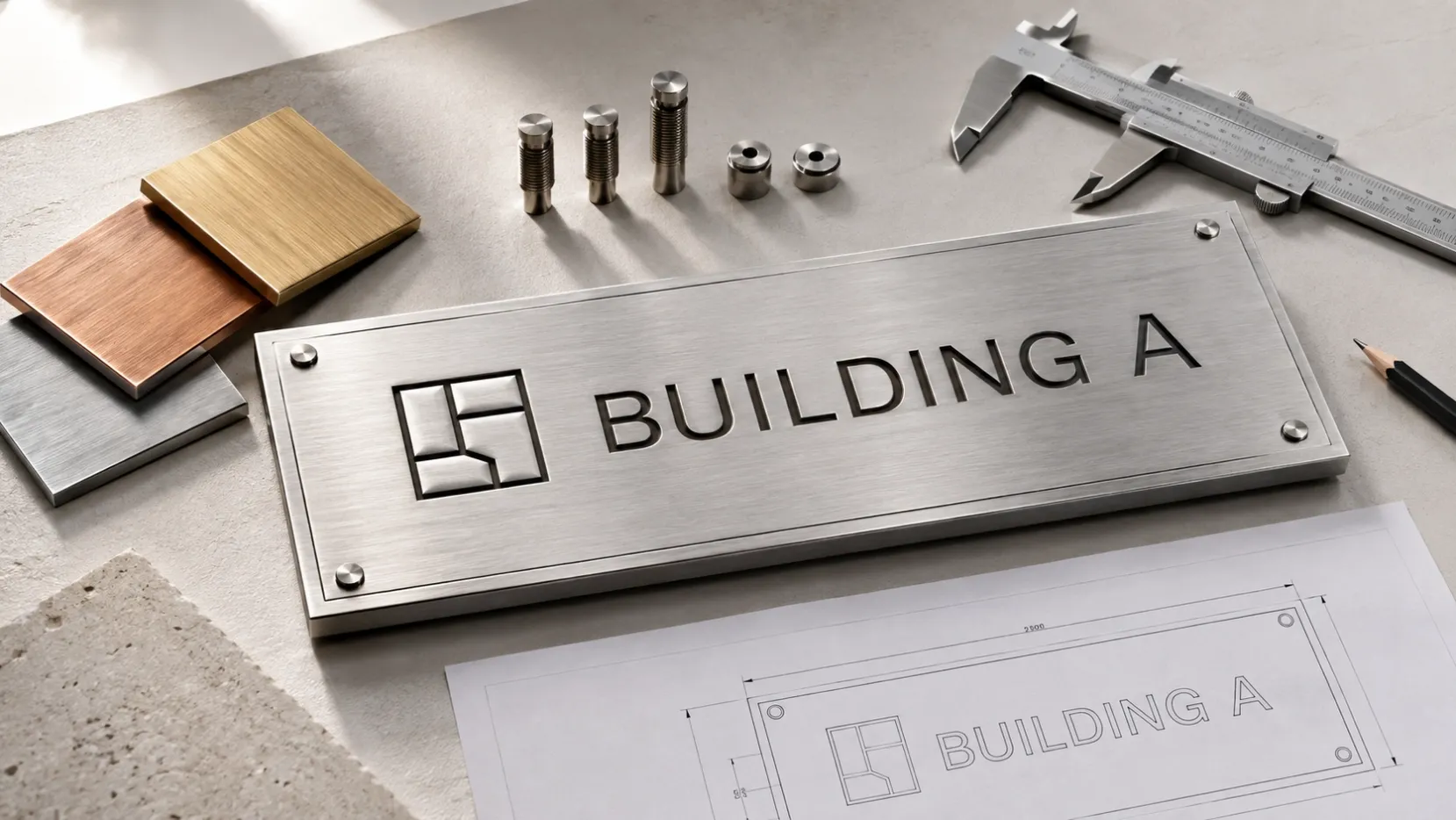
Bronze and brass offer warm, traditional appearances. Stainless steel provides a clean architectural look. Aluminum offers relatively low weight and flexibility. Copper provides a distinctive surface that can change naturally as it ages.
How Will the Plaque Be Installed?
Common mounting options include screws, studs, concealed studs, adhesive mounting, standoffs, and custom brackets.
Installation should be considered during the design stage rather than after manufacturing because mounting holes, studs, recesses, and backing structures can affect the plaque itself.
Metal Plaque Materials and Typical Applications
Material | Common Applications | Visual Character |
|---|---|---|
Bronze | Historical, memorial, architectural plaques | Traditional and substantial |
Brass | Hotels, offices, luxury interiors | Warm and decorative |
Stainless Steel | Buildings, addresses, corporate signage | Modern and clean |
Aluminum | Identification and commercial signage | Lightweight and versatile |
Copper | Decorative and architectural plaques | Warm, distinctive aging surface |
Material alone does not determine durability. Thickness, finish, coating, installation environment, manufacturing process, and maintenance should all be evaluated together.
From Artwork to Finished Metal Plaque
A successful custom metal plaque project usually starts with accurate artwork and installation requirements.
The typical workflow includes artwork preparation, material selection, size and thickness confirmation, engraving or relief production, surface finishing, coloring, quality inspection, and mounting preparation.
For engraving plaques, customers should ideally provide vector artwork for logos and clear text files for inscriptions. High-resolution images are recommended when portraits or detailed artwork need to be converted into engraved metal surfaces.
This preparation reduces unnecessary revisions and helps the manufacturer reproduce the intended design more accurately.
Conclusion
From a simple metal address plaque to architectural identification, donor recognition, historical interpretation, metal memorial plaques, and branded commercial signage, metal plaques can serve both functional and decorative purposes.
The right solution depends on more than appearance. Material, engraving process, environment, mounting, readability, dimensions, and long-term maintenance all influence the finished result.
For buyers considering metal custom plaques, defining the application first makes material and process selection much easier. A well-designed metal plaque should communicate information clearly while becoming a natural part of the building, landscape, or brand environment.