Aug 17, 2026 Choose Guiding
Outdoor House Number Signs: Materials & Design Guide
Learn how to choose outdoor house number signs by climate, visibility, home style, metal finish and installation for a durable customized entrance.
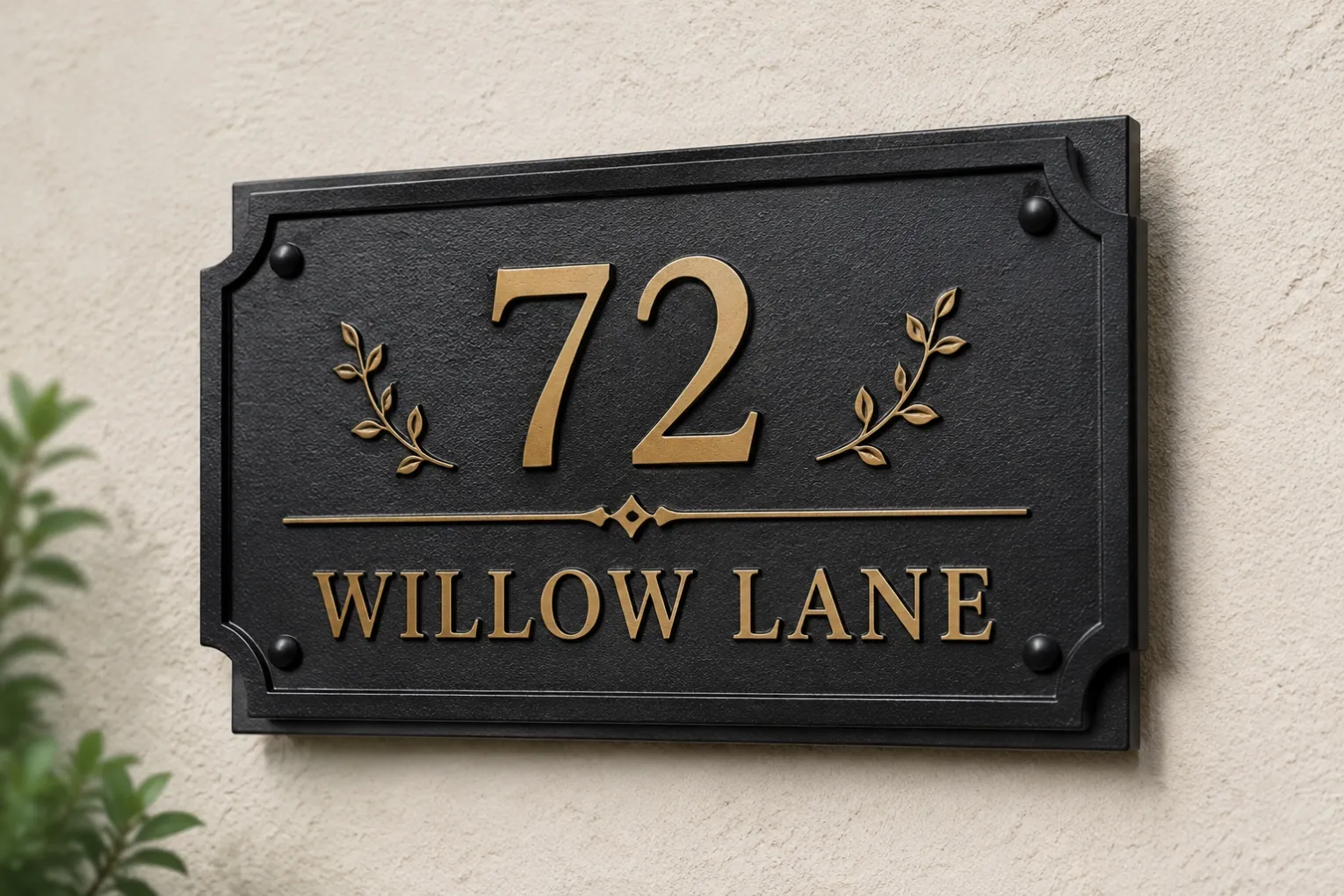
Outdoor House Number Signs: How to Match Climate, Architecture and Design
A good house number sign should answer three questions immediately:
Can visitors see it? Does it suit the building? Can it withstand the environment?
This is why selecting house number signs should not begin with a font or decorative pattern. It should begin with the property itself.
A modern city residence, a coastal villa, a countryside home and a traditional estate experience very different environmental conditions and have different architectural identities.
The best custom house number signs are designed around those differences.
Start with the Installation Location
Before choosing the material, determine exactly where the plaque will be installed.
Common locations include:
- Exterior wall
- Entrance gate
- Stone pillar
- Garden wall
- Fence
- Front door
- Freestanding post
This decision affects size, thickness, mounting and material selection.
For example, house number signs for yard installations may need larger numbers because they are viewed from farther away, while a plaque beside a front door can use smaller, more detailed typography.
Visibility Comes Before Decoration
One of the most common mistakes in house sign design is focusing on decoration while ignoring readability.
A visitor should not have to stop and search for the address.
Three factors determine visibility.
1. Viewing Distance
The farther the sign is from the road or pedestrian path, the larger the numbers should be.
2. Color Contrast
Examples of strong combinations include:
- Black numbers + brushed stainless steel
- Silver numbers + black background
- Brass numbers + dark iron
- Bright copper details + dark patina
Contrast is particularly important for exterior house number signs viewed in changing daylight.
3. Nighttime Conditions
Consider how the entrance looks after sunset.
Possible solutions include:
- Exterior wall lighting
- Backlighting
- LED illumination
- Solar lighting
A solar powered house number sign can be useful for locations where running electrical cables is impractical, provided the solar panel receives adequate daylight.
Choose a Material That Matches the Architecture
Material selection should reinforce the visual language of the building.
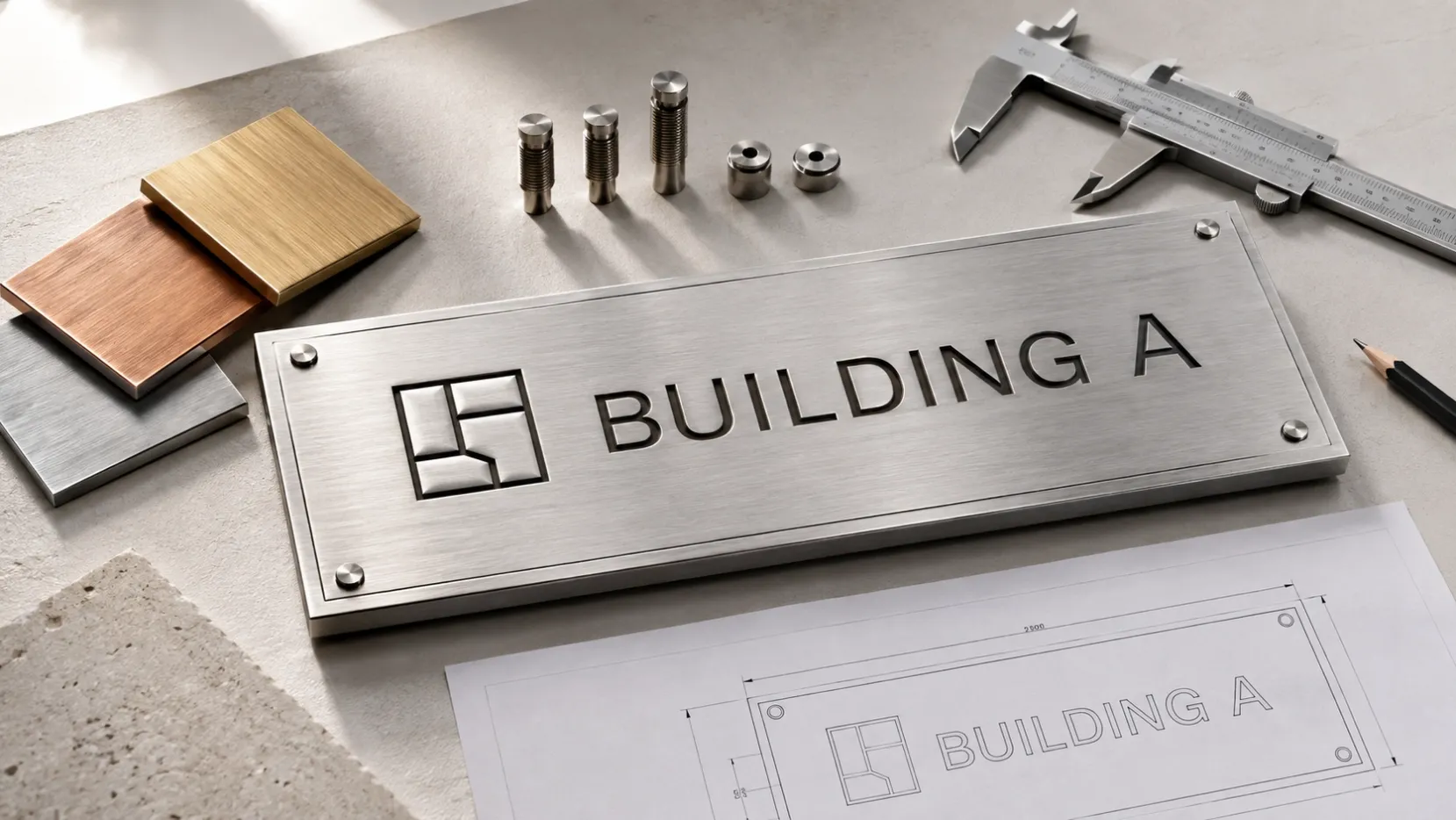
Modern Homes: Stainless Steel
Minimalist homes often feature:
- Concrete
- Glass
- Stone
- Black frames
- Straight architectural lines
Brushed stainless steel complements these materials naturally.
A rectangular stainless steel metal sign with large numbers and limited decoration can create a clean architectural statement without competing with the façade.
Contemporary Projects: Aluminum
Aluminum works especially well when architects need flexibility in shape or color.
Powder-coated aluminum can be produced in:
- Black
- White
- Gray
- Bronze tones
- Custom architectural colors
Because aluminum is relatively lightweight, it can also be useful for larger wall-mounted designs.
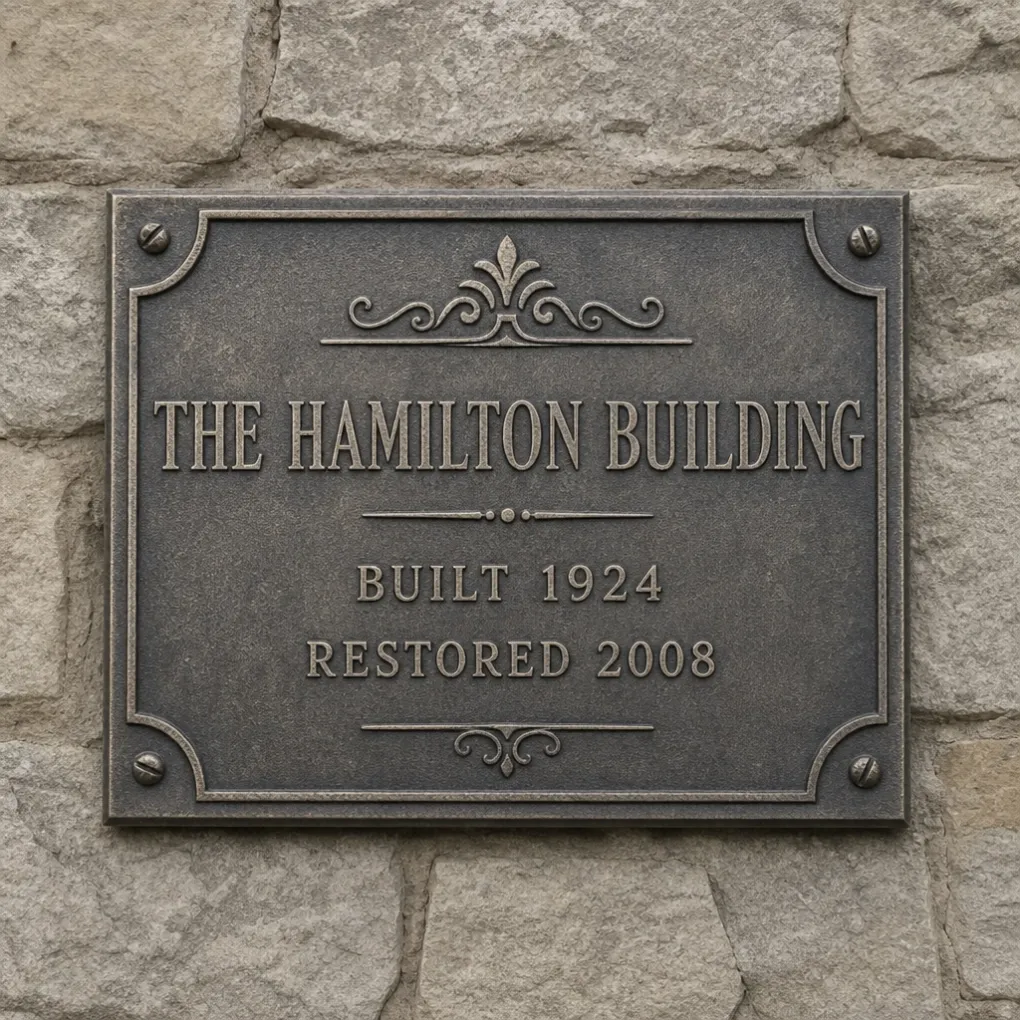
Traditional Homes: Iron
Iron introduces visual weight and heritage character.
A black iron plaque with raised gold numbers can complement:
- Brick walls
- Natural stone
- Traditional gates
- Classical landscaping
- European-inspired architecture
Decorative borders and relief patterns can further strengthen this traditional aesthetic.
Luxury and Heritage Properties: Copper
Copper has an unmistakable visual identity.
Its warm tone works particularly well with:
- Natural stone
- Dark timber
- Traditional masonry
- Luxury entrance gates
- Heritage-inspired architecture
An aged copper family plaque can communicate permanence and history in a way that a highly polished modern material may not.
Why Custom Metal Plaques Work Well Outdoors
The value of custom metal plaques lies in the combination of durability and manufacturing flexibility.
Metal can be:
- Cut into custom shapes
- Engraved
- Etched
- Embossed
- Carved in relief
- Polished
- Brushed
- Antiqued
- Powder coated
This allows the same basic product to serve very different architectural styles.
A minimalist address plaque and an elaborate commemorative plaque may use completely different designs while relying on similar metalworking principles.
Engraved or Raised Numbers?
Both approaches can work, but they create different visual effects.
Engraved Numbers
Engraved metal plaques for outdoors create a clean, integrated surface.
Engraving is suitable for:
- Addresses
- Names
- Logos
- Fine patterns
- Building information
A contrasting infill can make engraved details easier to read.
Raised Numbers
Raised numbers produce stronger depth and shadow.
They are particularly effective when:
- The plaque is viewed from a distance
- A premium dimensional appearance is desired
- Traditional architecture requires more visual weight
Combining engraved backgrounds with raised numbers can create additional depth.
How Surface Finishing Improves Outdoor Performance
The base metal does not work alone.
Surface finishing can significantly affect appearance and maintenance.
Stainless Steel
Possible finishes:
- Brushed
- Polished
- PVD coated
- Painted details
Aluminum
Common treatments:
- Anodizing
- Powder coating
- Painting
Iron
Outdoor iron should normally incorporate appropriate corrosion protection, which may include primers, coating systems and sealed finishes.
Copper
Copper can be:
- Polished
- Brushed
- Antiqued
- Patinated
- Clear coated
The correct choice depends on whether the customer wants the surface to remain relatively consistent or develop naturally with age.
Think About Fasteners Too
A premium plaque can still fail if its mounting hardware is poorly specified.
For exterior installations, evaluate:
- Fastener material
- Wall construction
- Plaque weight
- Wind exposure
- Water drainage
- Distance from the wall
Standoff mounts create a modern floating appearance and allow shadows to form behind the plaque.
Flush mounting creates a more integrated appearance and may be preferable for classical signs.
Material compatibility should also be considered to reduce unwanted corrosion between dissimilar metals in exposed environments.
When Should You Choose Personalized Designs?
Custom personalized metal signs are particularly valuable when the plaque needs to communicate more than an address.
A personalized design may include:
- Family surname
- House number
- Street name
- Construction year
- Property name
- Logo
- Decorative motif
- Family emblem
For luxury homes, these elements can transform a functional address marker into a distinctive architectural feature.
What About "Metal Plaques Near Me"?
People searching for metal plaques near me are often looking for quick local production or installation.
However, location should not be the only purchasing criterion.
For customized architectural metalwork, buyers should also evaluate whether the manufacturer can provide:
- Material selection guidance
- Custom drawings
- Prototype confirmation
- Engraving capability
- Surface finishing
- Quality inspection
- Secure packaging
- International shipping
For highly customized projects, manufacturing capability can matter more than physical proximity.
Five Questions to Ask Before Ordering
Before approving a custom plaque, confirm:
- Where will the plaque be installed?
- What weather conditions will it experience?
- From what distance must the numbers be readable?
- Which metal and finish match the architecture?
- How will the plaque be fixed to the building?
Answering these questions before production can prevent many common problems.
Custom Metal Signs Should Be Designed for the Building
The best custom metal signs do not look like accessories added after construction. They appear to belong to the architecture.
A modern stainless steel plaque should reinforce modern lines. A traditional iron sign should complement stonework and classical detailing. A copper plaque should use its warm surface and natural aging characteristics intentionally.
This is where customization provides real value.
Instead of choosing a standard sign and adapting the building to it, the plaque can be designed around the building.
Final Thoughts
Choosing an outdoor house number sign is a balance between function, environment and design.
Start by determining where the sign will be installed and how far away it must be visible. Then select the metal according to weather exposure and architectural style. Finally, specify engraving, surface treatment, mounting and color contrast.
Whether the final product is a minimalist stainless steel number plate, a lightweight aluminum sign, a traditional iron plaque or an aged custom brass plaque style, good design should make the address easy to identify while strengthening the character of the property.
That is the difference between simply displaying a number and creating a permanent architectural detail.