Metal Plaques
Modern House Numbers Plaque Custom Villa Sign Kaiyubang
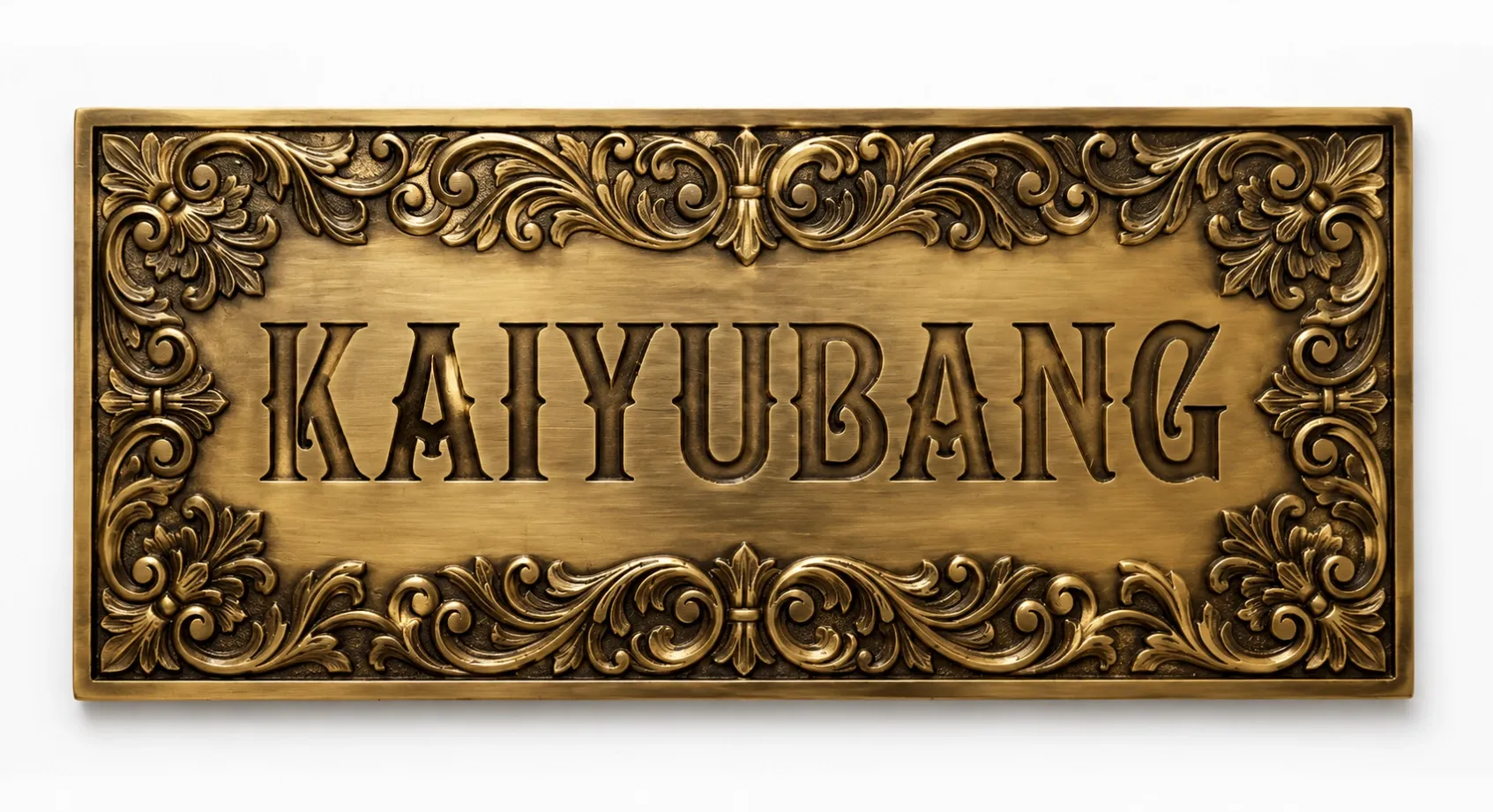
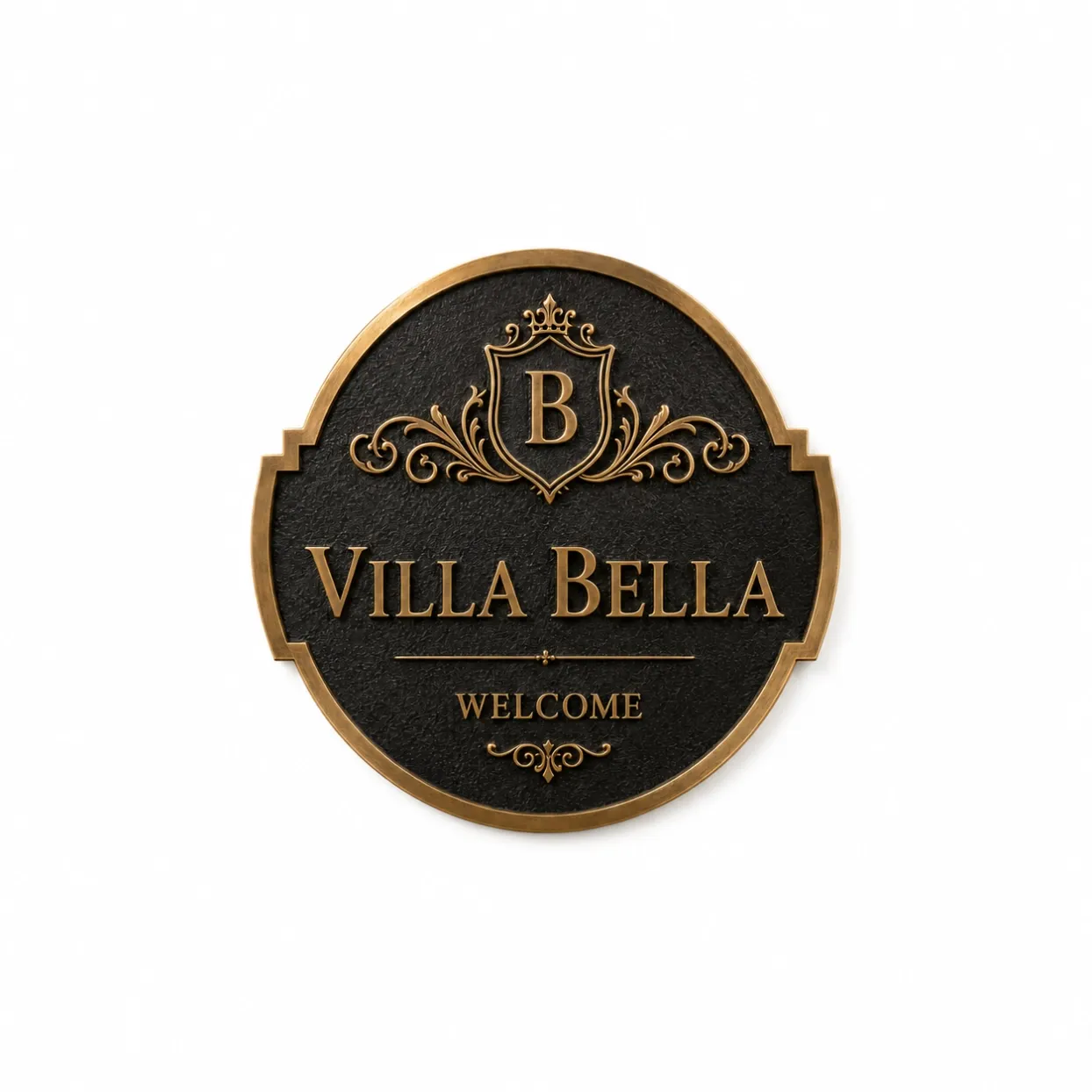
Custom modern house numbers plaque for villas, homes and entrance walls. Featuring a black textured metal surface, antique gold raised lettering and decorative relief details. Available in stainless steel, aluminum, brass or iron, with custom names, numbers, logos, finishes and sizes. Suitable for villa entrances, gates, exterior walls and door name signs. Contact Kaiyubang for custom sizing and production.
Modern House Numbers Plaque: How to Design a Custom Villa House Number Sign
A house sign may occupy only a small area of an entrance, but visually it can have a surprisingly large impact.
For villas, private residences, hotels and architectural projects, a modern house numbers plaque does more than display an address. It can connect the entrance gate, exterior wall, door and architectural style into one consistent visual identity.
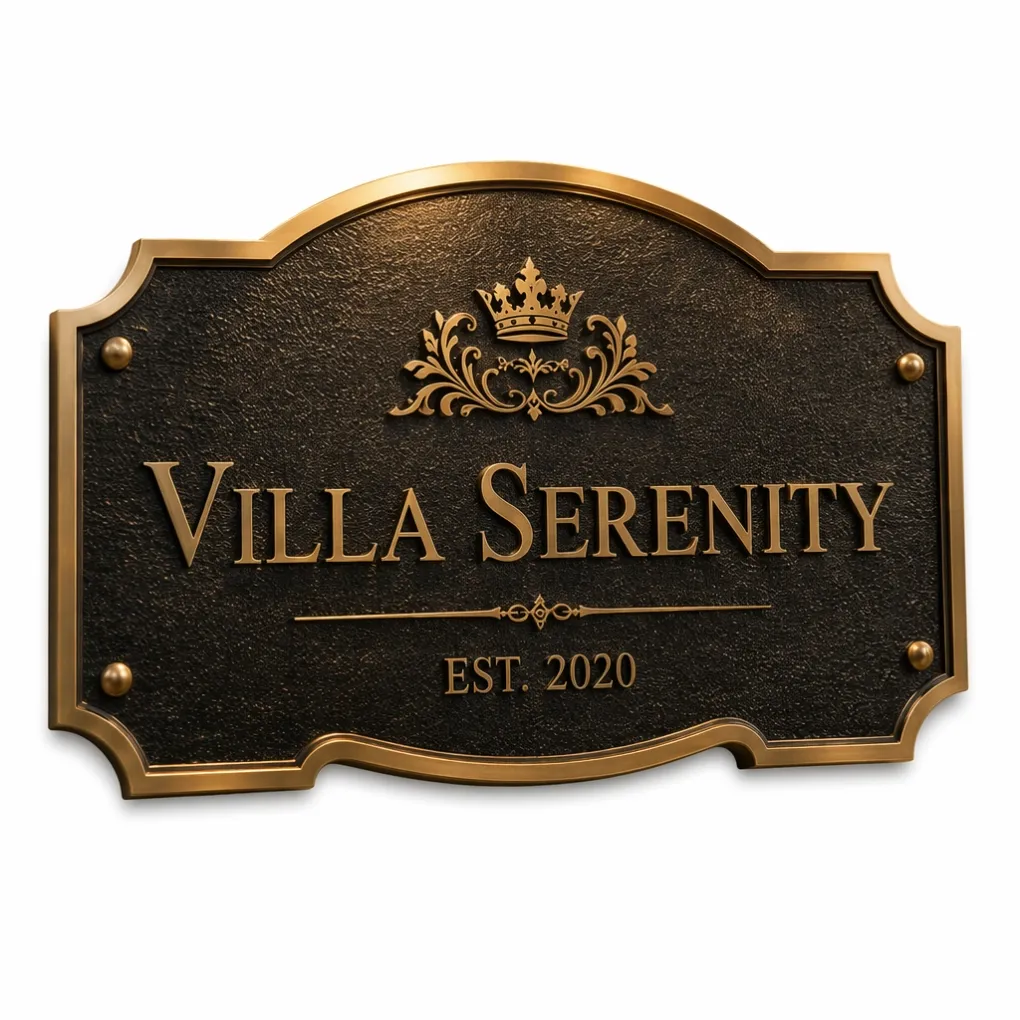
The Villa Bella plaque shown here takes a slightly different approach to minimalist contemporary signage. Instead of using only flat lettering, the design combines a deep black textured surface, antique-gold details, raised lettering and ornamental relief elements.
This creates a house sign that can function as both identification and architectural decoration.
Why Choose a Custom Metal House Number Plate?
Many standard house number plates are designed around fixed dimensions, fonts and layouts. This works for basic residential identification but can become limiting when the sign is part of a larger architectural project.
A custom house number plate design allows several elements to be coordinated:
- House number
- Villa or property name
- Family initials
- Logo or emblem
- Typeface
- Metal finish
- Background texture
- Dimensions
- Border design
- Mounting method
For example, the Villa Bella plaque uses the letter B as the central crest and places the property name prominently beneath it.
This creates a clear visual hierarchy: emblem first, property identity second, supporting message third.
Black and Gold House Number Plate Design
Black and metallic gold work particularly well for villa entrances because of their strong contrast.
Customers searching for modern house numbers black designs often encounter very minimalist black plates with white or silver numbers. That is suitable for modern architecture, but it is not the only option.
For classical villas, Mediterranean homes, luxury residences and decorative entrance gates, black can instead be used as the background for bronze, brass or antique-gold details.
The dark textured surface provides depth while the metallic lettering remains easy to distinguish.
This approach gives the plaque a more architectural character than a simple printed sign.
What Materials Can Be Used?
Material selection should depend on the installation environment, appearance and project budget.
Stainless Steel
Stainless steel is an excellent option for exterior architectural signage because of its durability and corrosion resistance.
It can be combined with brushed, polished, antique, painted or plated finishes.
For customers looking for a premium outdoor metal sign, stainless steel is often one of the most practical choices.
Aluminum
Aluminum provides a lighter alternative.
Its relatively low weight makes it useful for larger wall-mounted signs where reducing installation weight is important. Different surface treatments can also create black, bronze, gold or other decorative appearances.
Brass
Brass provides a naturally warm metallic appearance that works particularly well with traditional villa architecture.
It is frequently selected when the design calls for a classic or heritage character.
Iron
Iron can produce a substantial traditional appearance and is especially relevant when customers are comparing cast iron house signs.
For exterior applications, however, the surface treatment and corrosion protection should be carefully considered.
Metal vs. Other House Sign Materials
Customers do not always begin their search knowing which material they need.
Someone considering oak house signs, for example, may value the natural appearance of wood. Another customer searching for an engraved slate house number may prefer the traditional texture of stone.
Metal offers a different combination of characteristics.
It can support detailed engraving, relief decoration, precision-cut lettering and a wide range of architectural finishes. It can also coordinate naturally with metal entrance gates, railings, doors and façade details.
This makes metal particularly useful when the house sign needs to become part of the overall architectural design rather than function as an isolated address plate.
Large House Signs for Posts and Entrance Gates
Not every house sign needs to be mounted beside a front door.
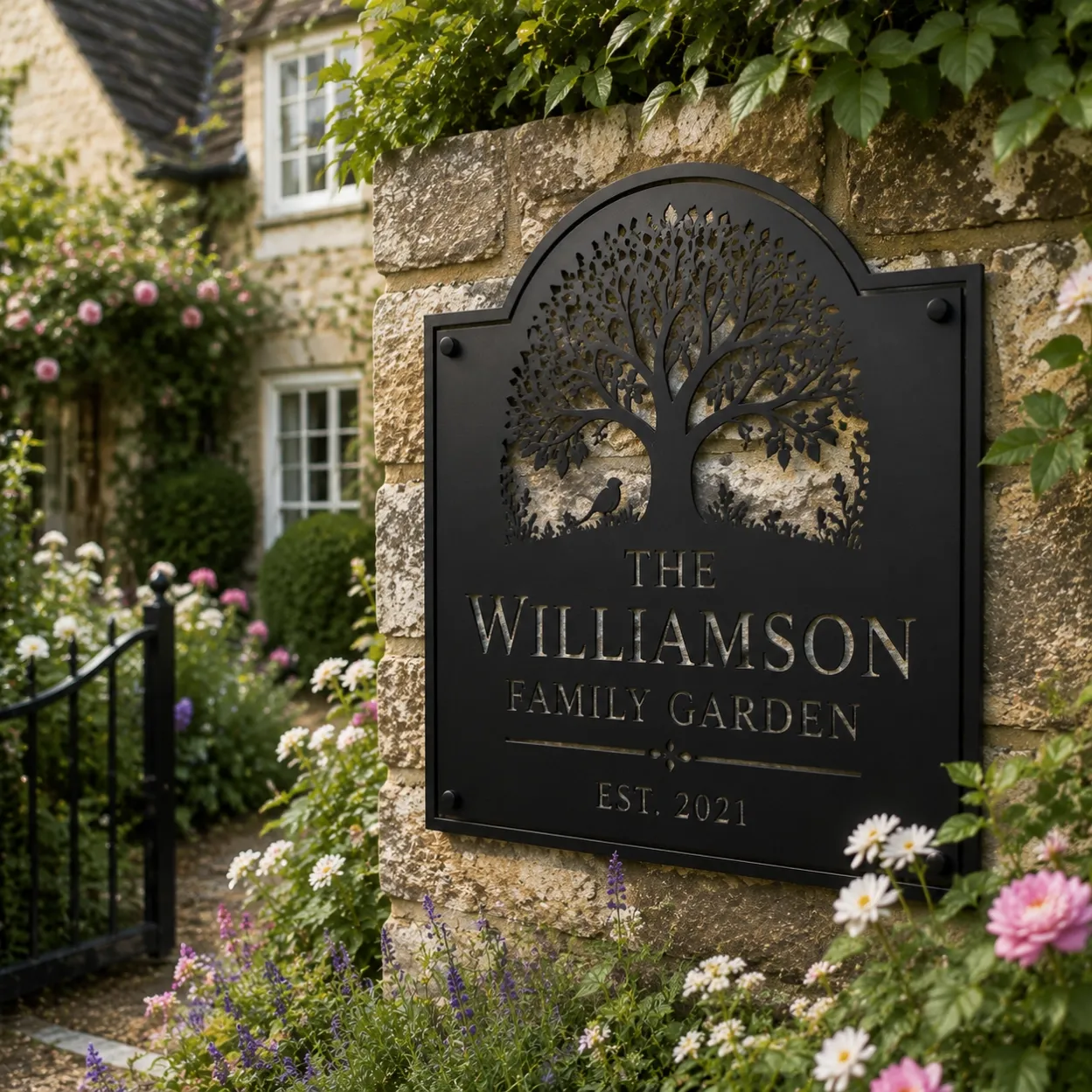
For larger properties, large house signs on posts can be installed near:
- Driveway entrances
- Garden entrances
- Villa gates
- Estate boundaries
- Private roads
- Hotel entrances
In these situations, viewing distance becomes important.
Letter size, contrast and plaque dimensions should therefore be determined according to where visitors first see the sign rather than simply choosing a standard size.
A beautiful sign that cannot be read from the driveway is not an effective entrance sign.
Door Name Signs for Villas and Private Homes
For smaller entrances, customized door name signs provide another option.
Instead of displaying only a number such as "28", the plaque can incorporate:
28
VILLA BELLA
or:
THE BELLA RESIDENCE
28
Family initials, crests or logos can also be incorporated when appropriate.
This transforms a functional house number into a more recognizable property identity.
Relief Details vs. Hand Painted House Signs
Traditional hand painted house signs have a handcrafted aesthetic, but engraved and relief metal signage achieves visual depth differently.
Raised borders, engraved textures and three-dimensional lettering interact with natural light throughout the day.
As the direction of sunlight changes, shadows around the relief details change as well.
This is particularly noticeable on antique bronze, brass and gold-tone surfaces and is one reason relief metal plaques work well on architectural façades.
Can Metal House Signs Be Used as Wall Decoration?
Yes.
Decorative metal signs for walls can combine identification with architectural decoration.
A plaque can display:
- Family name
- House number
- Villa name
- Building name
- Company logo
- Hotel name
- Memorial text
- Decorative emblem
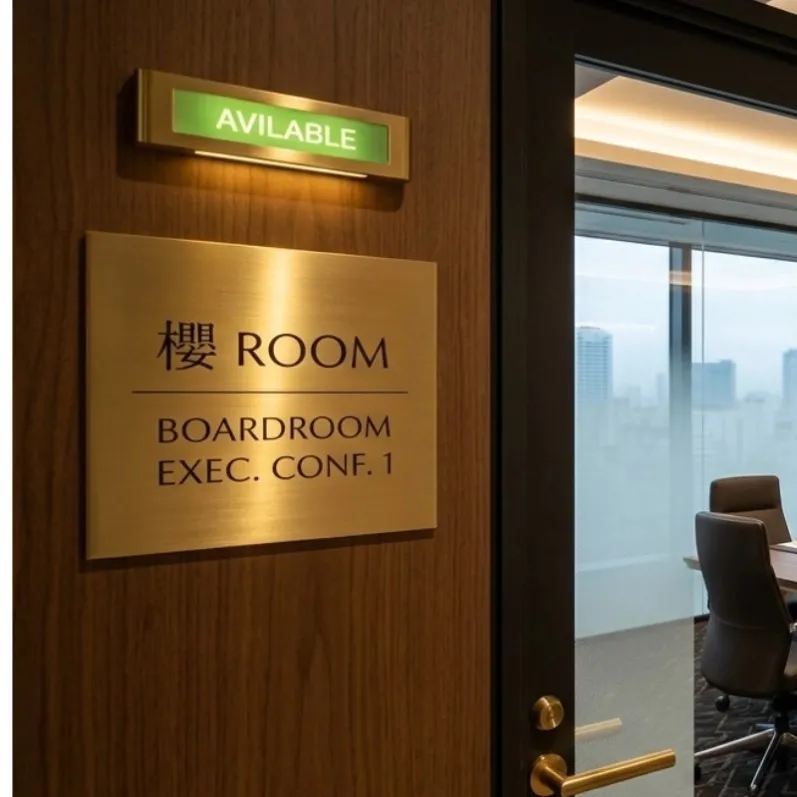
The same manufacturing concept can therefore be adapted from residential house numbers to hospitality, commercial and architectural projects.
DIY Villa House Number Sign vs. Custom Manufacturing
Some homeowners search for Villa house number sign DIY solutions because simple acrylic, wood or painted signs can be produced at home.
DIY can work well for temporary or lightweight applications.
However, designs involving deep relief, precise metal engraving, custom metallic finishes or architectural mounting generally require specialized fabrication equipment.
Professional manufacturing also makes it easier to control dimensions, edge finishing, surface consistency and mounting points before installation.
For architects, contractors and villa projects, this becomes especially important when multiple signs must follow the same design language.
How to Order a Custom House Number Plate
A custom plaque normally starts with a few basic pieces of information:
- Required dimensions
- House number or property name
- Preferred material
- Preferred finish or color
- Logo or crest, if required
- Installation location
- Reference design or drawing
Kaiyubang can then develop the plaque around these requirements rather than forcing the project into a fixed standard design.
This is particularly useful for villas, hotels, residential developments and architectural projects requiring coordinated metal elements.
Choosing the Right House Number Plate Design
Before ordering, consider three factors: architecture, viewing distance and installation environment.
A minimalist residence may work best with simple black metal numbers. A classical villa may benefit from antique-gold lettering and decorative relief. A large estate entrance may require oversized lettering that remains readable from a vehicle.
The best house number plate design is therefore not necessarily the most decorative one. It is the design that balances visibility, architecture, material and personal identity.
For custom projects, dimensions, lettering, borders, logos and surface finishes can all be developed around the entrance rather than selected independently.