Oct 16, 2026 Choose Guiding
Courtyard Iron Gates | First Impressions - Kaiyubang
Discover how courtyard iron gates shape your home's first impression, with ideas for color, proportion, hardware, and feng shui-inspired entrance design.
Courtyard Iron Gates | First Impressions - Kaiyubang
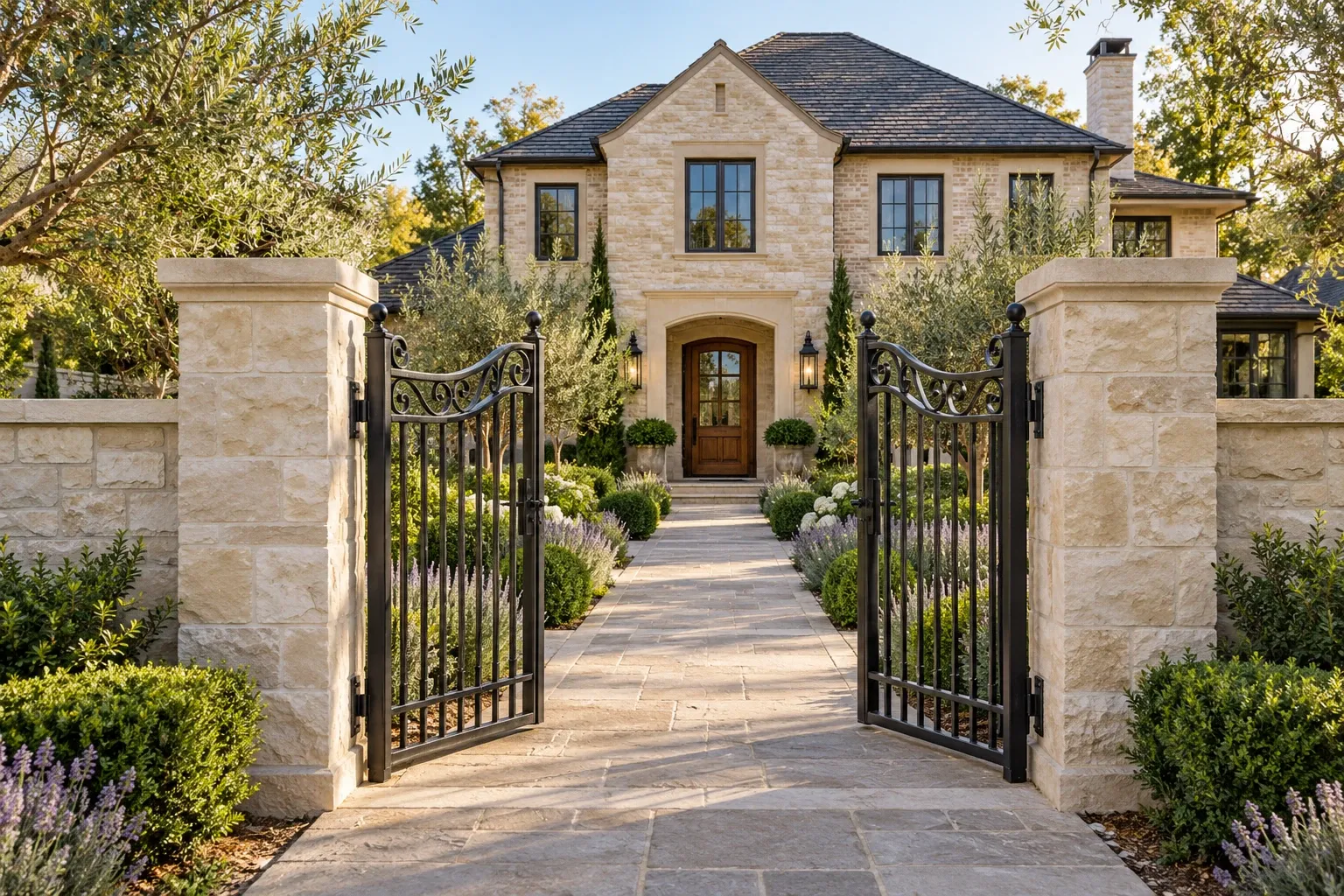
Courtyard iron gates introduce your home before visitors reach the front door. Their proportions, color, craftsmanship, and hardware help establish the character of the property—from formal and traditional to relaxed and contemporary.
In Chinese, the expression “men mian” (Face Door) can refer to a frontage or outward presentation. It offers a useful way to think about entrance design: the gate is part of the face your home presents to the world.
A successful entrance feels connected to the building behind it. It also works comfortably every day.
Why the Gate Matters to the Whole House
It Establishes the First Impression
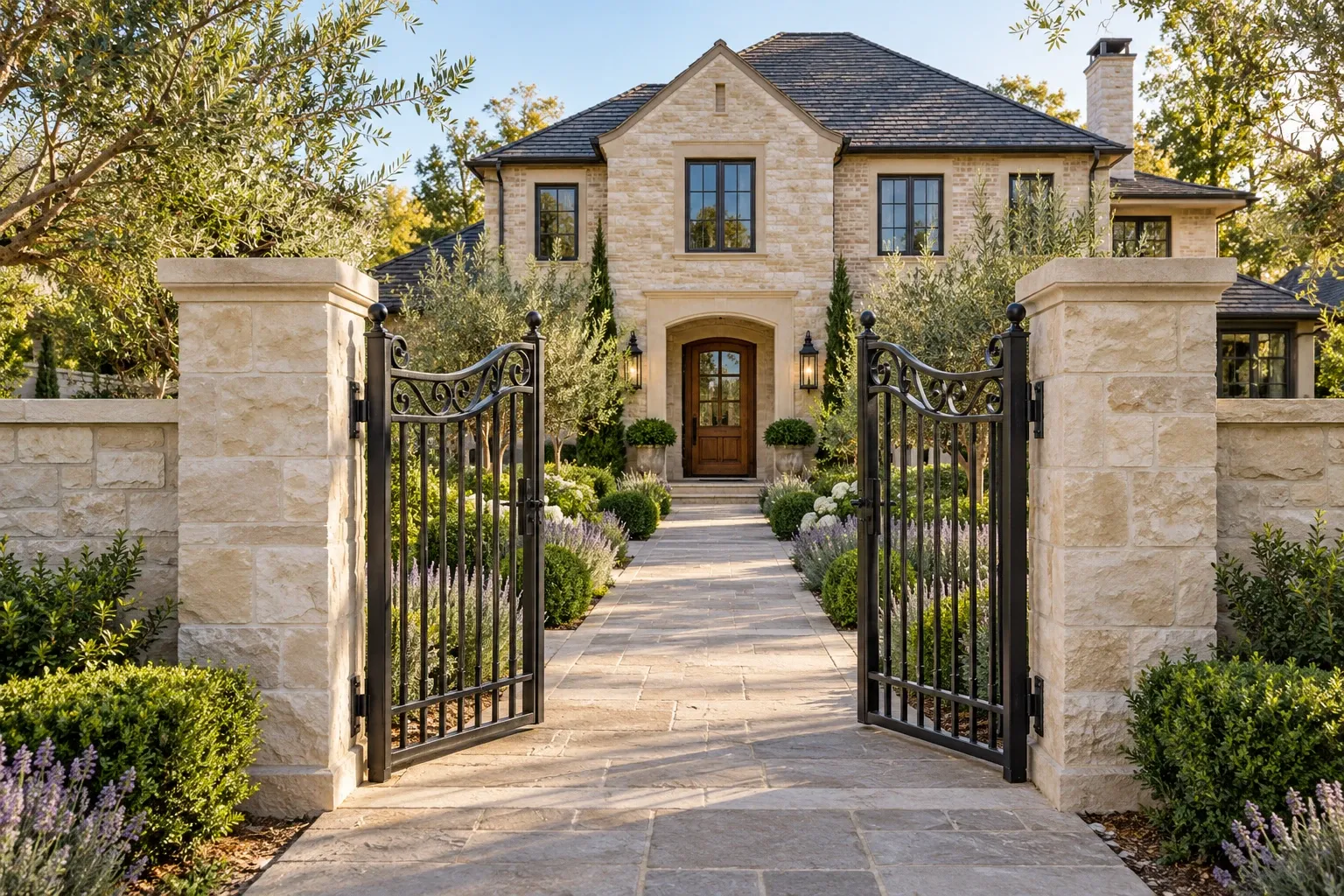
Visitors encounter the boundary, gate, and approach before they experience the interior. These elements set expectations.
A carefully proportioned gate can make a modest entrance feel considered. An oversized or overly decorative design can compete with the architecture, even when its individual details are attractive.
Start by identifying the character of the house:
- Traditional brick homes may suit slender ironwork and restrained scroll details.
- Contemporary façades often work well with simple lines and repeated spacing.
- Country gardens can accommodate softer shapes and weathered finishes.
- Formal courtyards benefit from a clear relationship between the gate, posts, and entrance path.
For a traditional entrance, explore an ornamental wrought iron scrollwork gate as a visual reference. Consider how its pattern would relate to your windows, railings, and boundary walls.
The aim is visual continuity. The gate should look as though it belongs to the property.
It Connects the Street to the Home
An entrance is a transition between public and private space.
Open ironwork allows views into a courtyard and can make an approach feel welcoming. More closely spaced designs provide greater screening. Planting, lighting, and the position of the path can soften either choice.
Consider what visitors see through the gate. A clear route to the door often contributes more to a welcoming entrance than additional ornament.
Gate Color and Height: Design with Cultural Meaning
Understanding the Feng Shui Connection
In Chinese feng shui traditions, entrances can carry symbolic importance. Their placement, orientation, appearance, and relationship to the surrounding space may be interpreted as part of the property's overall harmony.
Approaches differ between practitioners and traditions. There is no single gate color or height that can be presented as universally auspicious, and claims about changing a household's fortune are matters of belief.
Homeowners who value these traditions can include them in the design brief alongside practical needs.
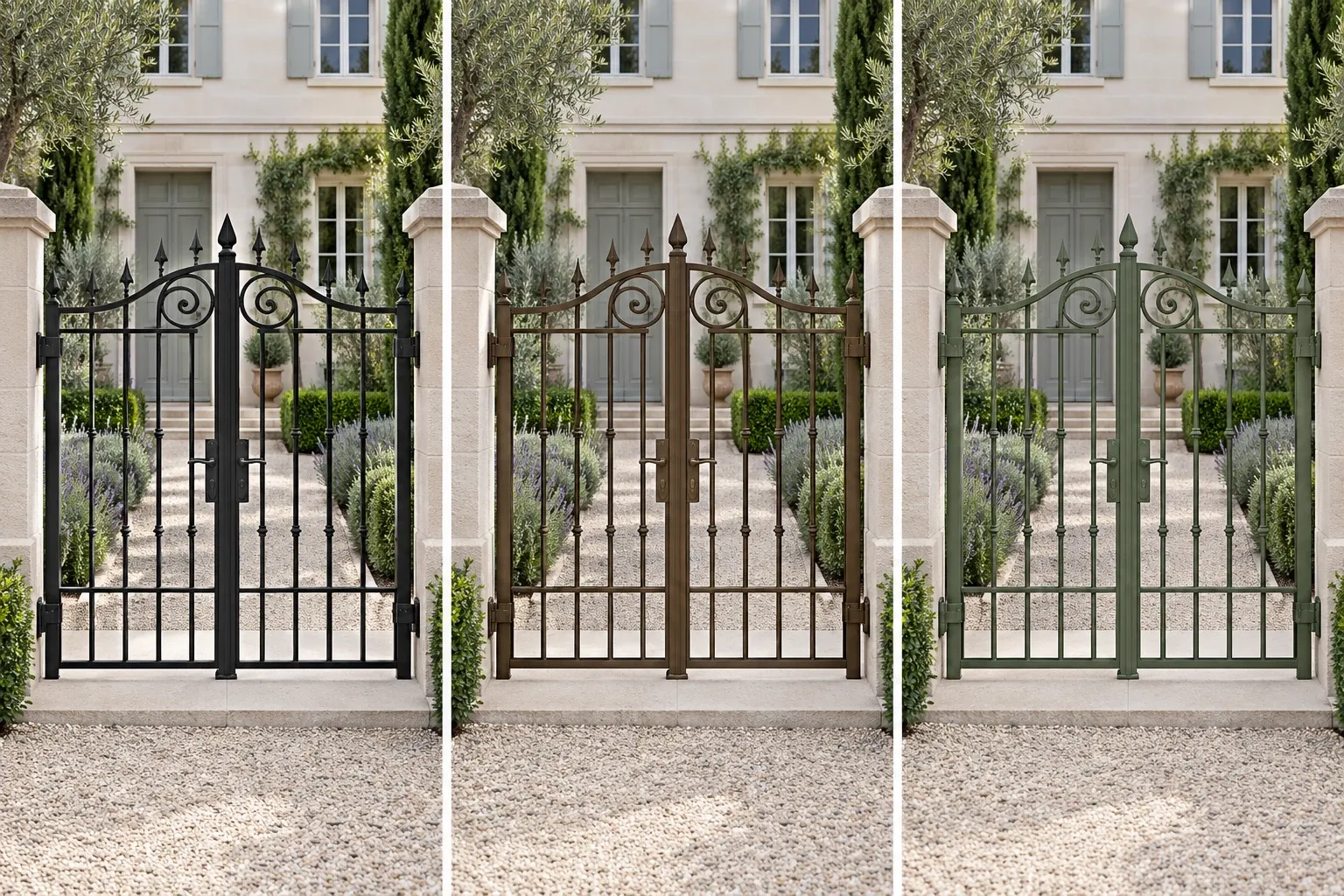
Choose Color in Relation to the Façade
Color changes how strongly a gate stands out.
Black and charcoal can define the outline of ironwork. Brown and bronze tones may complement timber and warm masonry. A muted green can connect an entrance with its planting, while a stronger accent color creates a focal point.
Before choosing a finish, compare samples against the actual wall, roof, and paving materials. View them in daylight and under entrance lighting.
If a color has personal or cultural significance, use that meaning thoughtfully within the wider palette.
Choose Height for Proportion and Use
Gate height affects privacy, visibility, and the perceived scale of the entrance.
A lower garden gate can feel informal and open. A taller entrance may create a more enclosed courtyard, but its appearance depends on the width of the opening and the surrounding walls.
Review height together with:
- The scale of the house and boundary.
- Sightlines near the driveway.
- The desired level of screening.
- Wind exposure and structural requirements.
- Applicable local requirements.
Cultural preferences can inform the choice, while the final dimensions should suit the site.
Match the Gate Type to the Way You Arrive
Wrought Iron Sliding Gates
Wrought iron sliding gates can suit entrances where the layout favors sideways movement over a swinging leaf. They still need sufficient space beside the opening for the gate to retract.
Confirm what the supplier means by “wrought iron.” The term is sometimes used as a style description for fabricated steel products. Ask for the actual material and protective finish.
For a metal rolling driveway gate, discuss the track, drainage, debris clearance, and maintenance access before deciding on decorative details.
Sliding Aluminum Driveway Gates
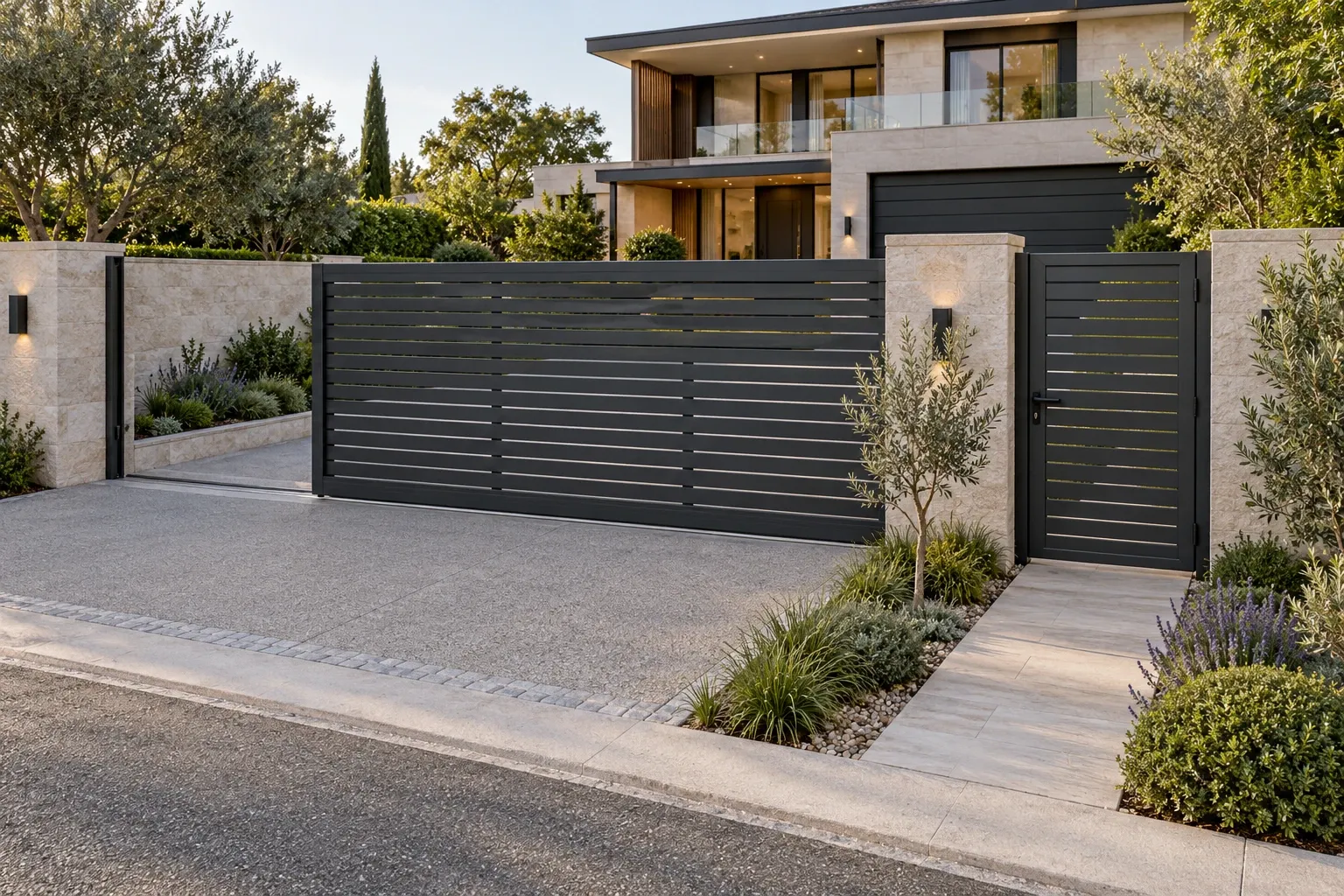
A sliding aluminum driveway gate offers another route to a coordinated entrance. Aluminum does not develop iron rust, although its finish, fixings, and exposure conditions still affect long-term performance.
For visual inspiration, consider a black aluminum branch-pattern driveway gate. Confirm the available operating configuration separately; the decorative pattern alone does not establish whether a gate slides or swings.
A search for a 10 foot aluminum gate is only a starting point. Confirm whether the stated dimension refers to the clear opening or the overall gate assembly. Sliding and cantilever systems can require additional length beyond the opening.
Choose aluminum gate hardware that is compatible with the gate's construction, loading, and operating system.
Metal Pedestrian Gates
Metal pedestrian gates give people a dedicated way to enter without opening the vehicle gate.
They should connect naturally to the footpath and front door. Coordinate their pattern and finish with the driveway entrance, while selecting handles and latches for comfortable everyday use.
A geometric metal pedestrian gate is one design direction to consider when repeated lines and decorative geometry suit the property.
For powered vehicle entrances, include pedestrian access in the initial layout. The DASMA automated gate safety guide provides useful background for discussing the complete entrance with an installer.
Small Hardware Details Shape the Experience
Wrought Iron Gate Handles and Everyday Comfort
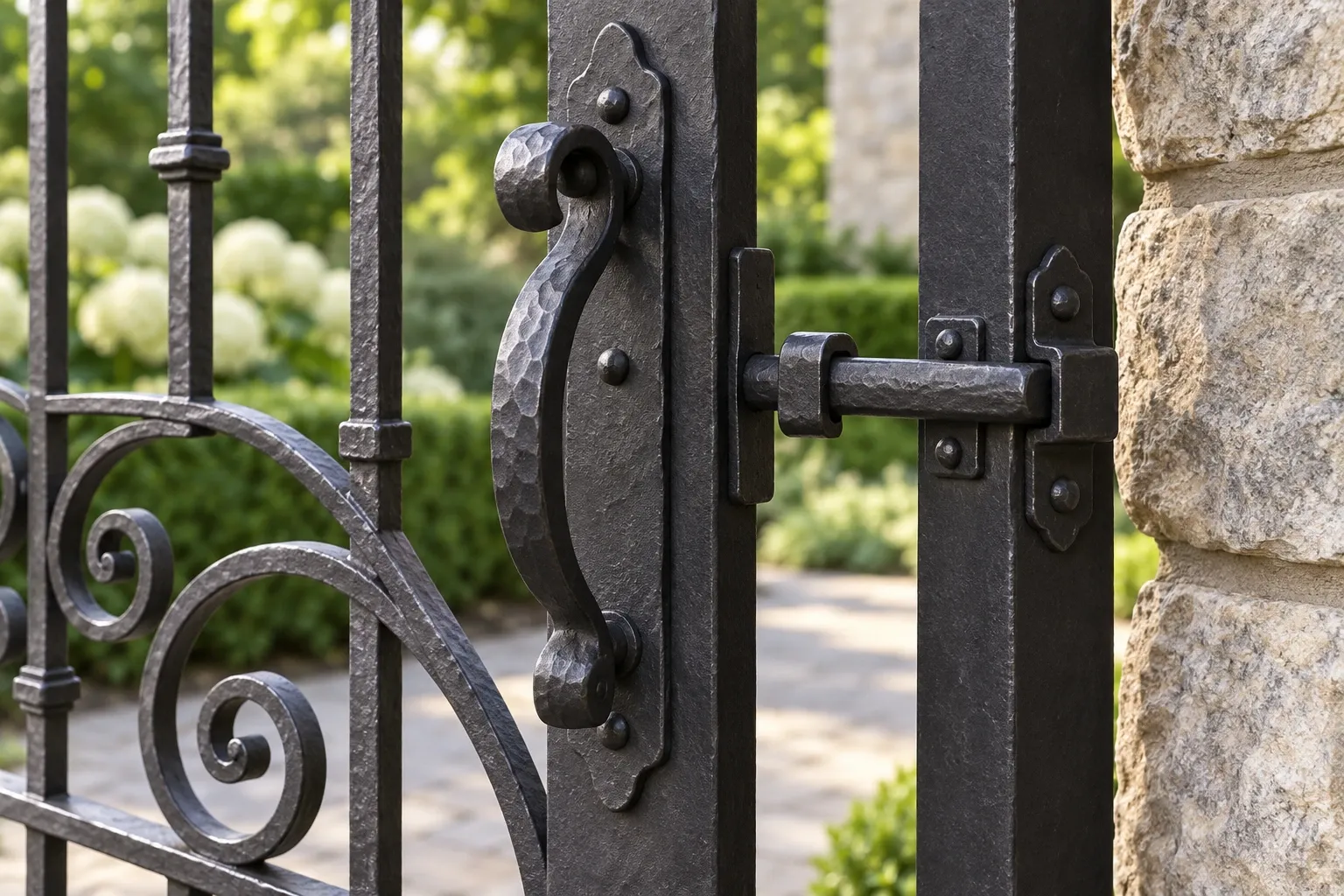
Wrought iron gate handles are among the few architectural details visitors physically touch. Their shape, finish, and position influence how the entrance feels in use.
A metal gate handle should provide a comfortable grip and sufficient clearance from nearby surfaces. Decorative complexity should not make it awkward to operate.
Check a sample where possible, particularly if children, older relatives, or people with limited hand strength will use the entrance.
Choose Metal Gate Hardware as a System
Metal gate hardware includes more than the visible handle. Hinges, latches, stops, guides, and fixings all affect alignment and operation.
When specifying wrought iron gate hardware, ask the fabricator to match the components to the gate's weight, dimensions, material, and exposure.
A heavy duty gate post also needs an appropriate foundation and connection details. Its suitability cannot be judged by appearance alone.
For cantilever systems, cantilever gate accessories—including carriages, guides, and end supports—must be selected for the complete design.
Powered gates also require a site-specific safety assessment. The UK Health and Safety Executive's guidance on powered gate safety explains why safe operation depends on the whole installation.
Antique Garden Gates: Character with Careful Planning
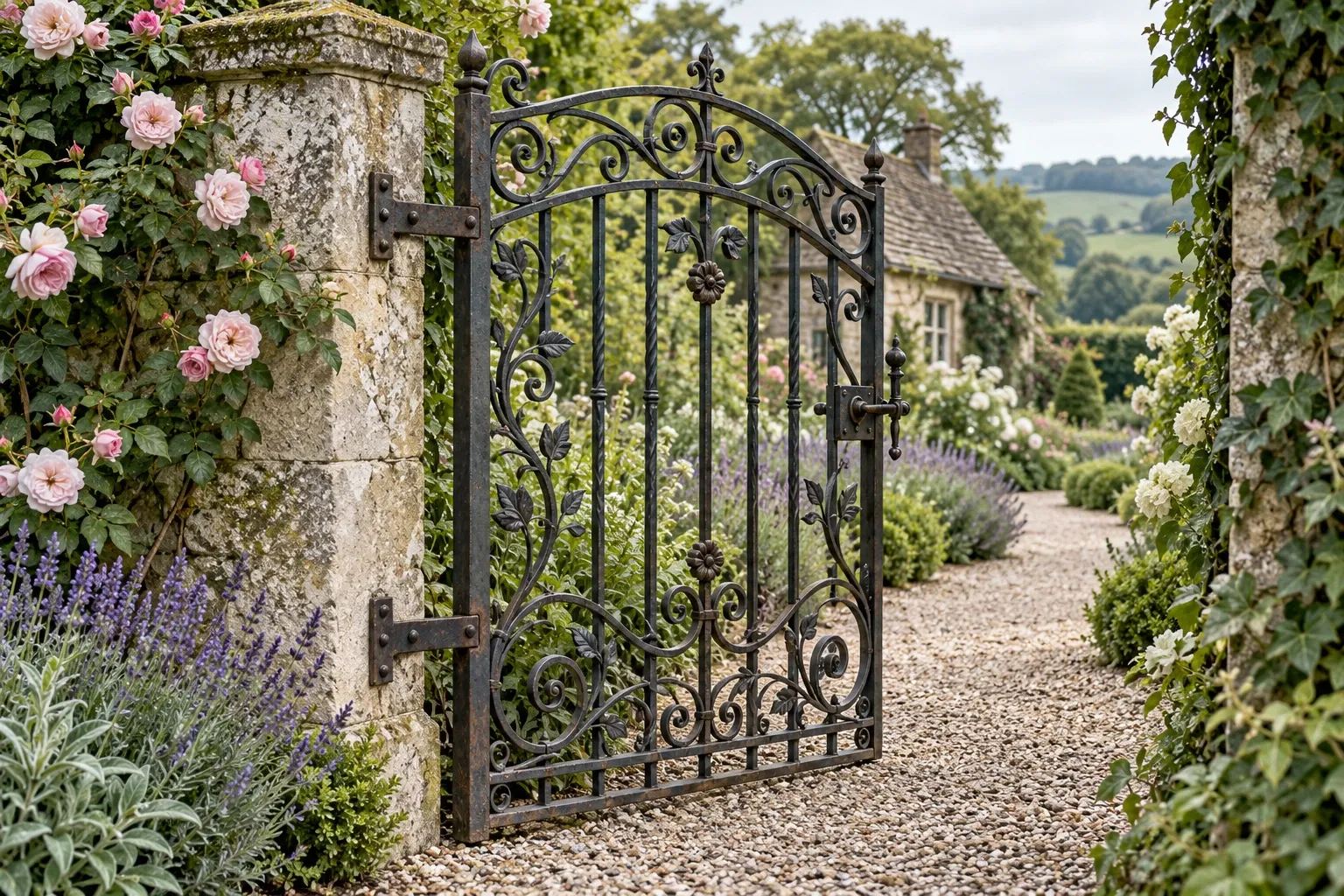
Antique garden gates can bring texture and individuality to a landscape, especially when their proportions complement the surrounding planting and masonry.
When browsing a vintage garden gate for sale, look beyond the surface finish. Request measurements and inspect for distortion, section loss, damaged joints, and previous repairs.
Antique gate hardware may need specialist attention before returning to regular use. Confirm whether the original hinges and latch can function reliably or whether compatible replacements are needed.
A reproduction can also be worth considering when a specific opening size or operating arrangement is essential. Be clear about whether you are buying an original antique, a restored piece, or a newly made design.
A Practical Entrance Design Checklist
Before approving a gate, review the entrance as a whole:
- Architectural fit: Does the pattern relate to the house, walls, and landscaping?
- Proportion: Do the height, width, and posts feel balanced together?
- Movement: Is there enough room for people, vehicles, and the gate itself?
- Material: Are the substrate, finish, and maintenance needs clearly specified?
- Hardware: Are handles, hinges, latches, and supports suitable for the design?
- Cultural preferences: Have meaningful colors or feng shui considerations been discussed?
- Installation: Has a competent installer assessed the site and operating requirements?
Request a scaled drawing showing the gate, posts, and adjacent walls. Small material samples and isolated product photographs cannot show the full relationship.
Give Your Home an Entrance That Feels Complete
Courtyard iron gates help establish the first impression of a home through proportion, material, color, and detail.
The idea of “men mian” reminds us that an entrance expresses something about the place beyond it. Feng shui traditions can add another layer of personal meaning for homeowners who value them.
Choose a design that reflects the architecture, welcomes people comfortably, and works reliably.
Planning your entrance? Discuss your courtyard gate design with Kaiyubang, sharing photographs, opening dimensions, preferred materials, and the way you want the gate to operate.