
The Story between Our Customer and Kaiyubang
Gate Parts Arrive Damaged? Improve Packing Details
Protect decorative metal gates in transit. Review support points, finish protection, hardware packing, delivery access, and receiving checks before dispatch.
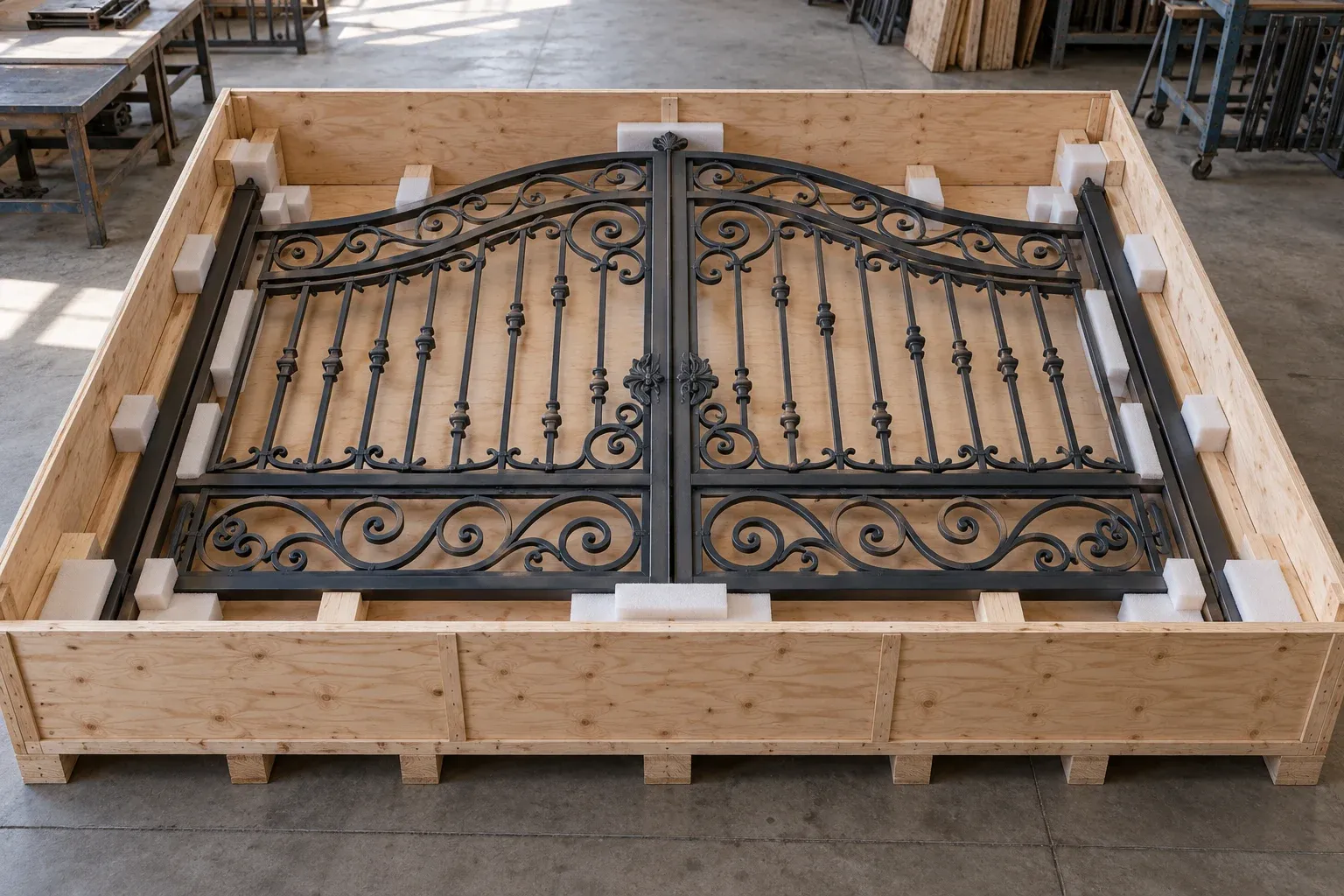
A decorative metal gate can leave the workshop with an attractive finish and arrive with bent details, rubbed edges, or missing hardware. Packaging deserves the same coordination as the gate drawings, particularly when a large assembly will travel through several handling stages.
The solution is more than a thicker wrapping layer. Support, restraint, surface compatibility, hardware identification, and site access need to work together. Discuss these items before accepting the shipping arrangement rather than after the crate is ready.
Map the Shipment Before Choosing the Package
Start with the actual route. Will the gate move directly to the property, through a freight terminal, or into temporary storage? Ask who unloads it and which handling equipment is available at each stage.
Record the packed dimensions, declared weight, lifting information, and receiving contact. A package that protects the gate but cannot pass the final access route creates another installation problem. Compare the available space at the delivery entrance with the packed assembly, not only the finished gate size.
Explore decorative metal gates when discussing design options, then request packing information for the particular construction being quoted.
Support the Frame Without Loading Fragile Details
Decorative leaves, scrolls, and thin infill should not automatically become support points. Ask the fabricator to identify suitable bearing and restraint locations for the complete gate.
Packing should control movement without transferring damaging pressure into projections. The correct arrangement depends on weight, frame stiffness, surface treatment, and the transport method. Do not assume that laying every gate flat or standing every gate upright is appropriate.
For a double gate, confirm whether the leaves travel together or separately and how they are prevented from contacting each other. Similar-looking components should remain clearly identifiable when unpacked.
Protect the Finish from More Than Impact
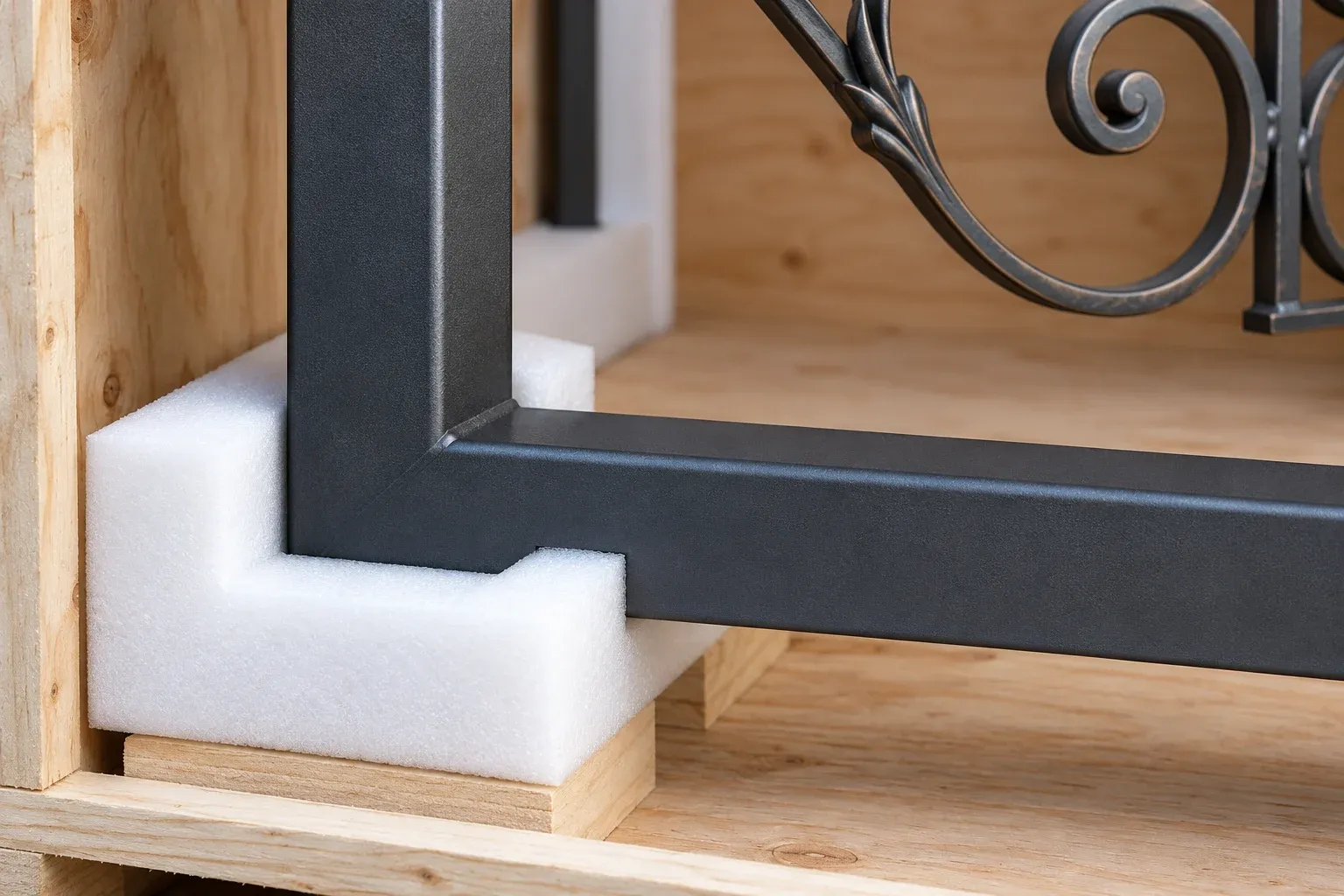
Scratches can result from vibration and rubbing as well as direct knocks. Check the contact materials around edges, corners, and raised ornament. A soft-looking layer can still carry grit or become abrasive during movement.
Ask whether protective films and contact materials are compatible with the actual coating and expected storage duration. Agree on removal instructions rather than assuming a film can remain indefinitely. Moisture conditions also deserve discussion, especially if the shipment will spend time in uncontrolled storage.
A close-up reference such as a geometric steel driveway gate helps identify exposed edges to discuss, but a product photograph is not a packing specification.
Pack Hardware as an Identified Set
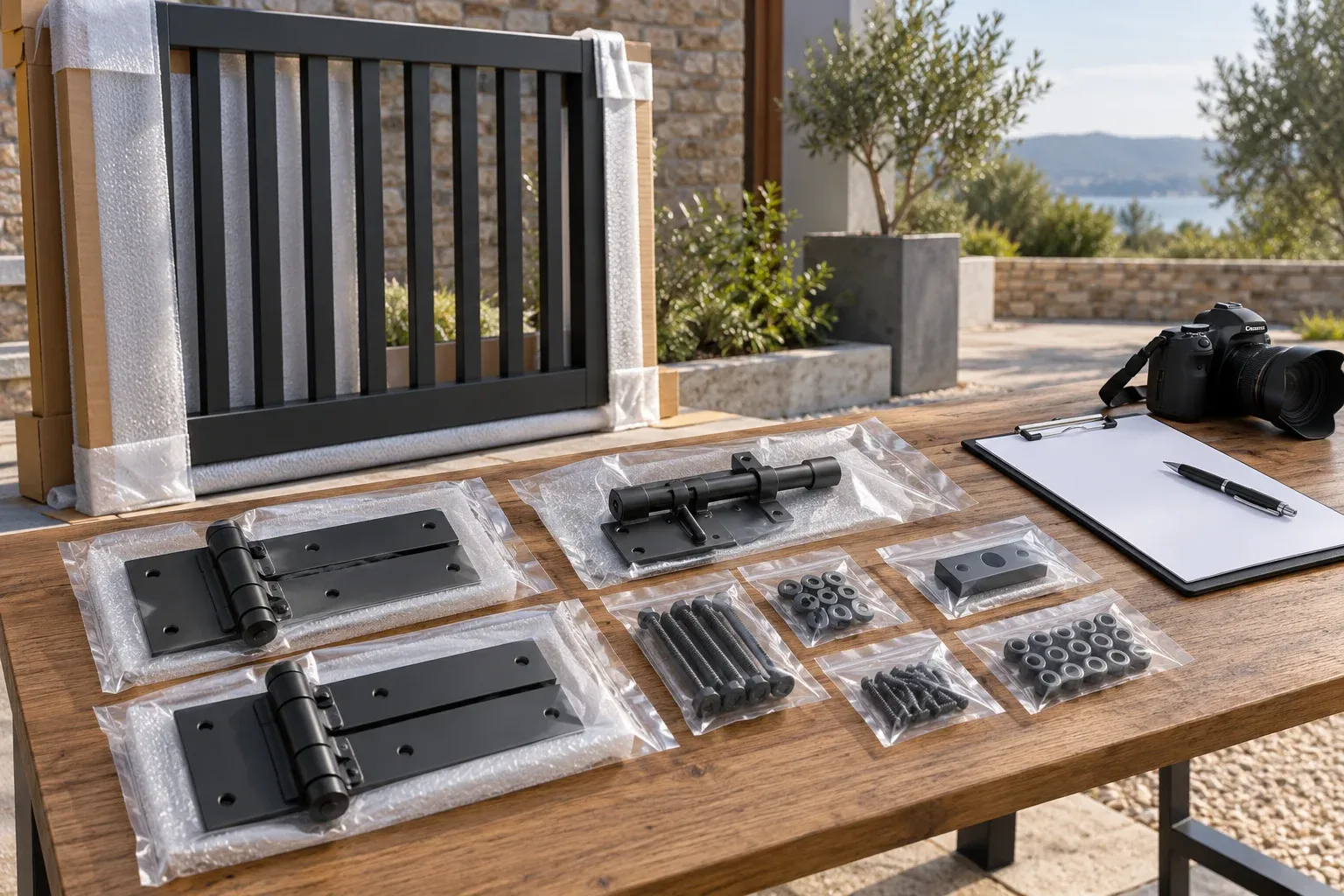
Small parts can delay installation even when the main gate is undamaged. List the hinges, latch components, stops, covers, and included fixings against the agreed supply scope.
Separate loose items from finished metal surfaces. Mark hardware packs with the corresponding gate reference and retain a packing list that the receiver can understand. Record what is deliberately not supplied, including any components to be sourced locally.
Packing item | Question to resolve |
|---|---|
Main leaves | How are the frames supported and restrained? |
Decorative projections | What prevents contact or pressure damage? |
Finished surfaces | Which contact layers and films are suitable? |
Hardware | Is every included component identified? |
Documents | Are drawings and assembly references available? |
Check Timber Packaging Requirements
For international deliveries, the packaging material may introduce requirements separate from those applying to the gate itself. The IPPC guidance on wood packaging explains the ISPM 15 framework for regulated wood packaging in international trade.
Ask the exporter or freight specialist to confirm the destination’s current requirements and how the actual crate construction is classified. Do not assume all timber products are treated identically or that a photograph of a mark proves the complete shipment is acceptable.
For example, the standard distinguishes regulated raw wood packaging from certain processed-wood exemptions. That distinction does not replace checking the full package and destination conditions with the responsible parties.
Agree on Receiving Checks Before Dispatch
Request useful photographs of the gate before packing, the internal support arrangement, hardware packs, and the closed package. These records help document condition; they do not guarantee that transport damage cannot occur.
At delivery, follow the carrier’s receiving procedure and inspect what can reasonably be checked. Photograph visible damage and keep the packaging while the issue is assessed. Do not invent a universal claim deadline: confirm the actual carrier, insurance, and purchase terms beforehand.
If damage is discovered, avoid immediately installing, modifying, or disposing of affected items before agreeing on the next steps. Record the component reference and communicate a clear description with photographs.
Make Packing Part of the Purchase Scope
When comparing gate manufacturers, check whether quotations include the same packing, transport, unloading, and site-handling responsibilities. The lowest gate price may not describe the complete delivered scope.
Before production, discuss your gate delivery requirements with Kaiyubang. Share destination details, access constraints, receiving arrangements, and the proposed installation sequence so packing and handover questions can be resolved early.