The Story between Our Customer and Kaiyubang
Plan Metal Panel Joints Before Fabrication
Metal wall panels may look continuous in a rendering while the real installation requires several separate pieces.
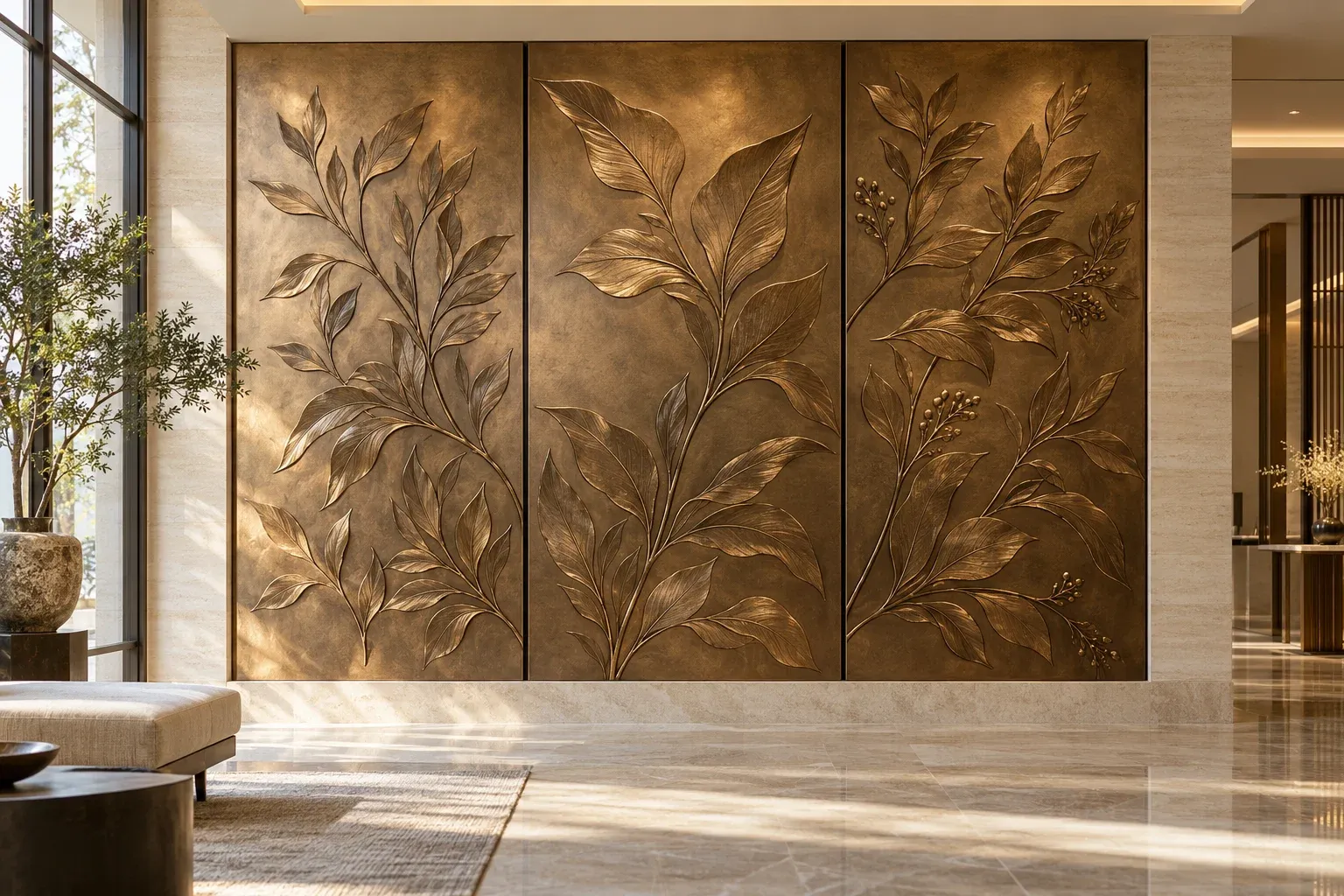
Metal wall panels may look continuous in a rendering while the real installation requires several separate pieces. If their joints are left until fabrication or site assembly, a seam can interrupt the focal motif, expose an awkward edge, or make slight misalignment more noticeable.
Good joint planning does not always mean hiding every division. It means deciding where joints belong, how they should look, and what the installer needs to reproduce the approved layout.
Treat Panel Divisions as Part of the Artwork
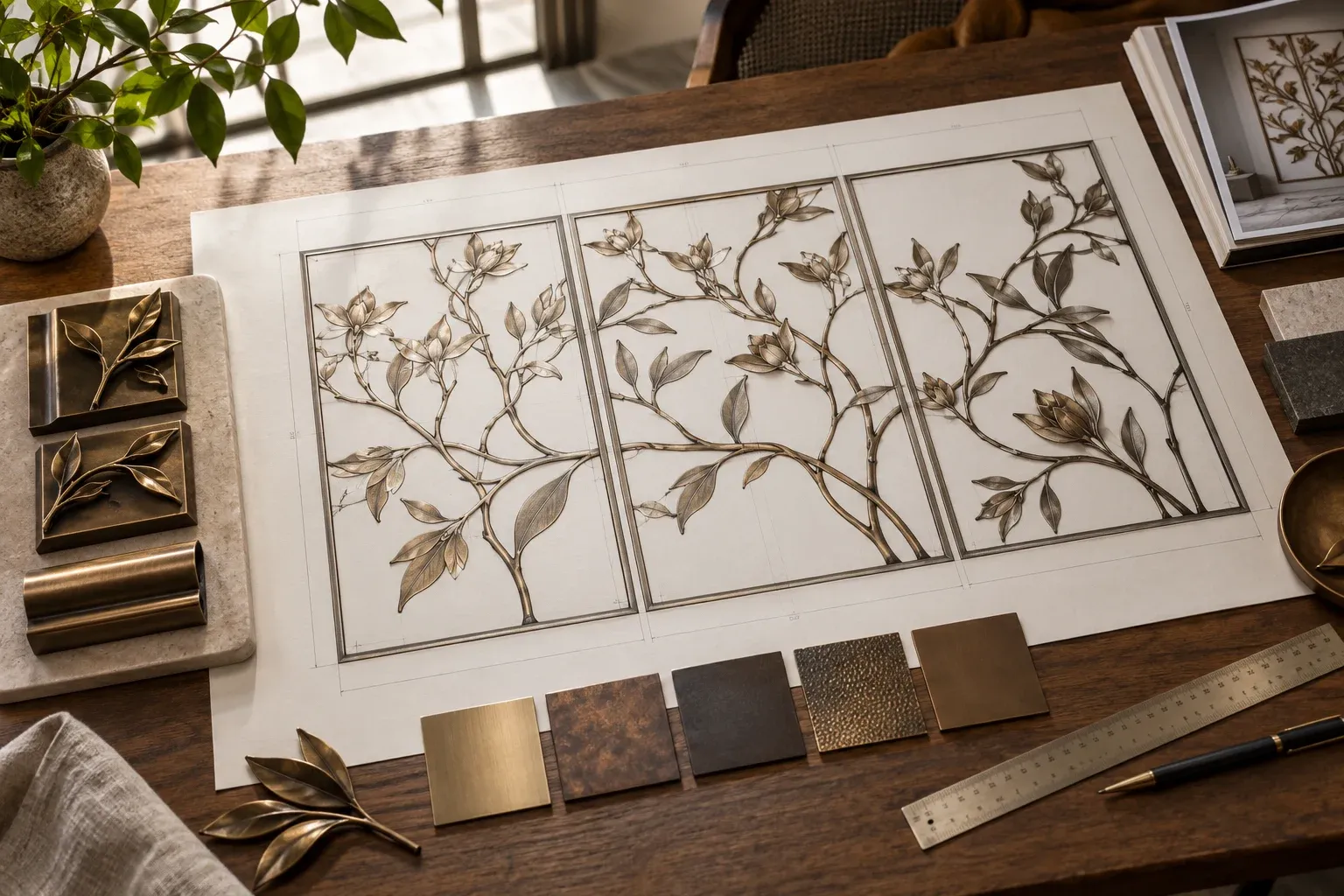
Start with a full elevation of the finished wall. Show the panel outline, surrounding finishes, furniture, and important viewing positions. Then add the proposed divisions before approving the artwork.
A seam through the face of a figure or the center of a focal flower can be distracting. A division that follows an architectural line or a quieter part of the composition may be more appropriate. The answer depends on the design rather than a universal rule about keeping all joints invisible.
For decorative metal embossed panels, discuss the relief as well as its front outline. A raised element crossing a joint may require more coordination than a simple flat repeated pattern.
Choose an Honest Joint Appearance
Expressed Joints
A deliberate gap or framed division can make separate panels read as a coordinated series. Its appearance needs to be specified consistently, including the backing visible through the opening and the relationship to perimeter edges.
Close-Fitting Joints
Close alignment may suit continuous imagery, but it should not be described as guaranteed seamlessness without an agreed sample. Metal edges, relief, finish direction, and the supporting wall all influence the result.
Cover Strips and Frames
A cover or perimeter frame may suit some designs. It also changes the artwork and cleaning access, so it should be shown in the approved elevation rather than added as a last-minute remedy.
Coordinate Pattern and Finish Direction
Adjacent metal panels can look different even when their nominal color matches. Brushing orientation and reflections may make a boundary more visible. Ask the fabricator to maintain the intended pattern direction and identify the installation orientation of each section.
For botanical work, check where stems and leaf contours meet. For geometric designs, review the rhythm across the whole wall. Small errors repeated along a sequence may be more noticeable than a single isolated discrepancy.
Material names alone do not define this appearance. The comparison of brass, bronze, and copper is useful background when clarifying substrate and finish, but the actual sample remains important for approval.
Consider Movement and Support Together
Metal, backing materials, and the supporting construction do not necessarily behave identically. Do not ask an installer to force every joint closed without a project-specific review of movement, support, and attachment.
The Copper Development Association’s architectural copper handbook is a technical reference for copper construction and detailing. Its building-envelope details should not be copied directly into an interior artwork: use a suitable designer or fabricator to resolve the actual assembly.
The drawings should identify the support arrangement, section positions, perimeter treatment, and any required allowances. No single joint width is suitable for every material, panel size, or location.
Plan Sections Around Handling and Access
A large uninterrupted design may be visually appealing but difficult to transport or bring into the building. Check doors, lifts, corridors, turning space, and the installation area before fixing the section sizes.
Balance access with composition. Adding many small sections simply to simplify transport can create an unnecessarily busy wall. Review the packing, lifting, and site sequence with the people responsible for those stages.
Make the orientation and installation order clear. A panel reference should connect the physical piece to the same position on the current drawing.
Approve a Representative Joint Mockup
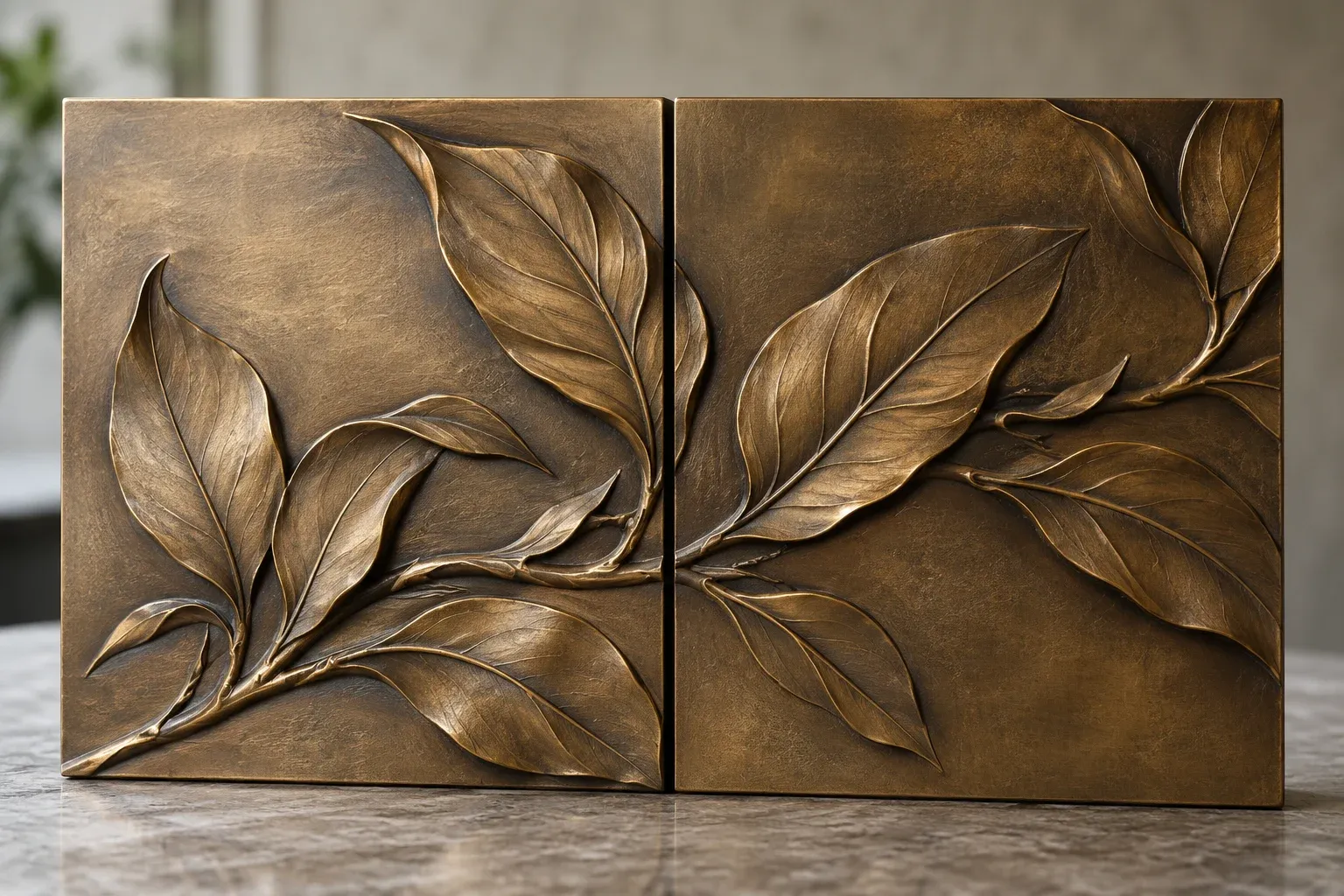
A single finish swatch cannot demonstrate how two embossed edges meet. Where the joint appearance is important, request a mockup containing adjacent sections, a representative pattern transition, and the intended backing or frame.
Review it from the normal approach and under relevant lighting. Strong side lighting can reveal edge differences that are less apparent under diffuse light. It can also exaggerate small irregularities, so agree on realistic viewing conditions.
Approval item | What to review |
|---|---|
Full elevation | Division locations and overall rhythm |
Section detail | Relief, backing, and connection approach |
Joint mockup | Actual adjacent edges and finish transition |
Orientation record | Pattern and brushing direction |
Site information | Access, substrate, and finished dimensions |
Keep the Site Working from One Revision
If the wall size or motif changes, update the panel schedule and joint drawing together. A revised image without corresponding section information can leave the fabricator and installer working from different assumptions.
Before dispatch, review a trial arrangement when practical and record how the parts correspond to the approved elevation. A photograph helps document alignment, but it does not replace dimensional checks or the final support design.
Make Seams a Decision, Not a Surprise
Well-planned metal wall panels can use visible divisions confidently or keep them visually restrained. Either approach works better when the composition, finish, support, and installation sequence are coordinated early.
To develop a panel layout, contact Kaiyubang about your metal feature wall with wall dimensions, artwork, site photographs, and access information. Confirm how sectioning and sample approval will be handled before fabrication.