Choose Guiding
Why Does Your Gate Look Different from the Render?
A 3D render can flatter any gate. Learn why the real gate can look different — light, scale, finish and pattern density — and what to check before ordering.
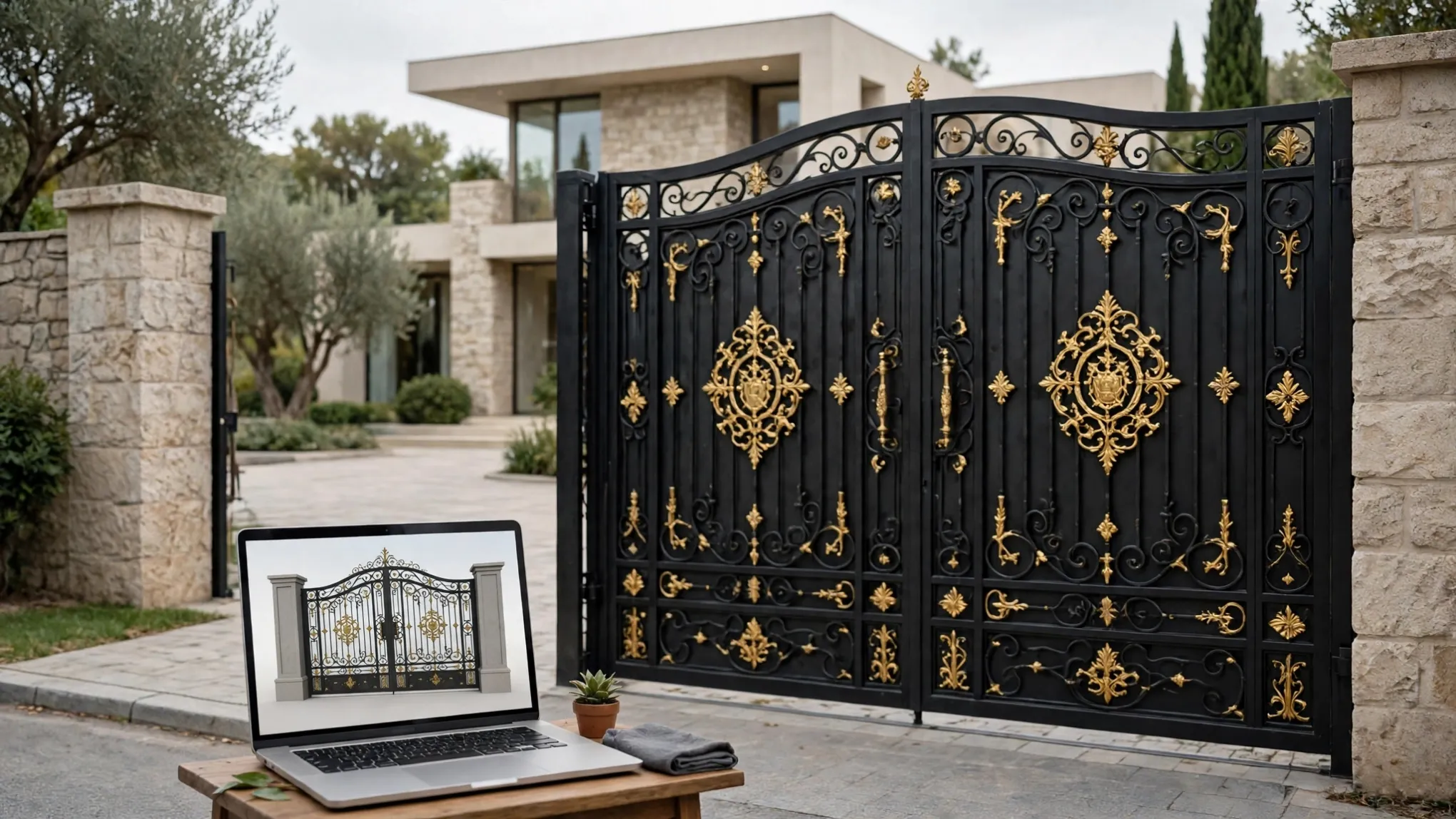
Why Does Your Gate Look Different from the Render?
The render looked perfect: crisp lines, a warm bronze glow, a pattern floating across the opening. Then the gate arrived and something felt off — the colour flatter, the pattern busier, the whole thing heavier than expected. The gate had met daylight, real scale and a real street for the first time. A render is a promise drawn in ideal conditions; a custom metal gate lives in conditions that are never ideal. Knowing where the gap comes from lets you close it before the metal is cut.
A Render Is Lit by a Perfect Sun
Every render is lit by a sun that never moves, never hides behind cloud and never shines straight into the camera. The software places soft light where it flatters the metal and keeps shadows shallow so the pattern stays readable. Real light is not so kind. Morning sun strikes a gate from the side and throws long shadows across a relief; midday sun bleaches a polished surface to white; an overcast afternoon drains the warmth out of bronze and copper altogether.
A dark bronze that glowed amber on screen may read almost black against a pale wall in flat light, while a bright gold that looked restrained in the render can glare under a low evening sun. The fix is simple: before you order a custom metal gate, ask the factory for a finish sample and hold it at the entrance at different times of day. One afternoon with a sample tells you more than a dozen renders ever will.
Scale Changes Everything About a Pattern
On a laptop screen, a gate is a few centimetres wide and the whole pattern fits in one glance. At full size, your eye reads it in pieces rather than all at once. A motif that looked delicate in the render can turn bold and heavy at full height; a fine laser-cut repeat can blur into a grey mesh from the pavement. This is the most common reason a delivered gate feels different from its render.
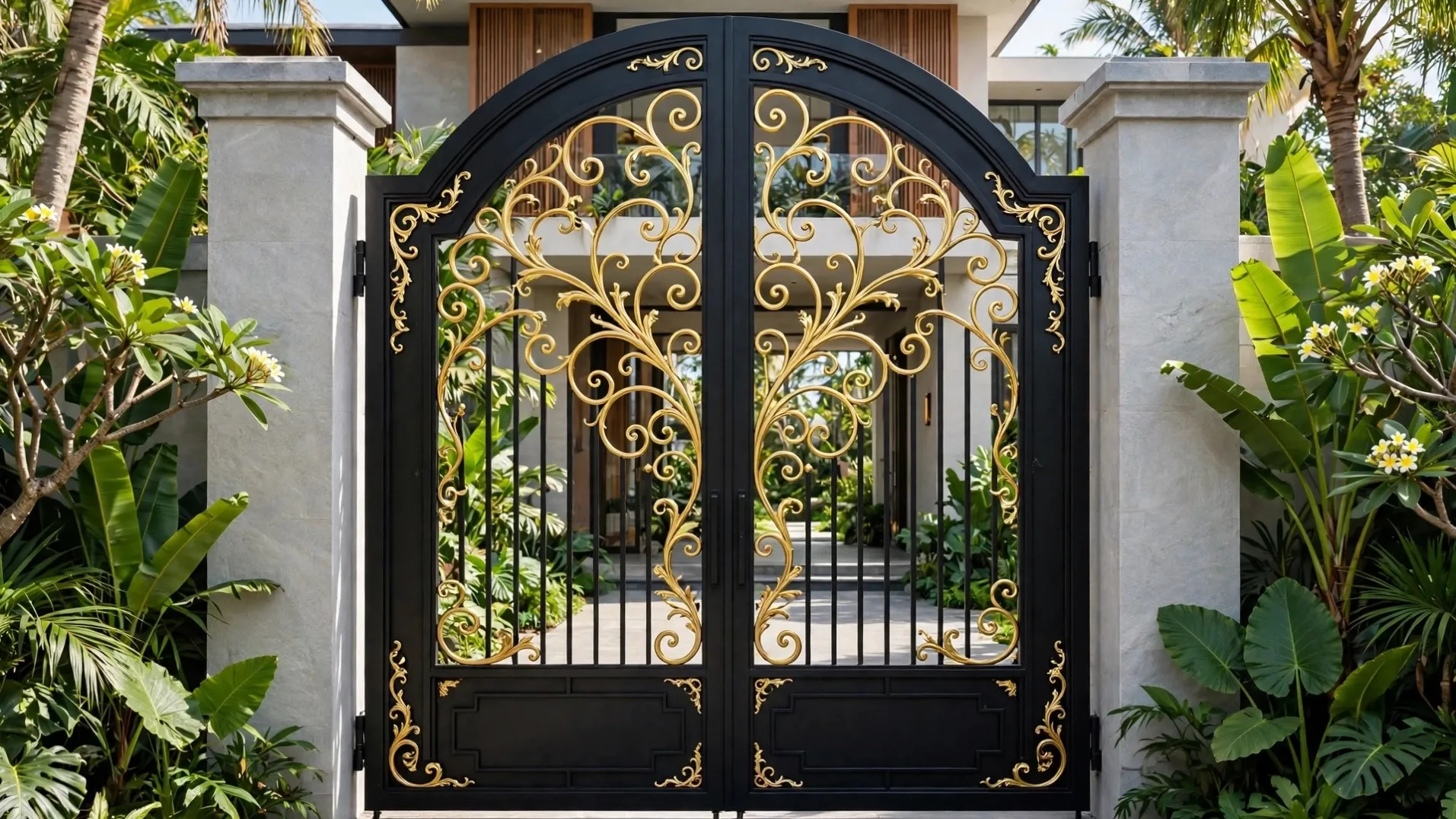
Pattern density is the heart of the problem. A dense design compresses well on screen because the render shrinks it; at full size the same density blocks light, blocks the view through the gate and makes the entrance feel closed in. A Tropical Villa Bronze Botanical Laser-Cut Driveway Gate shows how a botanical pattern should behave: the leaves are spaced so daylight still passes through, and the design reads clearly from the street rather than dissolving into texture. Before you approve a design, ask the factory to show the pattern at full size — a single panel, printed or cut, held up at the opening. If the pattern only works when it is small, it is the wrong pattern for a custom metal gate.
Finish on Screen Is Not Finish on Metal
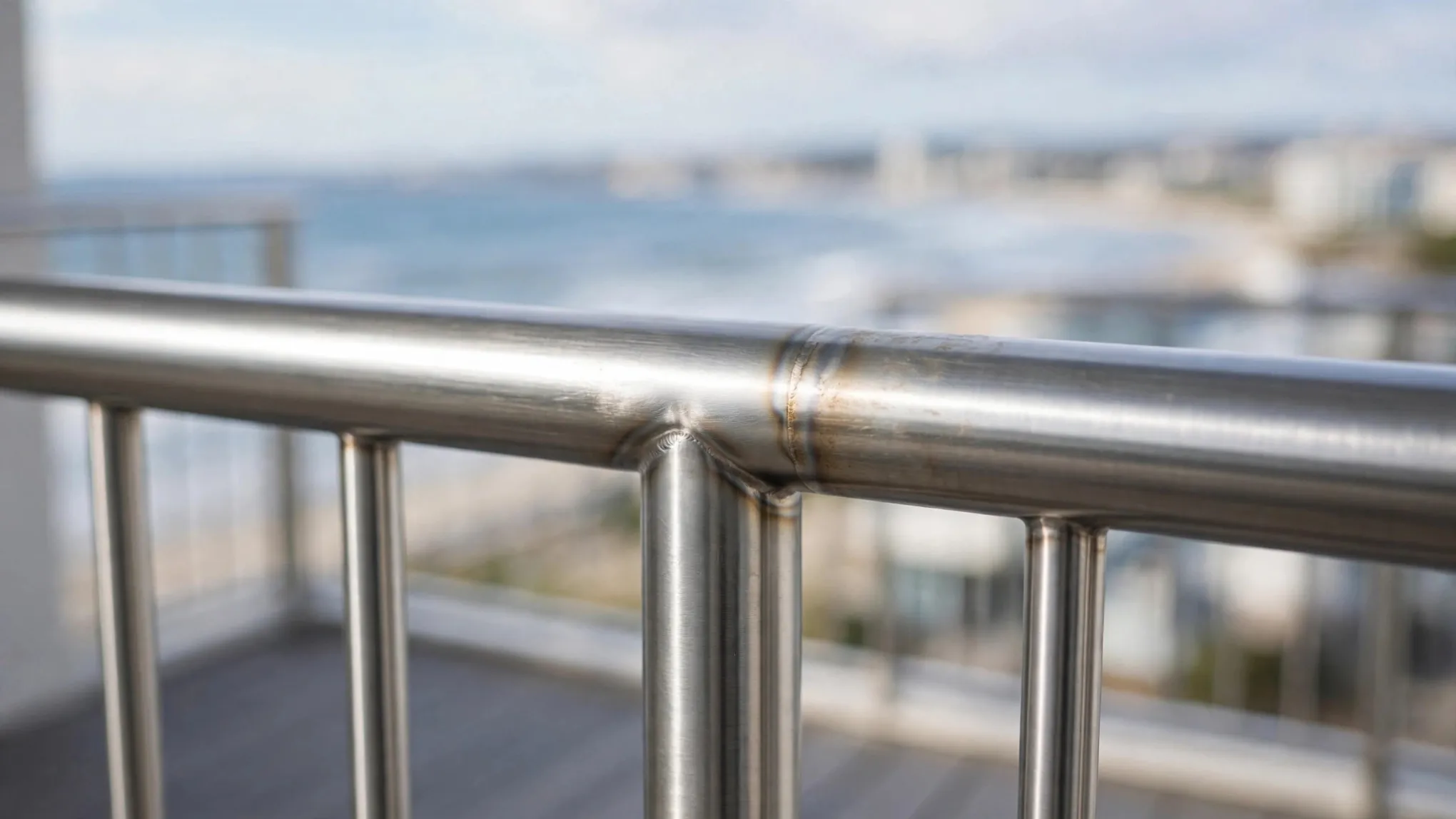
A render paints finish as a flat colour with a little shine, but real metal has depth: brushed lines, hammered marks, a powder coat whose texture changes how a colour reads. Two gates with the same colour code can look quite different in brushed stainless and in powder-coated aluminium, and no render can show you that difference.
Relief work is where the gap is widest. A Traditional Courtyard Dark Bronze Dragon Relief Gate carries its design in raised metal, and the depth of that relief decides how much shadow and highlight it gathers in real light — a shallow relief can almost vanish on a bright day, while a deep one can look dramatic even in shade. A render flattens all of that into a single tone. When you order a custom metal gate with relief work, ask the factory for a small relief sample in the exact material and finish, and view it outdoors. The sample is the only honest preview of what the finished gate will do in sunlight.
The View from the Street Is Not the View in the Render
Renders are drawn from a flattering angle — slightly above, slightly to one side, house and planting arranged around the gate. Nobody stands at that angle in real life. Visitors approach along the driveway or pavement, often from below, and see the back of it as they leave. A design that depends on a single perfect viewpoint will disappoint from every other one.
Check the back of the gate as carefully as the front. A panel beautiful from the street can look unfinished from the garden if the reverse was never designed. Walk the approach yourself and look at the opening from every direction a visitor will use. A Woodland Estate Cast Bronze Deer Relief Driveway Gate works because its relief reads from a distance and from an angle — the deer scene is bold enough to survive a real approach, not just a rendered one. When you shop for gate decorations metal suppliers, look for designs that survive this test, not only designs that photograph well.
Small Details Grow Larger at Full Size
In a render, a finial or a crest is a few pixels wide. On the real gate, those details sit at hand height and catch the light every time the gate moves. Decorative metal gate toppers are the classic example: a crest that looked elegant on screen can dominate the posts once it is cast at full size, and a finial that seemed subtle can throw a long shadow across the frame. Metal gate decor deserves the same full-size check as the main pattern — one sample piece, held in place, viewed from the street.
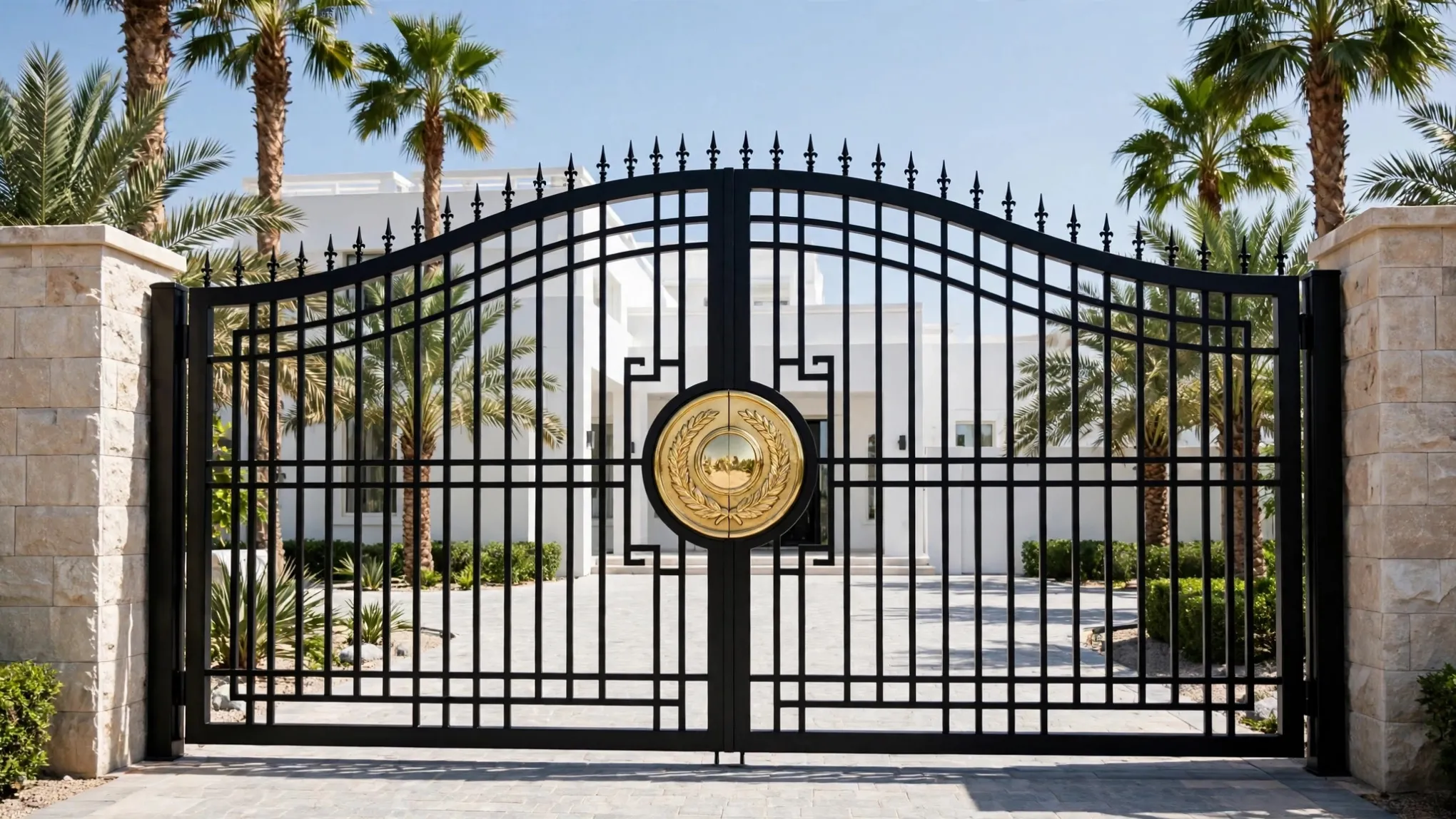
The same is true of colour contrast inside the gate. A two-tone design looks balanced in a render because the software keeps both tones in the same light. Outdoors, the gold may shine while the dark frame sinks into shadow. A Black Gold Floral Emblem Double Gate handles this well: the gold emblem is large and simple enough to hold its own against the black frame in any light, instead of depending on perfect illumination. If your design relies on a delicate contrast, test it on a sample before you commit to a custom metal gate.
How to Check Before You Order
Closing the gap between render and reality takes four checks, and none of them is expensive. First, get one elevation drawing with gate, posts, fence and house at the same scale. Second, before you order a custom metal gate, get a pattern sample and a finish sample, and view both at the entrance in morning and evening light. Third, ask for a photograph of a similar gate installed on a real site, not another render. Fourth, agree the sample in writing as the reference for the finished work.
A Black Cast Aluminium Lotus Emblem Entrance Gate is a useful benchmark for this process: a single clear emblem, a plain frame, and a finish that stays calm in changing light. A Deep Copper Landscape Carved Entrance Gate is the opposite test — deep carved relief that only a physical sample can honestly preview, because its whole effect comes from shadow. Many buyers searching for gate decorations metal start with renders alone; put the samples side by side at the entrance instead and let the site decide. When you browse metal gate decor ideas online, remember every image was lit and framed to sell; the sample at your own gate is the only image you can trust.
A custom metal gate is a large, permanent piece of metalwork, and a render is only the first sketch of it. Treat the render as a starting point, check it against samples, scale and real light, and the gate that arrives will be the gate you expected.
Kaiyubang is a small Foshan factory making custom metalwork to order — gates, plaques, screens and relief panels built from your drawings, with samples available before production. Send your gate drawings and entrance photographs for a quote; we reply within one business day and deliver in 2–4 weeks. Reach us at vivianvee639@gmail.com, on WhatsApp at +86 13715181867, or through www.kaiyubang.com.