Choose Guiding
Visible Screws? Compare Concealed Plaque Fixings
Visible screws can spoil a premium metal plaque. Compare concealed fixings, standoffs and hidden brackets, and choose the right fixing for your hotel wall.
Visible Screws? Compare Concealed Plaque Fixings
A plaque is meant to be read, not to show how it is held up. Yet on many hotel and villa projects, the first thing a visitor notices is not the engraved name or the polished brass — it is the four screw heads in the corners. A metal plaque wall display that should look calm and expensive ends up looking like a notice pinned to a board.
Visible screws do more than spoil the finish: they collect dust and water, corrode before the plaque does, and catch the light at the wrong angle on dark bronze. The fix is decided before installation, while the plaque is still being made. This guide compares the four main concealed options and shows how to match the fixing to the wall, the plaque and the site. When you specify a personalized metal plaque, the fixing deserves the same attention as the engraving.
Why Visible Screws Undermine a Premium Plaque
A plaque earns its place on a wall by looking deliberate, and every screw head breaks that impression. On brushed brass or blackened bronze, a steel screw reads as a bright spot; on pale stone or painted plaster, it reads as dirt. Guests notice it, even if they cannot say why — and that first impression colours everything that follows.
Screws also cause maintenance problems. Each hole is a place where water can sit. A screw made from a different metal can corrode through galvanic reaction, leaving a rust stain down the face. Screws work loose as the building moves, and a loose plaque rattles or tilts.
Four Concealed Fixing Options, Compared
No single concealed fixing suits every job: each fits a different weight, wall type and budget.
Standoff mounts. Short metal barrels pass through the plaque and anchor into the wall, holding it a few millimetres proud of the surface, with caps finished to match the plaque. Standoffs suit heavy plaques and let air circulate behind them. A Modern House Numbers Plaque Custom Villa Sign is often mounted this way at a villa entrance.
Hidden brackets and keyhole slots. A bracket or cleat is fixed to the wall first, and the plaque hangs on it through keyhole slots or a Z-clip in its back. From the front nothing is visible, and the plaque can be lifted off later — useful for a donor board that gains names, or a Satin Brass Executive Boardroom Plaque that may need re-engraving. The trade-off is accuracy: the bracket must be perfectly level and the wall flat, or the plaque will sit crooked.
Structural adhesive. High-strength tape with silicone can hold a plaque with no holes at all, and it suits smooth, flat surfaces such as polished stone or glass. But it has strict limits: it needs a clean, dry, flat substrate, carries only a rated load, and is a poor choice for rough render, outdoor exposure or very heavy plaques unless backed by a mechanical fixing.
Recessed or flush mounting. The plaque is set into a shallow recess, so its face sits flush with the surrounding surface — the most seamless result, and it protects the edges from knocks in corridors. It must be planned early, while the wall is being built or refurbished, because the recess and fixing points must be prepared in advance.
Matching the Fixing to Your Metal Plaque Wall
The wall decides the fixing more than the plaque does. A metal plaque wall in a hotel lobby is usually stone, tile or timber panelling; a villa entrance is often render, stone cladding or brick.
On stone and marble, standoff mounts with proper anchors are reliable; adhesive works only if the stone is polished and perfectly flat. On plaster or drywall, a hidden bracket must find solid backing — a stud, a plywood backer or a fixing board — because plaster alone will not hold it. On glass, adhesive or a standoff with a clamping plate works. On timber, screws go into battens behind the panel and stay hidden.
Weight and size matter too. A small room-number plaque can hang on a single keyhole bracket, while a large Brushed Brass Hotel Reception Logo Plaque needs at least four fixing points across its back, so it does not bow or tilt. If you can lift the plaque with one hand, adhesive or a single bracket may be enough; if it needs two hands, plan mechanical fixings.
Access matters too: a Stainless Steel Hospital Lobby Directory Plaque should hang on a cleat or keyhole system so staff can remove it without tools or damage. Decide before ordering: the fixing is built into the plaque's back.
Outdoor Plaques: Fixings That Survive the Weather
An outdoor metal plaque faces wind, rain and sun, and its fixings face the same. The most common failure outdoors is not the plaque — it is a fixing that rusts, loosens or stains the face.
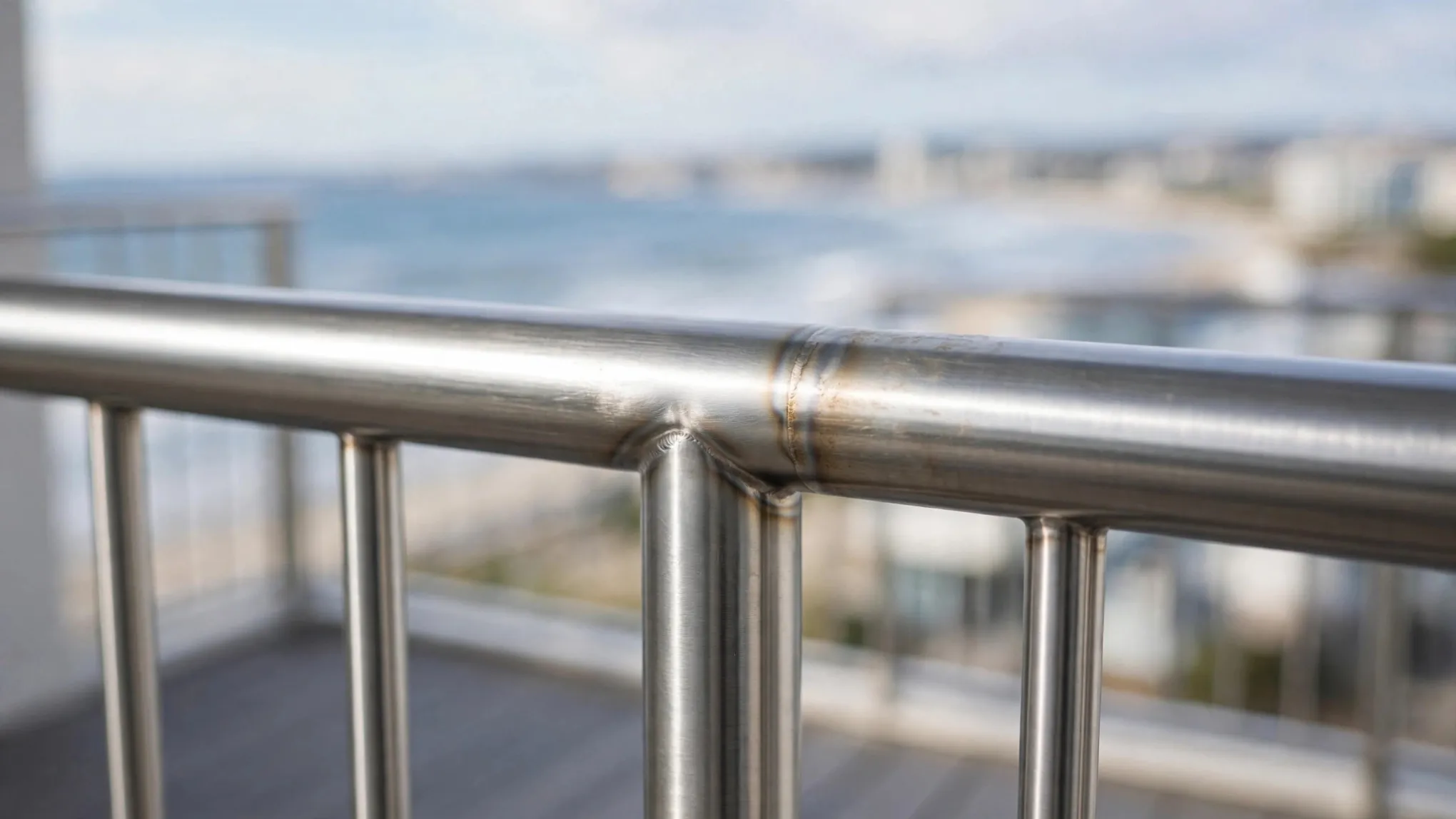
Use stainless fixings outdoors — grade 316 stainless steel for coastal or humid sites, where salt air attacks ordinary steel quickly. Seal every fixing point so water cannot track behind the plaque and stain the metal plaque wall. Leave a drainage gap at the bottom of a standoff-mounted plaque. Never mix metals: a plain steel screw in a brass plaque corrodes, and the stain is almost impossible to remove.
Adhesive alone is a poor choice outdoors. For an outdoor metal plaque, the safe default is a mechanical fixing — standoffs or a hidden bracket — with adhesive only as a secondary seal. A Cast Aluminum Family Garden Estate Plaque at a garden entrance is typically standoff-mounted on a stone pier, and the same applies to a Vintage Bronze Address Plaque for Luxury Villa Exterior: bronze weathers gracefully, but only if the fixings are chosen for the same lifetime.
For engraved metal plaques for outdoors, deep engraving with a durable infill holds up well, and the fixings should be inspectable once a year without removing the plaque.
What to Specify When You Order
The easiest way to get concealed fixings right for your metal plaque wall is to specify them in the order, not on site. Give the dimensions and weight, and say whether it hangs indoors or outdoors. Describe the wall — stone, tile, plaster, glass, timber or render. Say whether the plaque must be removable. Confirm the finish of any visible hardware, such as standoff caps. And confirm whether the fixing kit is included.
A personalized metal plaque is made to order, so the fixing positions can be planned around the artwork: tell the factory where the lettering and relief sit, so no fixing hole cuts through a letter or a design element. That small detail is the difference between a plaque that looks designed and one that looks drilled.
Kaiyubang makes custom metal plaques to order at its Foshan factory, with more than ten years of experience. Send your drawings or a photograph of the wall for a recommendation and a quotation within one business day; delivery is normally two to four weeks.
Conclusion: A Clean Finish Starts with the Fixing
Screws are the cheapest part of a plaque installation and the most visible mistake. A concealed fixing costs little more, but it protects the finish, the lettering and the impression the plaque is meant to make. Choose the fixing when you choose the plaque: standoffs for heavy or outdoor pieces, hidden brackets where the plaque must come off, adhesive only for light indoor work, and a recessed mount for walls still being built.
If you are planning a metal plaque wall for a hotel lobby, a villa entrance or a boardroom, send Kaiyubang your drawings. The factory will recommend the right concealed fixing, build the plaque to order and quote within one business day. Reach the team at vivianvee639@gmail.com, or on WhatsApp and WeChat at +86 13715181867, Monday to Sunday, 9:00 AM to 6:00 PM GMT+8. The factory is at No. 18 Xingye 4th Road, Guanglong Industrial Park, Chencun Town, Shunde District, Foshan.