Oct 19, 2026 Choose Guiding
Benefits of Using Engraved Plaques for Recognition
Discover how engraved plaques make recognition personal and lasting. Compare materials, customization options, practical uses, and long-term value.
Benefits of Using Engraved Plaques for Recognition
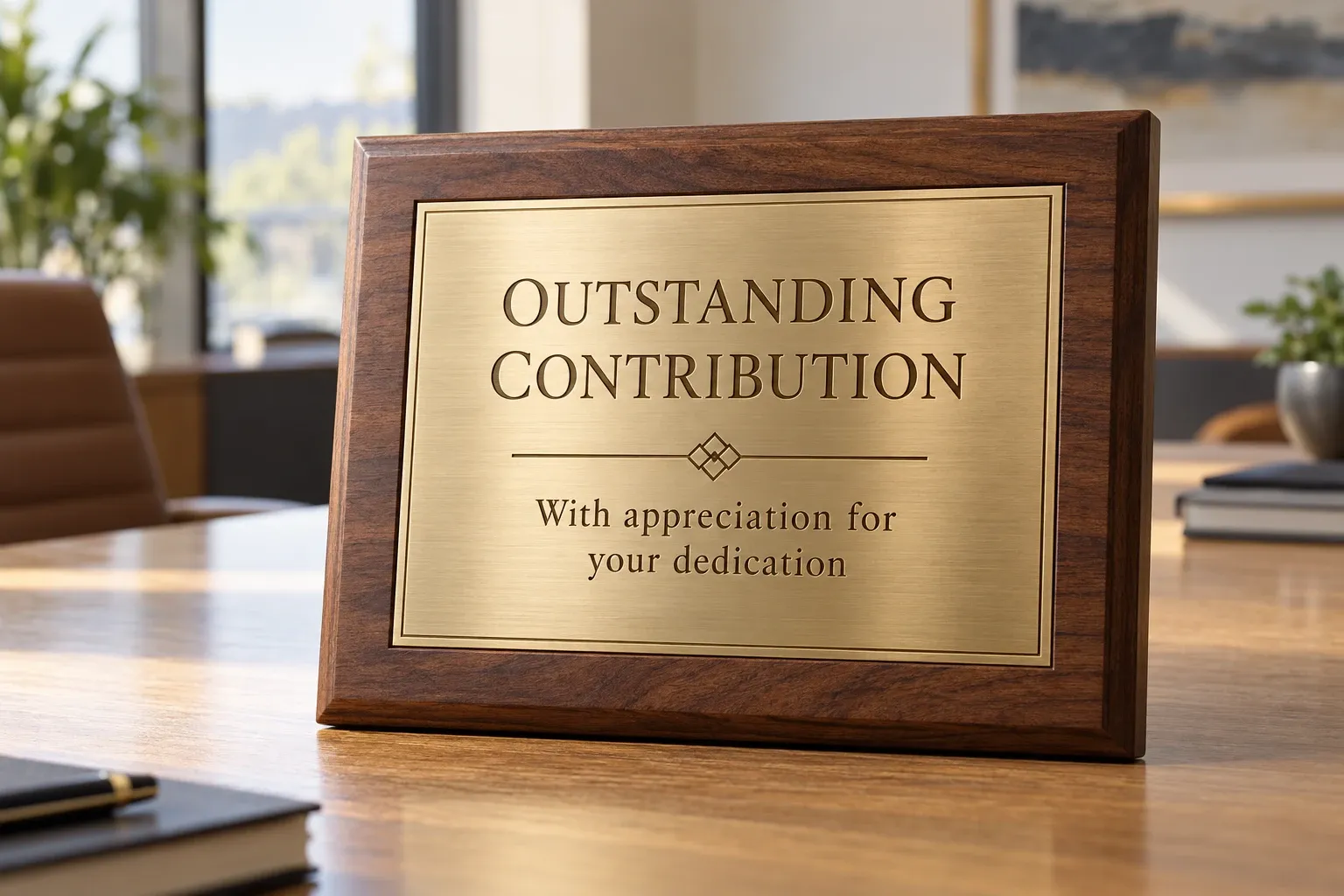
Engraved plaques turn a message of appreciation into something people can keep, display, and revisit. Whether they celebrate an employee’s contribution, acknowledge a donor, or commemorate a community milestone, they give recognition a visible and personal form.
Their value comes from the combination of thoughtful wording, suitable materials, and careful presentation. A meaningful inscription matters more than an elaborate design.
Introduction to Engraved Plaques
What Are Engraved Plaques?
Engraved plaques carry lettering or artwork cut into a surface. They may be made from metal, wood, acrylic, or a combination of materials, such as a metal inscription plate mounted on a wooden backing.
Engraving differs from casting, which can form raised lettering during manufacture. Printing and photographic transfers are different processes again. Before ordering, confirm how the inscription and any images will be produced.
Browse custom metal plaques to explore the range of decorative and identification applications, then discuss the appropriate production method for your design.
Types of Engraved Products
Common formats include:
- Presentation plaques for awards and retirement gifts.
- Engraved nameplates for desks, doors, and displays.
- Donor and dedication plaques for buildings and community spaces.
- Garden markers and commemorative plaques.
- Address and identification plates.
These products do not all serve the same purpose. An address plaque identifies a property, while a recognition plaque acknowledges a person or contribution. Both benefit from clear lettering and thoughtful placement.
The Emotional Impact of Recognition
Building Morale with Personalized Engraved Plates
Personal recognition begins with specificity.
“Thank you for your service” expresses appreciation. Adding the recipient’s name, contribution, and occasion makes the message more individual.
For example:
“Presented to Jordan Lee in appreciation of ten years of thoughtful leadership and commitment to the team.”
A plaque can provide a lasting reminder of that appreciation. It works best when it accompanies sincere feedback and a considerate presentation, rather than replacing everyday recognition.
Before arranging a public ceremony, consider whether the recipient would prefer a quieter acknowledgement.
Lasting Impressions of Engraved Nameplates
An engraved nameplate can connect a person’s contribution with a place: a meeting room, a garden bench, a scholarship display, or a donated facility.
Keep the relationship clear. Explain who is being acknowledged and why, using language that future visitors can understand.
For permanent installations, verify names, titles, dates, and organizational wording before approving production. A small proofreading error can distract from an otherwise thoughtful tribute.
Practical Uses of Engraved Plaques
Awards Ceremonies and Events
Plaques suit occasions where recipients need something easy to display after the event.
Wood certificate plaques can combine a certificate-style presentation with a rigid backing. Depending on the design, they may use a mounted document, printed panel, or engraved plate. Confirm the construction instead of assuming that every element is engraved.
For event orders, work backward from the presentation date. Allow time for artwork approval, production, delivery, and corrections.
Corporate and Employee Recognition
Corporate uses include service anniversaries, retirement presentations, project achievements, and acknowledgements of exceptional contributions.
For recurring awards, establish a consistent layout while leaving room for a personal message. This makes future orders easier without making every recipient’s recognition feel identical.
Choose a display format suited to the recipient: a wall-mounted plaque, a freestanding award, or a smaller desk piece.
Community, Religious, and Public Service Recognition
Church plaques may acknowledge donors, volunteers, building dedications, or years of service. Confirm names, scripture references, and institutional wording with the appropriate representative.
Police plaques may recognize retirement, service, or community contributions. Where badges, seals, or organizational insignia are included, confirm the approved artwork and any required permission.
Keep ceremonial language accurate and avoid suggesting official endorsement where none exists.
Gardens, Memorials, and Property Identification
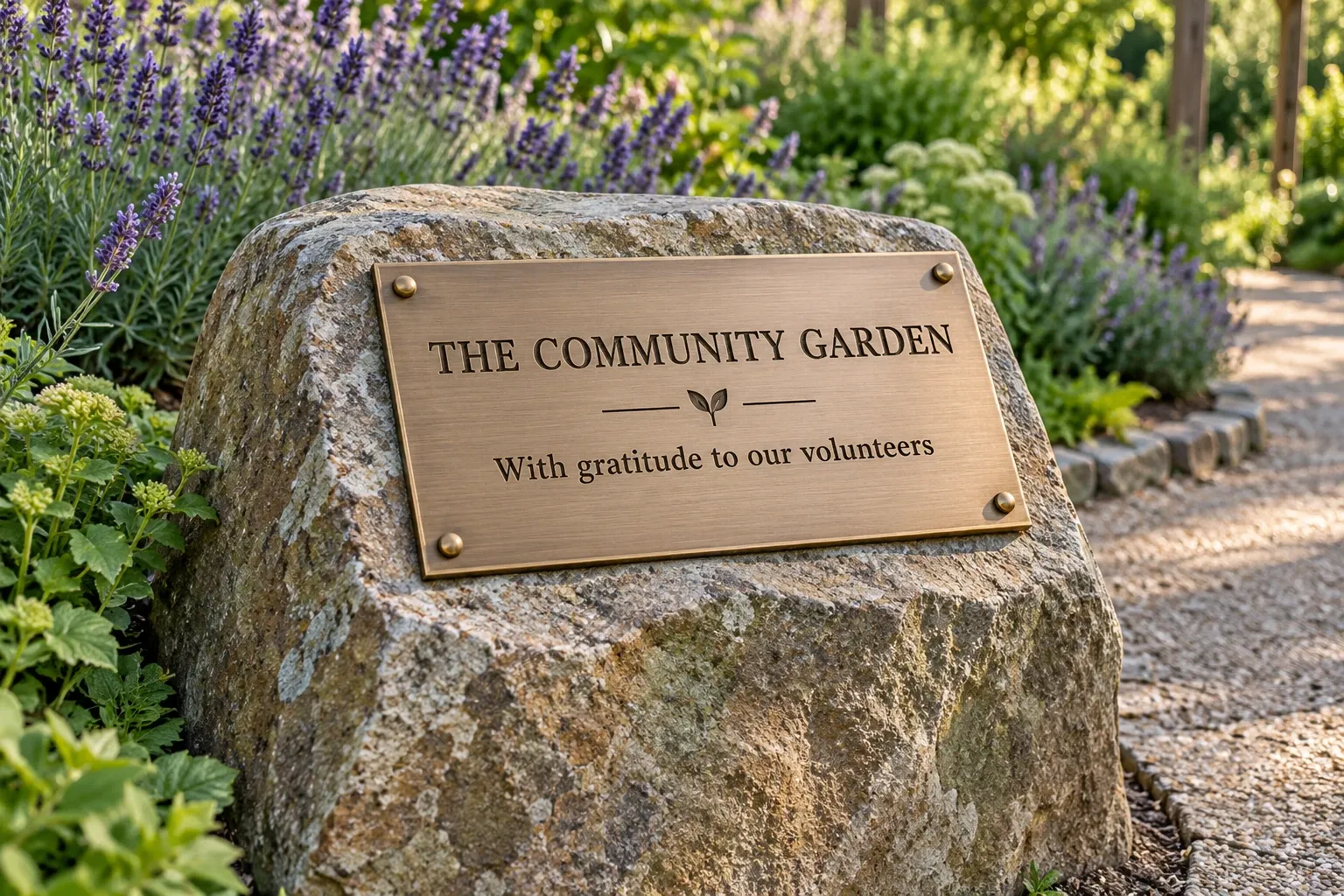
Personalised plaques for garden settings can celebrate volunteers, mark a donated tree, or preserve a dedication within the landscape. Placement should make the inscription readable without obstructing paths or planting.
For memorial applications, gravestone photo plaques require separate consideration. The portrait may be produced using ceramic, printing, or another photographic process rather than engraving. Confirm image quality, outdoor suitability, attachment details, and cemetery requirements.
Address products serve a different role. Vertical address plaques for house entrances can suit narrow mounting spaces, while bronze address plaques offer a warm, traditional appearance. Stainless steel house number plaques may complement contemporary façades.
In each case, prioritize viewing distance, contrast, and the available installation area.
Customization Options
Tailoring Design with Custom Engraved Plates
A successful design gives the most important information the most space.
Use a simple hierarchy:
- Recipient’s name or main dedication.
- Reason for recognition.
- Presenting organization.
- Relevant date.
Avoid filling every available area. Generous spacing can make the inscription easier to read and give the message greater emphasis.
Before production, approve a proof showing the actual dimensions, spelling, line breaks, artwork, and fixing positions. For detailed designs, ask whether a sample or close-up reference is available.
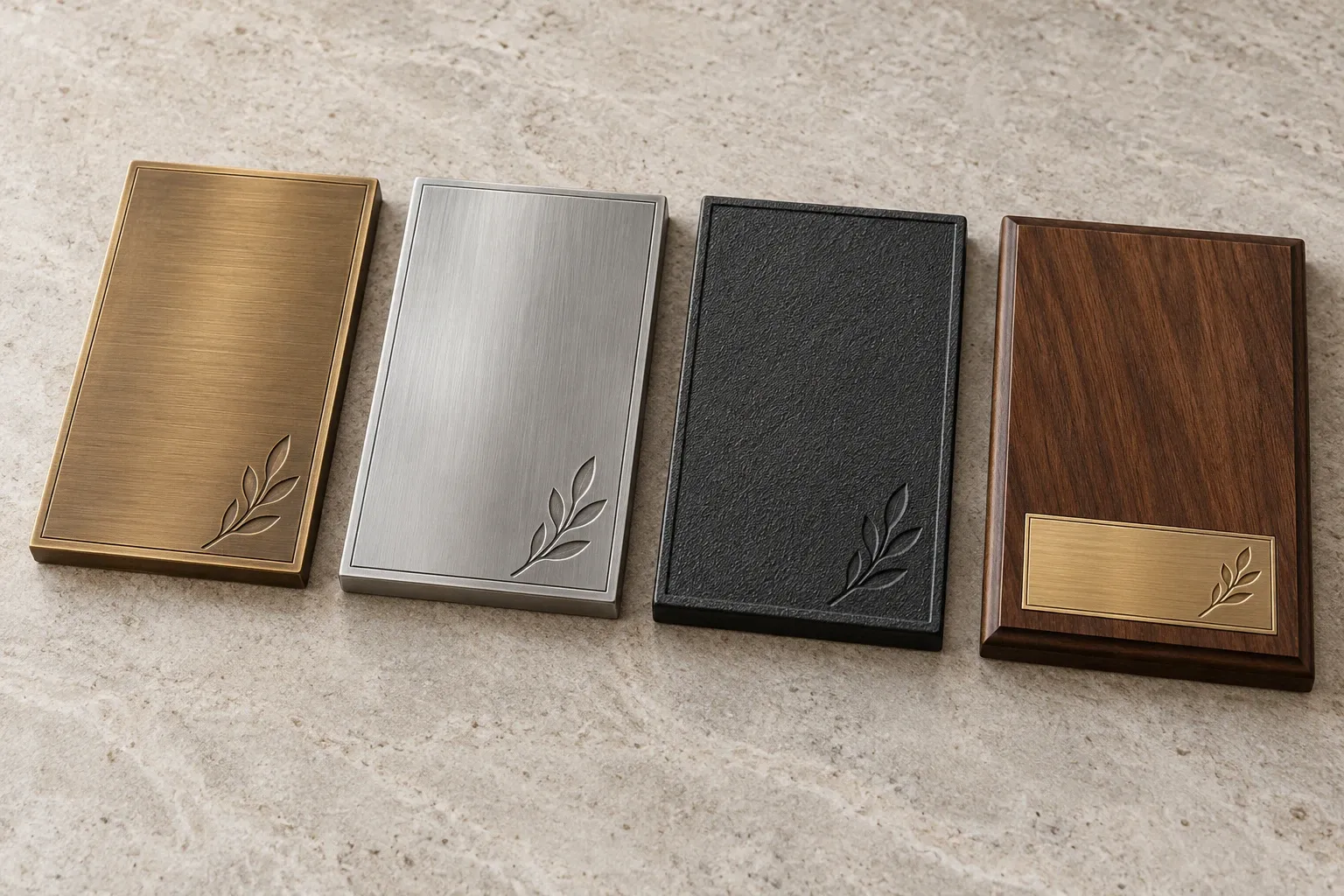
Material Choices: Metal vs. Other Options
Choose the material for its location and purpose, as well as its appearance.
Material or format | Visual character | What to confirm |
|---|---|---|
Bronze | Warm, traditional, suited to commemorative designs | Alloy, inscription method, finish, and maintenance |
Stainless steel | Clean, contemporary appearance | Grade, exposure conditions, contrast, and surface finish |
Cast iron | Substantial, textured, traditional character | Protective coating, weight, mounting, and lettering method |
Wood | Warm presentation for indoor awards | Solid wood or composite construction and moisture sensitivity |
Acrylic | Lightweight with flexible visual options | Scratch resistance, cleaning requirements, and intended exposure |
Cast iron wall plaques often use cast relief details or raised lettering. If you specifically need engraving, confirm that the manufacturer can achieve the required detail on the proposed surface.
Metal is not automatically the best choice for every setting. Wood may suit an indoor presentation, while an outdoor dedication requires a specification designed for weather exposure.
Durability and Value
The Longevity of Engraved Metal Plates
Engraving places the inscription into the surface, but the readability of the finished product also depends on contrast, engraving depth, coatings, and care.
Outdoor exposure affects materials differently. Bronze can change color as its surface weathers. The Copper Development Association describes the development of patina on outdoor copper and bronze.
Stainless steel requires a grade and finish suited to its environment. Cast iron depends on an appropriate protective finish and upkeep. Fixings and mounting surfaces also influence performance.
For existing outdoor bronze installations, the National Park Service provides conservation resources on caring for outdoor bronze plaques. Historic pieces may need specialist advice rather than routine polishing.
Ask the supplier for care instructions specific to the product supplied. Avoid treating every metal surface with the same cleaner.
Cost-Effectiveness of Custom Metal Engraving
Value depends on more than the initial quotation.
Compare:
- Material and backing construction.
- Dimensions and thickness.
- Artwork preparation and engraving.
- Finishes and color fills.
- Mounting hardware.
- Packaging and delivery.
- Expected maintenance.
A clear proof and agreed specification can reduce avoidable corrections. For repeated awards, reusing an approved layout may simplify future ordering, although savings depend on the supplier and order details.
Do not assume that a higher price guarantees a longer service life. Compare the actual specification and suitability for the intended location.
Conclusion
Summarizing the Benefits
Engraved plaques give recognition a physical presence. Personal wording makes the message meaningful, thoughtful design makes it readable, and suitable materials help it remain appropriate to its setting.
From employee awards to community dedications, the strongest result begins with a clear purpose and an accurately approved inscription.
Encouraging Recognition Through Engraved Solutions
Start with the person or contribution you want to acknowledge. Then choose the wording, material, and display format that support that message.
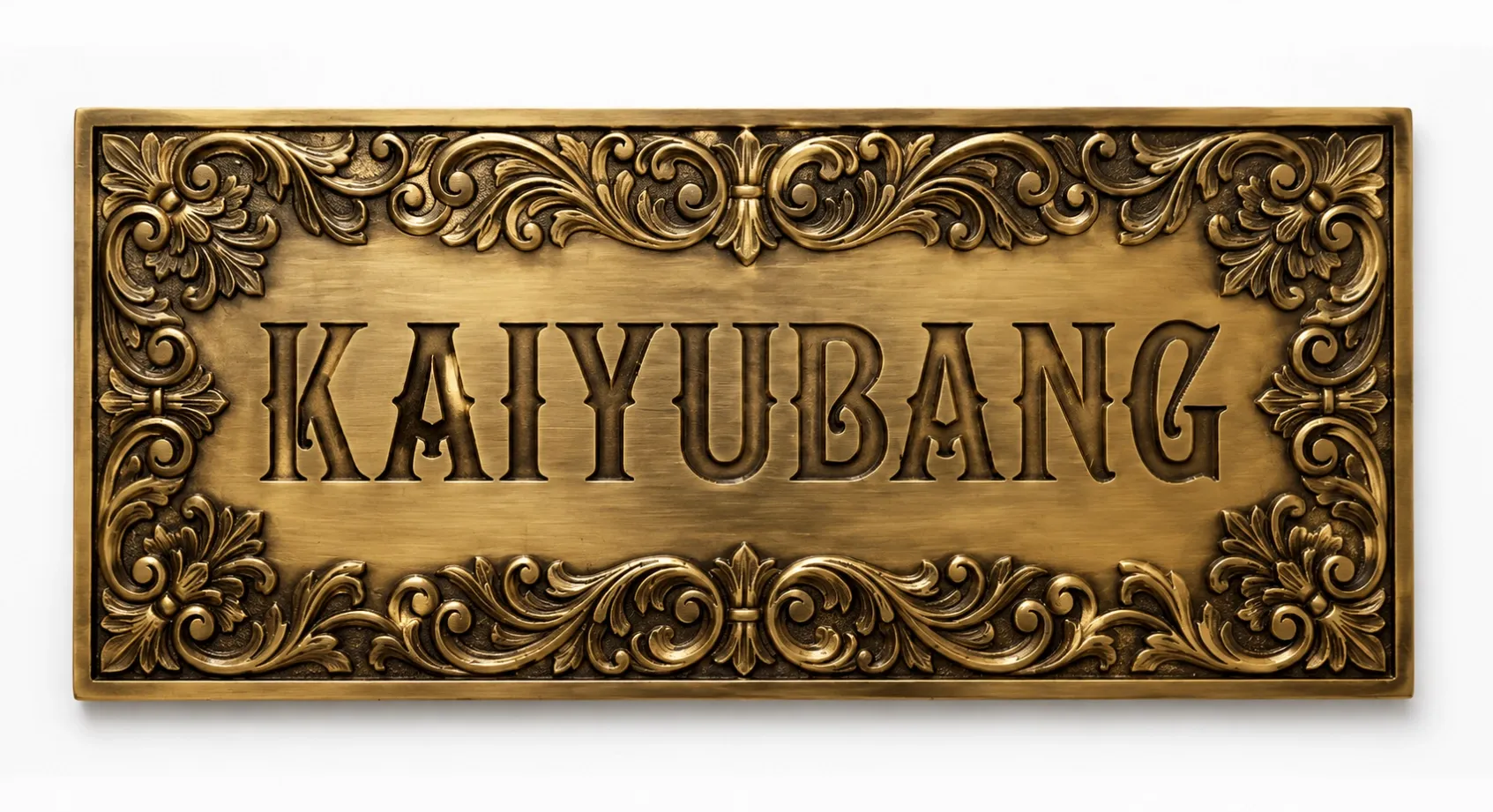
To discuss engraved plaques for your project, contact Kaiyubang about custom metal plaques with your proposed inscription, dimensions, quantity, installation location, and required date. Confirm the available production method and scope before placing an order.